Analysenzertifikat: Bakteriostatisches Wasser (BAC Water) 10 ml, Charge ATBAC-03-2607-01
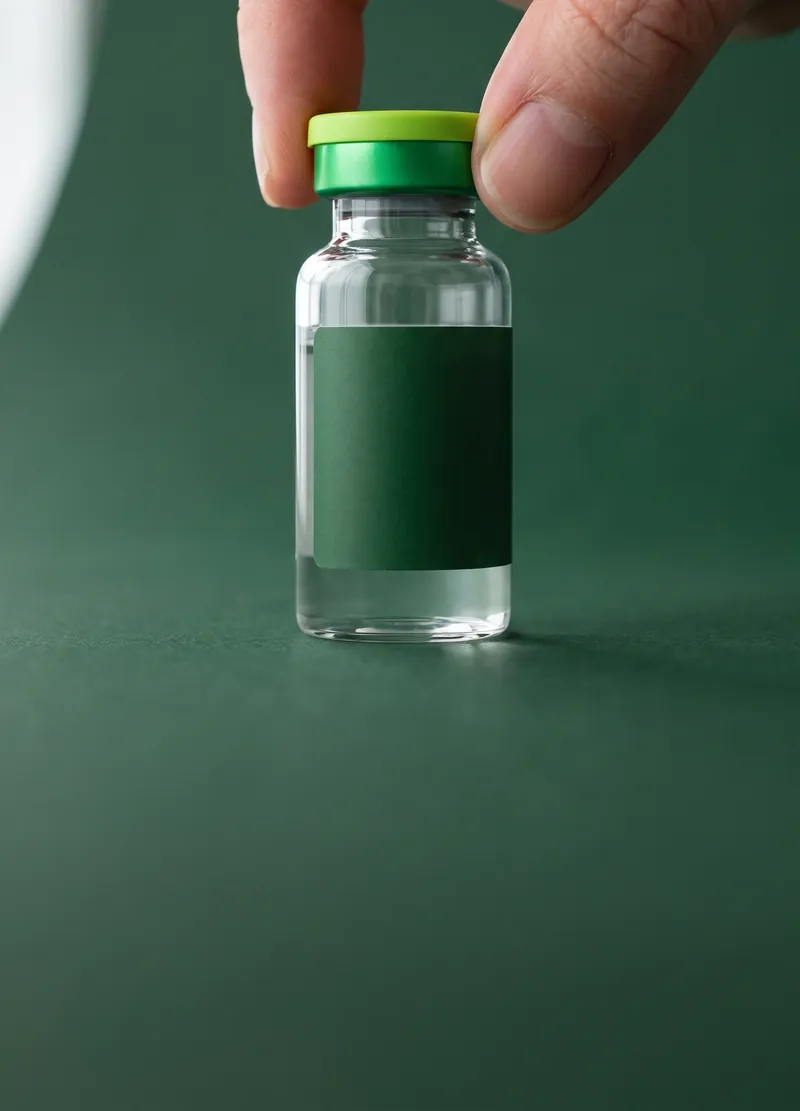
Bakteriostatisches Wasser (BAC Water) 10 ml, Charge ATBAC-03-2607-01, geprüft vom unabhängigen Labor Analyton Labs, Zertifikat AN-2026-00018 ausgestellt am 11. August 2026: 20 Bestimmungen einschließlich Sterilität, bakterielle Endotoxine < 0.005 EU/ml.
Produktseite: Bakteriostatisches Wasser (BAC Water) 10 ml 8,90 €
- Produkt
- Bakteriostatisches Wasser (BAC Water) 10 ml
- Charge
- ATBAC-03-2607-01
- Zertifikatsnummer
- AN-2026-00018
- Labor
- Analyton Labs
- Ausgestellt
- Probe
- Bacteriostatic water, 0.9 % benzyl alcohol, vial labelled 3 ml
Zusammenfassung der Ergebnisse, 20 Bestimmungen
Methoden und Ergebnisse sind auf Englisch angegeben, genau so, wie das Labor sie erfasst hat.
| Bestimmung | Methode | Ergebnis | Spezifikation |
|---|---|---|---|
| Appearance | Visual, USP <790>, black and white background, 2000 lx, 5 s | Clear, colourless solution free of visible particles; faint aromatic odour of benzyl alcohol | Clear, colourless, free of visible particles |
| Identity of benzyl alcohol | GC-MS (EI, 70 eV) and LC-HRMS (ESI+) | Retention time 12.90 min matches the standard within 0.05 min; EI spectrum m/z 108 (M+•), 107, 79, 77, NIST library match 96 %; LC-HRMS [M+H]+ 109.0648, deviation 0.0 ppm, [M+Na]+ 131.047 | Theoretical monoisotopic 108.0575 Da from C7H8O; [M+H]+ 109.0648 |
| Benzyl alcohol content | GC-FID, DB-624, internal standard 2-phenylethanol; five-point calibration 0.5 to 1.5 % w/v, r² 0.9998 | 0.91 ± 0.02 % w/v (9.1 mg/ml), 101 % of the labelled 0.9 % (k = 2) | 90 to 110 % of label (0.81 to 0.99 % w/v) |
| Related substances of benzyl alcohol | GC-FID; LOD 0.003 %, LOQ 0.01 %, reporting threshold 0.01 % relative to benzyl alcohol | Benzaldehyde 0.030 % (RRT 0.85, ± 0.004 %), i.e. 2.7 µg/ml; dibenzyl ether 0.020 % (RRT 1.62); cyclohexylmethanol < 0.01 % (RRT 0.93); total 0.05 % | Ph. Eur. 0256, parenteral grade: benzaldehyde <= 0.05 %, cyclohexylmethanol <= 0.10 %, any other <= 0.10 %, total <= 0.3 % |
| Deliverable volume | Gravimetric, USP <697>, density 0.9975 g/ml at 20 °C | 3.15 ml (five vials 3.10 to 3.20 ml) | Not less than 3.0 ml from each vial |
| Benzyl alcohol per vial | Calculated from content and deliverable volume | 28.7 mg per vial (9.1 mg/ml × 3.15 ml) against 27 mg for the labelled 0.9 % in 3 ml, i.e. 106 %; each withdrawn millilitre carries 9.1 mg regardless of overfill | 90 to 110 % |
| pH | Potentiometric, USP <791>, 25 °C, KCl bridge for low ionic strength | 5.6 ± 0.1 | 4.5 to 7.0 (USP Bacteriostatic Water for Injection) |
| Osmolality | Freezing point depression, USP <785> | 85 ± 3 mOsm/kg (calculated 83 for 9.0 g/l benzyl alcohol); the solution is hypotonic and is not an isotonic vehicle | Report only |
| Conductivity | USP <645>, 25 °C | 1.1 ± 0.1 µS/cm | <= 1.3 µS/cm (stage 1) |
| Total organic carbon | USP <643> | Not applicable: benzyl alcohol itself contributes 7.4 mg of carbon per ml, so the test would measure the preservative and not contamination | Report only |
| Density and balance | Oscillating U-tube, USP <841>, 20 °C | 0.9975 ± 0.0005 g/ml; 9.1 mg/ml benzyl alcohol + 988.4 mg/ml water = 997.5 mg/ml, consistent with the density; no other solute (conductivity 1.1 µS/cm) | Report only |
| Inorganic impurities of the water | Ion chromatography; oxidisable substances by permanganate | Nitrate < 0.2 ppm, chloride < 0.5 ppm, sulfate < 0.5 ppm, ammonium < 0.1 ppm; oxidisable substances: the pink colour persists | Ph. Eur. Water for injections: nitrate <= 0.2 ppm, ammonium <= 0.2 ppm |
| Bacterial endotoxins | Kinetic chromogenic LAL, USP <85>, undiluted sample | < 0.005 EU/ml (LOQ 0.005 EU/ml); 0.9 % benzyl alcohol does not interfere | <= 0.25 EU/ml (USP Bacteriostatic Water for Injection) |
| Sterility | Membrane filtration with 3 × 100 ml rinse to neutralise benzyl alcohol, USP <71>; 20 vials; fluid thioglycollate 30 to 35 °C and soya bean casein digest 20 to 25 °C | No growth after 14 days | No growth |
| Antimicrobial effectiveness | USP <51>, category 1 (parenteral), inoculum 10^5 to 10^6 CFU/ml | S. aureus 3.4 log reduction at 7 d and > 4.0 at 14 d; P. aeruginosa 3.6 and > 4.0; E. coli 3.8 and > 4.0; C. albicans 1.2 log at 14 d; A. brasiliensis 0.6 log at 14 d; no increase to 28 d. Benzyl alcohol is weak against moulds, which is why the number is reported | Bacteria >= 1.0 log at 7 d, >= 3.0 log at 14 d, no increase to 28 d; yeast and mould no increase from the initial count |
| Residual solvents and volatile impurities | Headspace GC, USP <467> | Benzene < 0.5 ppm (LOQ 0.5 ppm; precursor of benzyl alcohol); toluene < 1 ppm; methanol, ethanol and acetone each < 10 ppm | ICH Q3C: benzene <= 2 ppm (Class 1), toluene <= 890 ppm, methanol <= 3000, ethanol and acetone <= 5000 ppm |
| Elemental impurities | ICP-MS, direct introduction of the solution, USP <233> | Cd, Pb < 0.05 µg/l; As, Hg, Co, V < 0.10 µg/l; Ni 0.30 µg/l; for information Al 2.0 µg/l (type I glass) and Fe 1.5 µg/l | ICH Q3D(R2) Class 1 and 2A, parenteral PDE per 3 ml daily: Cd 667, Pb 1667, As 5000, Hg 1000, Co 1667, V 3333, Ni 6667 µg/l |
| Sub-visible particles | Light obscuration, USP <788>, mean of 5 vials | >= 10 µm 140 per vial; >= 25 µm 6 per vial | <= 6000 and <= 600 per container |
| Container closure integrity | Vacuum decay, USP <1207> | 0 of 10 vials leaking; bromobutyl stopper, aluminium seal, flip-off cap | 0 leaking |
| Compound screening | GC-MS full scan m/z 35 to 400 and LC-HRMS m/z 100 to 1000, both polarities, against reference standards | Other preservatives (methylparaben, propylparaben, phenol, m-cresol, chlorobutanol), ethanol, glycerol, propylene glycol and phthalates (DEHP from the closure): none above 1 µg/ml; no sodium chloride (conductivity), so this is not saline | Nothing above 1 µg/ml outside the declared composition |
SHA-256 der Datei: aeee8c5e375b0f245439d75c233ad264e70b0ae37f3677bc0ce342a3e5ac2bee
Forschungsmaterial. Das Zertifikat beschreibt die Eigenschaften der Charge, nicht die Eignung für irgendeine Anwendung bei Menschen oder Tieren.