



Quick overview
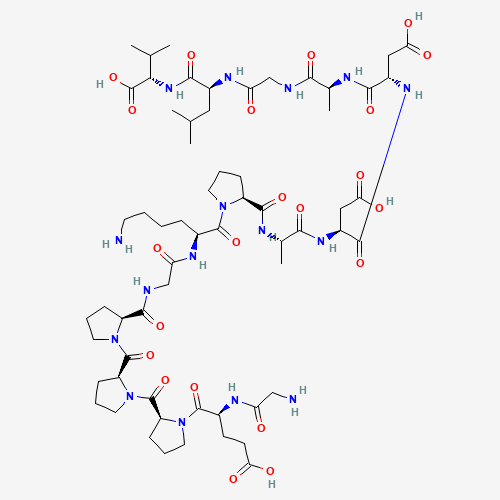
BPC-157 is a pentadecapeptide derived from a protective protein of gastric juice. It is the most cited molecule in regeneration research: studies cover tendons, muscles, ligaments and the digestive tract.
- Over 30 years of publications from professor Sikiric’s team
- Unusually broad scope: tendons, muscle, GIT, blood vessels
- Stable even in gastric acid
- WADA lists it as prohibited in sport, sold strictly for research
Read more Close
Overview
Origin and why it was developed
BPC-157 (short for Body Protection Compound-157) is a short chain of 15 amino acids, a tiny “peptide fragment” that scientists found in human gastric juice.
The story began in the 1990s in Zagreb. The team of Professor Predrag Sikiric at the Medical Faculty was working on a simple but fascinating question: why doesn’t the gastric mucosa die? Gastric acid has a pH of 1 to 2, a force that would dissolve most tissues in the body. And yet the stomach functions for decades without problems. Something must protect it.
Sikiric’s team looked for this “protective substance” directly in gastric juice, and they found it. It was a fragment of a larger protein, which they named body protection compound. From this fragment they isolated the active sequence, BPC-157.
What began as a gastroenterological curiosity became, over 25 years, an evergreen of regenerative research. Sikiric’s group has published more than 200 peer-reviewed studies on BPC-157, you can verify the number on PubMed. That makes it one of the most-studied peptides in the entire preclinical (= preclinical testing prior to clinical trials) regenerative literature.
In 2022, WADA (the World Anti-Doping Agency) added BPC-157 to its Prohibited List under category S0 (non-approved substances). The listing applies to competitive sport and says nothing about clinical efficacy.
Important upfront: in the Western pharmaceutical world BPC-157 never passed Phase 3 trials (= the large clinical trials required before drug approval). Its clinical program in the 1990s in Croatia (intended for approval for Crohn’s disease, an autoimmune inflammatory bowel disease) stopped at Phase 2. So most of the evidence comes from animal models, experiments on animals, most often rats. That is precisely why it belongs in the research peptide category, not the approved-drug category.
Mechanism of action, what it does at the cellular level
Here is the key difference from most drugs: BPC-157 does not function like a classical drug. A classical drug is like a key in a lock, it has one target receptor and binds there. Aspirin blocks COX, antihistamines block histamine receptors, and so on.
BPC-157 does not have one lock. It acts pleiotropically, the technical term for the fact that it activates multiple signaling pathways in the cell at once. Imagine it entering a small town of cells and simultaneously sending a message to the postman, firefighters, repair crews and gardeners. That is precisely why it has effects in such a broad range of tissues, from tendons through gut to blood vessels.
Formation of new blood vessels (angiogenesis) via VEGFR2
The best-documented pathway. In simplified terms it works like this: when damage occurs somewhere in the body, the tissue needs blood, oxygen, nutrients, immune cells. Blood needs vessels. And we build them from endothelial cells (those that line the inside of blood vessels).
BPC-157 sends a signal to these cells via a receptor called VEGFR2, imagine it as an “antenna” on the surface of the cell. The antenna catches the signal, triggers a chain reaction inside the cell (called the MAPK/ERK cascade) and the cell receives the instruction: “Start dividing and build a new vessel.”
Hsieh et al. (2017) demonstrated this also in reverse: when they blocked this receptor with a selective inhibitor (SU5416), BPC-157 lost its pro-regenerative effect. As if you had broken the key in the lock, the door no longer opens. That is important, because it confirms that VEGFR2 is not just “one of many” mechanisms, but truly a causal pathway.
FAK-paxillin signaling pathway, so cells know where to go
For a cell to move from point A to point B (for example to the site of damage), it needs two things: motivation and equipment. Motivation is provided by inflammatory signals from the injury. Equipment, that is exactly the FAK-paxillin system.
FAK stands for Focal Adhesion Kinase, an enzyme that functions as a coupling between the cell’s external world (the extracellular matrix, the “scaffolding” in which the cell lives) and its internal cytoskeleton (the cell’s own “framework”). Without this coupling the cell cannot pull itself forward.
BPC-157 activates FAK and via the paxillin cascade triggers cytoskeletal rearrangement. Cells, tenocytes (tendon cells), fibroblasts (connective tissue), endothelial cells, then reach the site of damage faster and in higher numbers than during spontaneous healing. Chang et al. (2011) mapped this mechanism in detail directly on isolated tenocytes in a laboratory dish.
Modulation of nitric oxide, a smart regulator, not a pump
NO (nitric oxide) is an important molecular signal in the body, vasodilation, blood pressure regulation, healing. BPC-157 engages the NO system in an interesting way: it does not act in one direction.
When NO is too high (e.g. during inflammation), BPC-157 dampens it. When it is too low (e.g. during ischemia), it normalizes it upward. This “bidirectional” effect, scientists call it buffering, is probably the key to its protective profile. It protects tissue both in NSAID lesions (stomach damage from ibuprofen) and in ethanol (alcohol) damage.
Modulation of growth hormone receptors (GHR)
Growth hormone (GH) and its child IGF-1 are important in tissue healing, especially of tendons. BPC-157 takes an elegant route here: it does not raise GH levels in the blood, but increases tissue sensitivity to GH via up-regulation of its receptors (GHR).
Imagine a radio. You can either shout the song louder (= more GH), or increase the sensitivity of the radio so it picks up weaker signals (= more receptors). BPC-157 does the latter. That is why it has an effect on tendon healing without systemic endocrine (hormonal) changes, no acromegaly-type side effects.
Serotonergic modulation in the gut-brain axis
Here it gets interesting. Sikiric’s group documented that BPC-157 affects serotonin (5-HT), the neurotransmitter everyone knows in the context of mood and depression. But 90 % of the body’s serotonin is in the gut, not the brain. There it serves to regulate gut motility, secretion and communication between the gut and the brain (the so-called gut-brain axis).
BPC-157 modulates serotonin in the gut as well as in the CNS (central nervous system). In animal models of depression (e.g. the forced swim test) it showed anti-depressant signals. This is why BPC-157 research expanded from tissue healing into psychiatry and neurogastroenterology.
Up-regulation of EGR-1 and cyclin D1
A bit more technical: EGR-1 (Early Growth Response 1) and cyclin D1 are transcription factors, proteins that, in the cell’s nucleus, determine which genes are “switched on”. Specifically, these two regulate the cell’s entry into the proliferative phase (division).
BPC-157 induces their expression at sites of damage, thereby accelerating cell growth and division exactly where it is needed.
What this means in practice: BPC-157 does not act on only one tissue type. Wherever healing is already underway, it simultaneously reinforces 4 processes, angiogenesis (new vessels), cell migration (movement of cells to the site), proliferation (division) and the anti-inflammatory response. That is why its effect in studies extends far beyond the gastrointestinal tract, where it was originally discovered.
Researched applications
The published preclinical literature documents the effects of BPC-157 in the following areas (mostly in animal models):
- Tendon and ligament healing, Achilles tendon, medial collateral ligament (MCL, the ligament on the inner side of the knee), tendinopathy models
- Muscle injuries, quadriceps (front thigh), gastrocnemius (calf muscle), transections and contusions
- Bone and joint healing, osteoarthritis models, fracture healing, periodontal tissues (around the teeth)
- Gastrointestinal diseases, gastric lesions caused by alcohol or NSAIDs (ibuprofen, diclofenac), colitis, IBD models (Crohn’s disease), fistulas
- Hepatoprotection, protection of the liver against toxic damage (paracetamol overdose, CCl₄, alcohol)
- Vascular healing, endothelial dysfunction, thromboses, healing of vascular anastomoses after surgery, thrombocytopenia (low platelet count)
- Skin wounds, acute as well as diabetic wounds, burns
- Nerve regeneration, peripheral (sciatic nerve crush) as well as central (cerebral ischemia models, i.e. “stroke”)
- Cardiology models, adrenergic-induced cardiomyopathy (heart damage from stress), arrhythmia models
- Neuropsychiatric models, depression models, anxiolytic (anti-anxiety) signals
Buying BPC-157: what to look for
When buying BPC-157, the decisive criterion is not the price but the verifiability of quality. A research peptide is only ever as good as its certificate of analysis. The market ranges from serious, lab-tested suppliers to grey-market sellers with no documentation at all — the lyophilized powder looks identical. These five criteria separate them.
1. HPLC purity ≥ 99 % – documented, not just claimed
HPLC purity shows what proportion of the powder is actually BPC-157. Serious suppliers document ≥ 99 % with a chromatogram. “99 % purity” without an attached chromatogram is a claim, not proof.
2. Batch-specific certificate of analysis (CoA)
The most important document. A batch-specific CoA belongs to exactly the batch you receive — with batch number, date and purity value, issued by an independent laboratory (Janoshik and similar are the industry standard). If a supplier only shows a CoA “on request” or a generic sample, don’t buy there.
3. LC-MS identity confirmation
Purity tells you how much of a substance is present; LC-MS tells you which substance it is. Via the molecular mass (1419.53 Da) it confirms this is the correct 15-amino-acid sequence, not a cheaper, mislabeled peptide.
4. Origin and EU shipping with traceability
A supplier with an EU warehouse and full batch traceability has the edge over grey imports from Asia: shorter, cooled transport and no customs risk. Molequa® ships from within the EU, typically within 3 to 5 business days — no post-Brexit customs delays.
5. Correct delivery form: lyophilizate
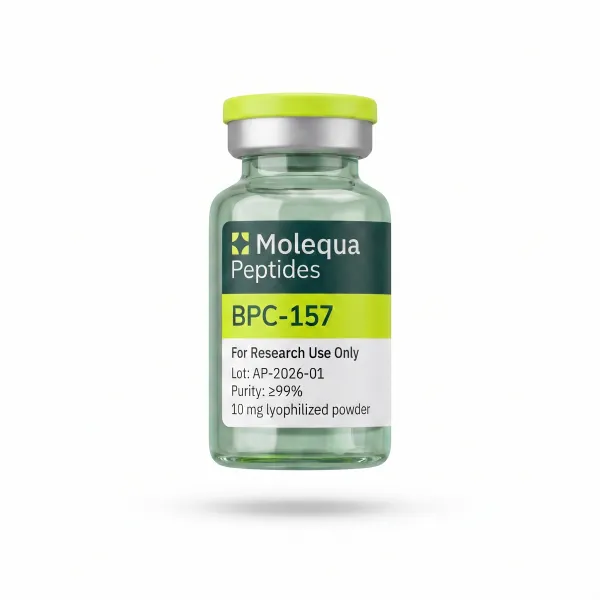
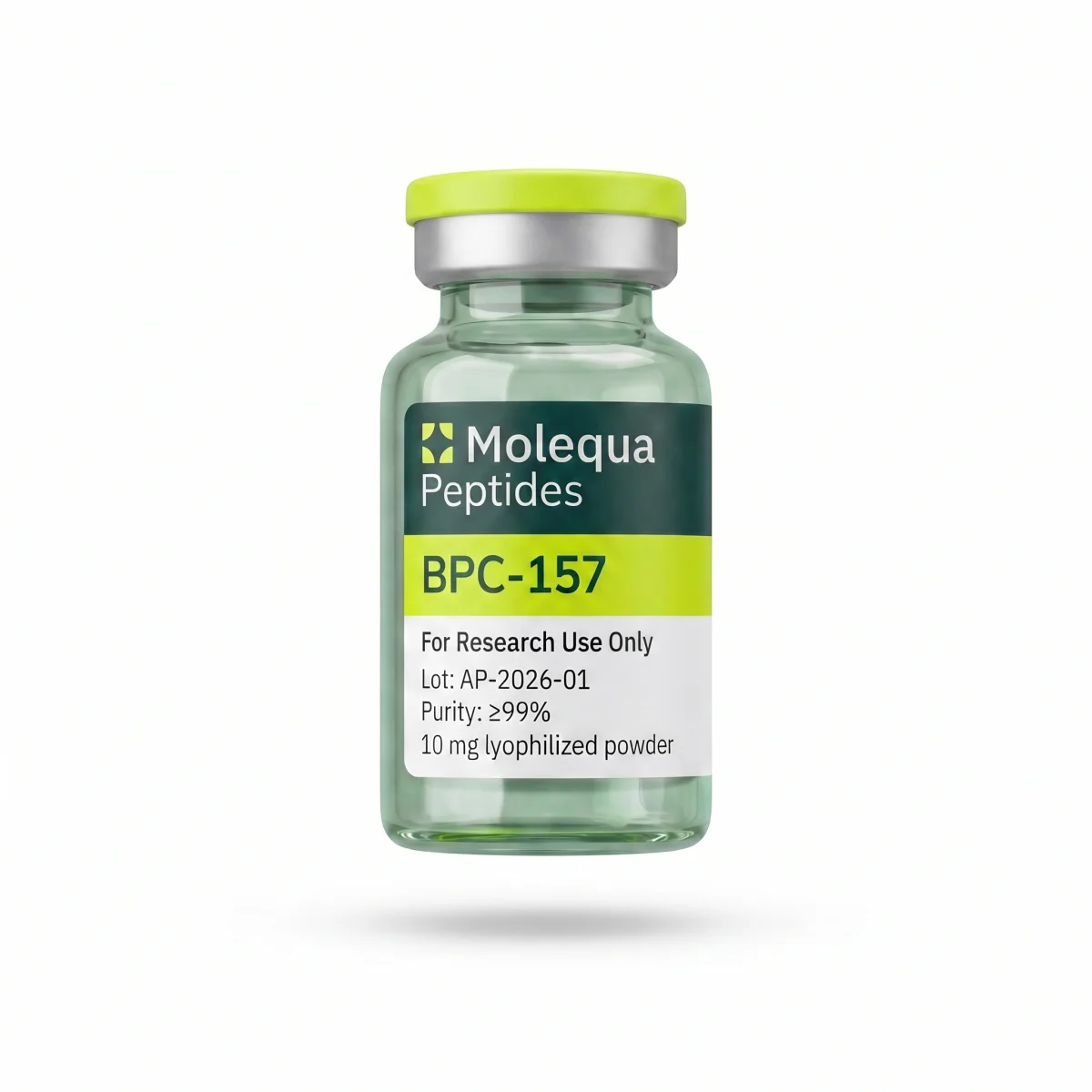
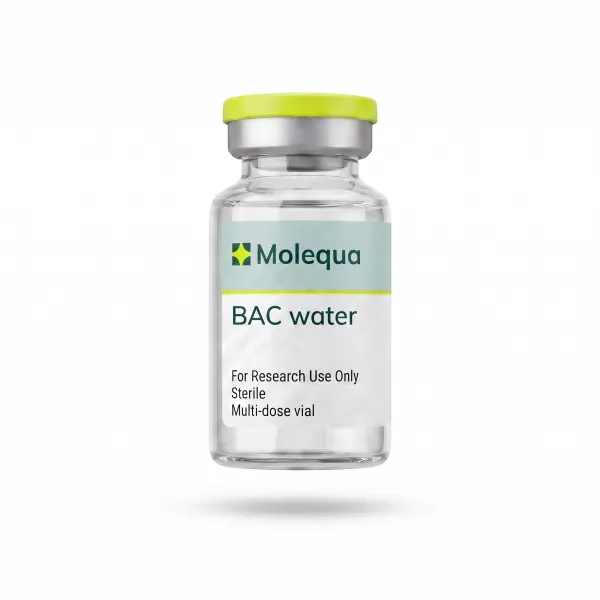
High-quality BPC-157 is delivered as a lyophilizate (white powder), not as a pre-mixed solution. Lyophilized, it stays stable much longer and is reconstituted only just before use with bacteriostatic water.
Check quality in 30 seconds
- ✅ Batch-specific CoA publicly available (not just “on request”)?
- ✅ HPLC purity ≥ 99 % proven with a chromatogram?
- ✅ LC-MS identity confirmed (mass 1419.53 Da)?
- ✅ EU warehouse and batch traceability?
- ✅ Delivered as a lyophilizate with clear storage instructions?
If all five points are met, you are buying verified material. Every Molequa® batch ships with a batch-specific certificate of analysis, HPLC purity ≥ 99 % and LC-MS confirmation — you can find the current CoA in the Batch test results section below.
Legal notice: BPC-157 is a research peptide and not an approved medicine. It is sold exclusively for scientific laboratory research and is not intended for human or animal consumption.
Science & studies
4.1 Key publications
Before going into the details of the individual studies, here are 6 key publications on which the BPC-157 evidence base rests:
Sikiric P., Seiwerth S., Rucman R., et al. (2011). Stable gastric pentadecapeptide BPC 157: novel therapy in gastrointestinal tract. Curr Pharm Des. 17(16):1612 to 1632. Comprehensive review of gastrointestinal effects and the clinical development program in Croatia.
Chang C.H., Tsai W.C., Lin M.S., Hsu Y.H., Pang J.H. (2011). The promoting effect of pentadecapeptide BPC 157 on tendon healing involves tendon outgrowth, cell survival, and cell migration. J Appl Physiol. 110(3):774 to 780. Gold-standard mechanism study of tendon healing on isolated tenocytes.
Krivic A., Anic T., Seiwerth S., Huljev D., Sikiric P. (2006). Achilles detachment in rat and stable gastric pentadecapeptide BPC 157: Promoted tendon-to-bone healing and opposed corticosteroid aggravation. J Orthop Res. 24(5):982 to 989. In vivo proof of tendon-to-bone interface healing.
Hsieh M.J., Liu H.T., Wang C.N., et al. (2017). Therapeutic potential of pro-angiogenic BPC157 is associated with VEGFR2 activation and up-regulation. J Mol Med (Berl). 95(3):323 to 333. Mechanistic characterization of the angiogenic pathway.
Seiwerth S., Milavic M., Vukojevic J., et al. (2021). Stable gastric pentadecapeptide BPC 157 and wound healing. Front Pharmacol. 12:627533. Current review article on wound healing.
Sikiric P., Hahm K.B., Blagaic A.B., et al. (2020). Stable gastric pentadecapeptide BPC 157, Robert’s stomach cytoprotection/adaptive cytoprotection/organoprotection, and Selye’s stress coping response: Progress, achievements, and the future. Gut Liver. 14(2):153 to 167. Theoretical synthesis of the cytoprotective hypothesis.
4.2 Detailed expandable studies
Here are the 7 most important studies that researchers in this field reference most often. Summarized in plain language: what they did, what they found, and why it matters.
▸ Study 1: Healing of a transected Achilles tendon
Citation: Staresinic M., Sebecic B., Patrlj L., et al. Gastric pentadecapeptide body protection compound BPC 157 and its role in accelerating musculoskeletal soft tissue healing. Cell Tissue Res. 2003.
What they did: They took 80 rats (Wistar strain), completely transected their Achilles tendon (the strongest tendon in the body) and divided them into 3 groups:
- Control, saline
- BPC-157 by injection, 10 µg/kg into the abdominal cavity
- BPC-157 in drinking water, 10 µg/kg orally
After 14 days they tested the tensile strength of the healed tendon and performed histology (microscopic examination of the tissue).
What they found: Tendons in the BPC-157 groups were 2.3× stronger than in the control group (p < 0.01, meaning the probability of chance is less than 1 %). Under the microscope they also looked “better”, collagen was organized, not chaotic, and there was less scarring. Oral and injectable administration worked equally well.
Why it matters: This is rare, peptides usually break down in the stomach. BPC-157 works even when you put it in drinking water, which is a huge advantage in practical research.
▸ Study 2: Tenocytes in vitro, how cells migrate
Citation: Chang C.H., Tsai W.C., Lin M.S., Hsu Y.H., Pang J.H. The promoting effect of pentadecapeptide BPC 157 on tendon healing involves tendon outgrowth, cell survival, and cell migration. J Appl Physiol. 2011;110(3):774 to 780.
What they did: Tenocytes (tendon-tissue cells) isolated from rats, grown in a laboratory dish. Three different tests:
- Tendon outgrowth, how many cells grow out from a piece of tendon in the dish
- Wound healing assay, cells are grown as a monolayer, you make a “scratch” in it and observe how quickly it closes
- Cell survival, you add peroxide (oxidative stress, which normally kills cells) and observe how many survive
What they found:
- Tenocytes grew faster and in a dose-dependent curve (the more BPC-157, the more growth)
- The “scratch” closed 1.8× faster at 1 µg/ml BPC-157
- Under oxidative stress, 22 % of cells survived without BPC-157, but 67 % with BPC-157
- When they blocked the FAK enzyme, the effect disappeared → mechanism confirmed
Why it matters: This is not just a “systemic effect via blood”, BPC-157 directly modifies the biology of an individual cell. And when you know which enzyme is responsible (FAK), you can verify and replicate it in further studies.
▸ Study 3: Protection against damage from anti-inflammatory drugs
Citation: Sikiric P., Seiwerth S., Brcic L., et al. Toxicity by NSAIDs. Counteraction by stable gastric pentadecapeptide BPC 157. Curr Pharm Des. 2013;19(1):76 to 83.
What they did: They produced gastric ulcers in rats using common anti-inflammatory drugs, diclofenac, ibuprofen, indomethacin and aspirin. Then they gave BPC-157 either beforehand (preventively) or only once the ulcers already existed (therapeutically). They tested two doses: 10 µg/kg and 10 ng/kg (that is a thousand times less!).
What they found:
- Preventive administration: 70 to 85 % reduction in ulcer area
- Therapeutic administration: 60 to 75 % reduction
- And now the most interesting part: 10 ng/kg worked just as well as 10 µg/kg
Why it matters: If the molecule worked in a stoichiometric way (= simply “blocking” something piece by piece), a higher dose would necessarily produce a larger effect. The fact that it does not means that BPC-157 works via signaling cascades, it triggers an avalanche, which you don’t need to feed with a large quantity of the substance. You only have to “switch it on”.
▸ Study 4: Formation of new blood vessels via VEGFR2
Citation: Hsieh M.J., Liu H.T., Wang C.N., et al. Therapeutic potential of pro-angiogenic BPC157 is associated with VEGFR2 activation and up-regulation. J Mol Med (Berl). 2017;95(3):323 to 333.
What they did: A two-phase study, first in a dish with human endothelial cells (HUVECs), then in a live rat with an ischemic limb (= they closed off the artery so that no blood reached the leg).
What they found:
- Cells exposed to BPC-157 began to form “capillary tubules”, small prototypes of new vessels. At 0.1 µg/ml there were 230 % more than in the control
- In the live rat BPC-157 restored perfusion of the ischemic limb to 85 % in 14 days; the control only reached 35 %
- When they blocked VEGFR2 (with the selective inhibitor SU5416), all of these effects disappeared
Why it matters: The last point is what holds the study together. If BPC-157 acts via VEGFR2, blocking it should abolish the effect. That happened. This is causal evidence, not just a correlation, but proof that VEGFR2 truly is the “engine” of this effect.
▸ Study 5: Healing despite corticosteroids
Citation: Pevec D., Novinscak T., Brcic L., et al. Impact of pentadecapeptide BPC 157 on muscle healing impaired by systemic corticosteroid application. Med Sci Monit Basic Res. 2010;16(3):BR81 to 88.
What they did: They transected the quadriceps (front thigh) of rats and divided them into three groups:
- Control, no drugs
- Dexamethasone, a potent corticosteroid that is known to impair healing
- Dexamethasone + BPC-157
What they found:
- Dexamethasone group: 50 % worse healing than control (confirmed negative effect of steroids)
- Dexamethasone + BPC-157 group: healing at the level of controls without steroids
Why it matters: This is a highly clinically relevant finding. Patients on chronic corticosteroids (asthma, autoimmune diseases) have impaired tissue healing, a well-known clinical problem. BPC-157 in this model compensated for that deficit. For research it is one of the strongest arguments for further investigation in humans.
▸ Study 6: Rescue in vena cava ligation
Citation: Vukojevic J., Siroglavic M., Kasnik K., et al. Rat inferior caval vein (ICV) ligature and particular BPC 157 effect. World J Gastroenterol. 2018;24(17):1837 to 1849.
What they did: A very harsh model, they ligated the inferior vena cava (vena cava inferior) in rats, which is the main “channel” for blood returning to the heart. Without that vein the body must build detours through collateral (alternate) vessels. Many animals do not survive.
What they found:
- In the control group 70 % of rats died within 30 days
- In the BPC-157 group only 10 % died
- Histology: faster formation of collaterals, normalization of portal vein pressure, 80 % reduction in liver thromboses
Why it matters: These are extreme conditions. If a peptide reduces mortality from 70 % to 10 %, that is an enormous effect. It raises questions for post-operative vascular surgery and disorders of venous return.
▸ Study 7: The only published clinical data in humans
Citation: Veljaca M., Pavic Sladoljev D., Mildner B., et al. Safety, tolerability, and pharmacokinetics of PL 14736, a novel agent for treatment of ulcerative colitis, in healthy male volunteers. Gastroenterology. 2003;124(4):A491.
What they did: A Phase 1 clinical trial in Croatia in the 1990s–2000s. At the time BPC-157 had the pharmaceutical code name PL-14736. It was tested on healthy volunteers and on a small cohort of patients with Crohn’s disease.
What they found:
- Favorable safety profile, no serious adverse events at doses up to 100 µg/kg
- Preliminary efficacy signals positive
- The program stopped before Phase 3 for unknown commercial reasons (the program passed through several sponsor rotations and no one ultimately “carried it through”)
Why it matters: These are the only published clinical data in humans that we have. They are limited but demonstrate safety in the tested dose range. Robust Phase 2/3 studies are still lacking and most of the evidence remains preclinical. To be honest, for the credibility of the research this is important context.
Storage
Lyophilizate (dry powder before reconstitution)
- 2 to 3 years at −20 °C (freezer)
- 6 to 12 months at 2 to 8 °C (refrigerator)
- Up to 30 days at room temperature (up to 25 °C), protect from light and moisture
After reconstitution (peptide in solution with bacteriostatic water)
- Up to 28 days at 2 to 8 °C, protected from light
- After this period degradation products (= broken fragments of the molecule, which do not function) can rise significantly
- Sterile water without preservative shortens stability to 7 to 10 days
Practical storage rules
- Allow the vial to warm to room temperature (15 to 20 min) before opening. Cold vial + warm air = condensation of moisture inside, which disrupts the peptide.
- Do not refreeze after reconstitution, crystallization during freezing/thawing can damage the peptide structure.
- Darkness is your friend, UV light gradually degrades the peptide. Store in the original vial or box.
- Do not shake! Mechanical stress can denature the peptide (= disrupt its three-dimensional structure). Always swirl gently only.
Stacking tips, frequently combined peptides
In the research literature BPC-157 is often combined with other peptides. Below are the three most common combinations and why they make sense.
TB-500 (Thymosin β-4 fragment)
The classic regenerative combination. BPC-157 and TB-500 are like the Batman and Robin of regeneration, they act complementarily, not competitively. BPC-157 dominates in formation of new vessels and migration of fibroblasts; TB-500 in actin polymerization (= reorganization of the cellular skeleton) and mobilization of stem cells to the site of injury.
Sikiric’s group and independent studies point to their synergy in complex musculoskeletal injuries. For soft tissue research this combination is considered the gold standard.
GHK-Cu (copper peptide)
If the research is focused on connective tissues, ligaments, fascia, skin, GHK-Cu brings a complementary mechanism via stimulation of collagen synthesis (the main “reinforcement” of the tissue) and of glycosaminoglycans (components of the intercellular matrix).
In simple terms: BPC-157 provides the vascular component (vessels, nutrient supply); GHK-Cu provides the matrix component (the “scaffolding” of the tissue itself).
Ipamorelin + CJC-1295
For research focused on overall regeneration with growth hormone support. The GH combination raises IGF-1 (anabolic signaling, “tissue, grow and renew”), BPC-157 provides local regenerative capacity. In the literature this combination is described in models of sarcopenia (loss of muscle mass in seniors) and post-training recovery.
Key scientific figures and citations
“Pentadecapeptide BPC 157, having no toxicity, has been investigated in more than 200 peer-reviewed publications, with consistent reports of beneficial outcomes on tendon, ligament, muscle, gastrointestinal and vascular tissue repair in animal models.”
Sikiric P. et al. (2018), Current Pharmaceutical Design 24(18), PubMed 29998800
Statistics from preclinical literature
- 200+ peer-reviewed publications indexed in PubMed (1991–2024)
- 15 amino acids (Gly-Glu-Pro-Pro-Pro-Gly-Lys-Pro-Ala-Asp-Asp-Ala-Gly-Leu-Val), molecular weight 1419.53 Da
- Identified in human gastric juice by Prof. Predrag Sikiric’s group (School of Medicine, University of Zagreb, 1991)
- Most common experimental dose in animal studies: 10 μg/kg intraperitoneally or per os, daily
- Standard targeted pathways: VEGFR2 angiogenesis, NO synthase, 5-HT2A serotonin receptor, dopamine D2 receptor
- Clinical program in Croatia halted at Phase 2 (Crohn’s disease)
- WADA Prohibited List: added in 2022 to category S0 (Non-Approved Substances)
Reference sources (PubMed)
- Sikiric P. et al. (2018). “BPC 157 and Standard Angiogenic Growth Factors. Gastrointestinal Tract Healing.” Curr Pharm Des 24(18):1972–1989. PubMed 29998800
- Chang CH. et al. (2011). “The promoting effect of pentadecapeptide BPC 157 on tendon healing.” J Appl Physiol 110(3):774–780. PubMed 21030672
- Seiwerth S. et al. (2014). “BPC 157 and blood vessels.” Curr Pharm Des 20(7):1121–1125. PubMed 23782145
- Sikiric P. et al. (1999). “Salutary and prophylactic effect of pentadecapeptide BPC 157 on acute pancreatitis.” J Physiol Paris 93(4):315–321.
Regulatory status: BPC-157 is not an approved human medicinal product in any regulatory zone (FDA, EMA, or any national medicines agency). Existing data come exclusively from preclinical (animal) literature. The product is sold strictly for laboratory scientific research (RUO).
Frequently asked questions about BPC-157
These questions address the most common research-context searches about BPC-157. For full technical documentation see the sections above.
What is BPC-157 and what is it used for in research?
BPC-157 (Body Protection Compound-157, sequence Gly-Glu-Pro-Pro-Pro-Gly-Lys-Pro-Ala-Asp-Asp-Ala-Gly-Leu-Val) is a 15-amino-acid peptide isolated from gastric juice. In research it activates VEGFR2 angiogenesis, FAK-paxillin migration and modulates NO synthesis. It is studied in animal models of tendon, ligament, GI and vascular healing (200+ PubMed publications).
What dose of BPC-157 do scientists use in animal models?
The most common experimental dose in animal studies (Sikiric et al.) is 10 µg/kg/day intraperitoneally or orally in rats. Lower doses of 10 ng/kg produce comparable effects via signalling cascades. Experiment duration: 7 to 28 days.
What is the difference between BPC-157 and TB-500?
BPC-157 and TB-500 are complementary regenerative peptides, BPC-157 dominates VEGFR2 angiogenesis and FAK-paxillin migration (tendon, GI healing), TB-500 dominates G-actin sequestration and stem-cell mobilisation (muscle and cardiac regeneration). BPC-157 is stable in gastric acid and works orally, TB-500 requires injection.
Is BPC-157 an approved medicine or research substance?
BPC-157 is not an approved human medicine in any regulatory zone (FDA, EMA, or any national medicines agency). The clinical program in Croatia halted at Phase 2 (Crohn’s disease). WADA added it to the Prohibited List in 2022, category S0. The product is sold strictly for laboratory scientific research (RUO).
How is BPC-157 stored?
Lyophilised BPC-157 should be stored at −20 °C (2 to 3 years), at 2 to 8 °C 6 to 12 months, room temperature up to 30 days. After reconstitution with bacteriostatic water the solution is stable 28 days at 2 to 8 °C protected from light.
What is the half-life of BPC-157 and how often is it administered in studies?
BPC-157 has a short plasma half-life (on the order of minutes intravenously) but its systemic effect exceeds pharmacokinetics, the mechanism acts via signalling cascades and transcription factors. In animal studies it is administered once daily subcutaneously, intraperitoneally or orally (gastric-stable).
Where to buy BPC-157 in the EU for scientific research?
BPC-157 for scientific research in the EU is offered by Molequa® with FedEx delivery in 3 to 5 business days across the EU. The product ships lyophilised with a Certificate of Analysis (COA), HPLC purity ≥ 99 %. The product is strictly for laboratory scientific research (RUO).