




Quick overview
TB-500 is a synthetic fragment of thymosin beta-4, a protein the body naturally uses in tissue repair. Research focuses on cell migration, angiogenesis and muscle regeneration.
- The active sequence of natural thymosin β4
- Acts via cytoskeletal actin, a different mechanism from BPC-157
- Most often paired with BPC-157 in protocols
- 5 mg and 10 mg vials with batch CoA
Read more Close
Overview
Origin and why it was developed
The story of TB-500 begins in the thymus, a small immune organ beneath the breastbone, large in children and gradually shrinking in adults. In the 1960s, Allan Goldstein (then still a young immunologist) was searching there for the proteins responsible for the development of T-cells. He found a whole family of them, named them thymic fractions, and later thymosins.
One of them was Thymosin β-4 (Tβ4). Goldstein noticed something unusual, Tβ4 was not only in the thymus. It was practically everywhere in the body: in muscles, in liver, in cardiac cells, in platelets, in macrophages. And there was a lot of it, Tβ4 is among the most abundant proteins in mammalian cells, with concentrations reaching hundreds of micrograms per gram of tissue.
The question therefore was: why does the body maintain such a high pool of this molecule? The answer came only in the 1990s, Tβ4 is the main regulator of actin, the most important structural protein of the cellular skeleton.
What “TB-500” actually is as a molecule
Here an honest distinction is important. In the academic literature there are two interpretations of the name “TB-500”:
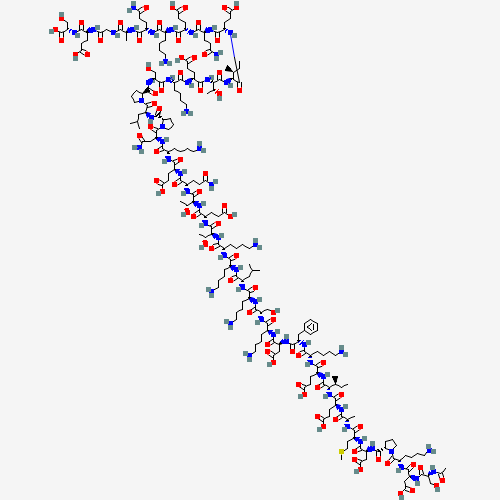
1. The original academic definition: TB-500 = the 7-amino-acid active fragment of Tβ4 (Ac-LKKTETQ, position 17 to 23 of the full molecule). This fragment contains the active actin-binding site and in some studies reproduces the main regenerative effects of the full molecule.
2. Commercial practice: “TB-500” is used as a synonym for the full 43-amino-acid Thymosin β-4. Most peptide suppliers (including Molequa®) sell the full Tβ4 under this name, because it is pharmacologically more relevant and corresponds to the molecule used in clinical trials (REGENERATE-1, TB4-Eye).
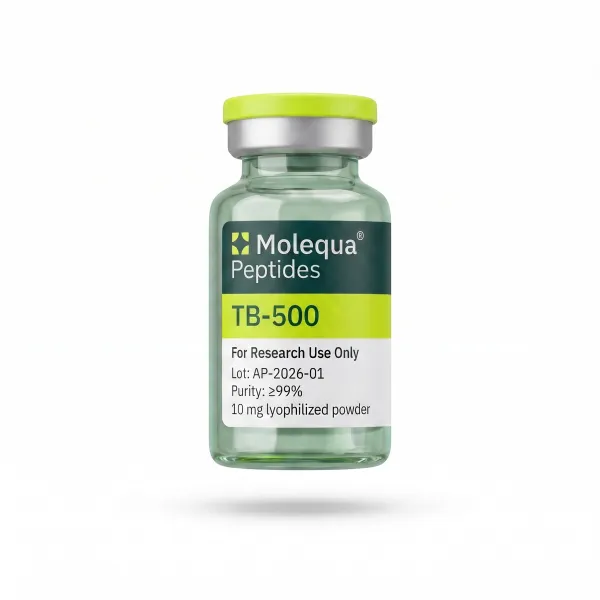
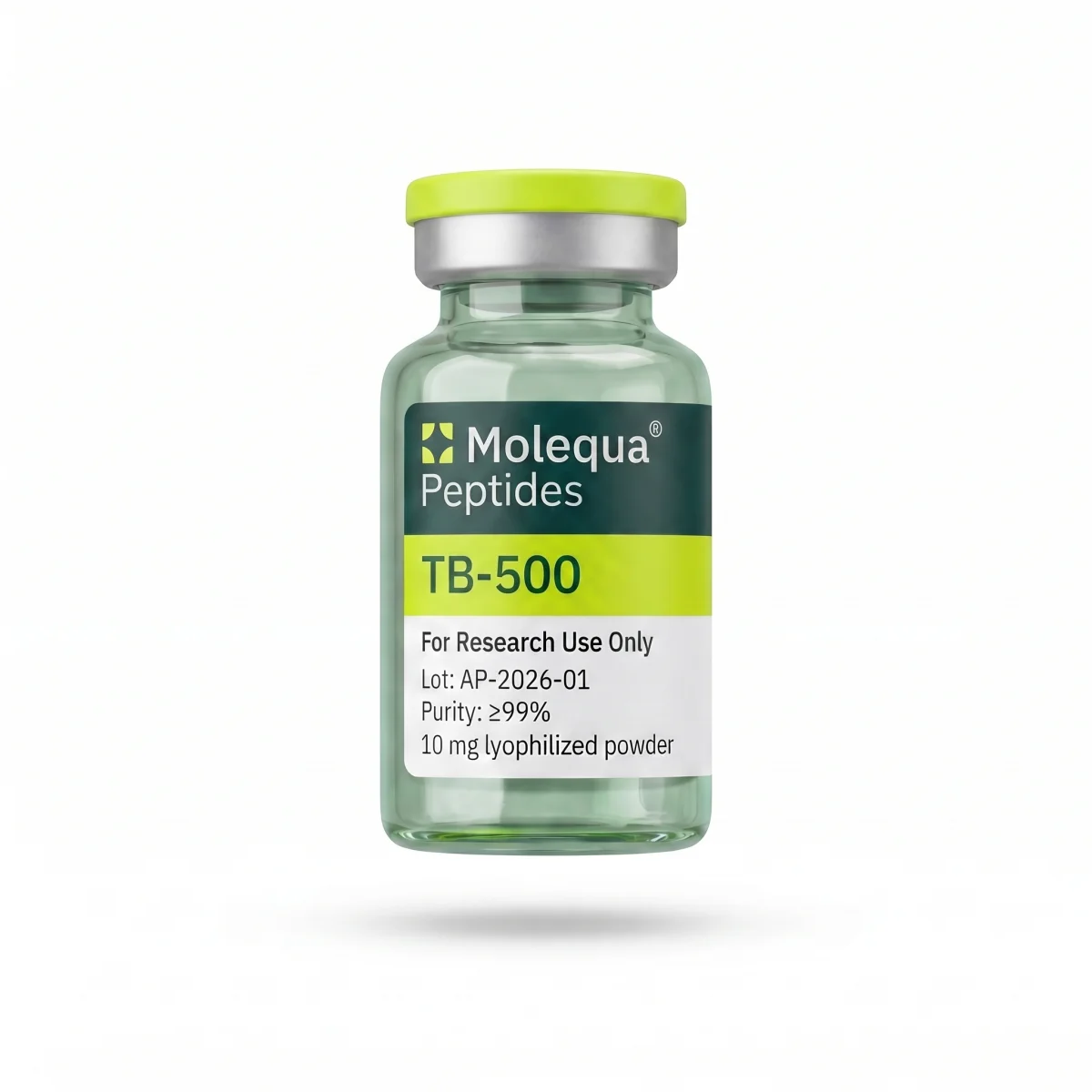
In this product Molequa® supplies the full Thymosin β-4 (43 aa, MW 4963 Da). This is the standard in the research community. If you are looking for the pure 7-amino-acid fragment, contact us directly, we also do custom syntheses.
Mechanism of action, what it does at the cellular level
The main role: actin regulator
Actin is the most important structural protein in the cell. Imagine it as Lego bricks, when they are free, they are small monomers (G-actin). When they join, they form long chains (F-actin) that make up the cellular skeleton (cytoskeleton). This skeleton holds the shape of the cell, but dynamically rearranges itself whenever the cell needs to migrate, divide or change shape.
Tβ4 is the “storage molecule” for G-actin. Imagine it as a shelf in a warehouse of Lego bricks. It holds the monomers ready until the cell receives the signal: “Now! Build!” At that moment Tβ4 releases the G-actin, which joins the F-actin chains, and the cell can migrate or change shape.
This is why Tβ4 has an effect on every process that requires cell movement:
- Wound healing (fibroblasts migrate into the wound)
- Vessel formation (endothelial cells migrate and build new vessels)
- Immunity (macrophages, neutrophils move toward inflammation)
- Embryonic development (cells move to their positions)
- Cardiac healing after infarction (cardiomyocytes + epicardial cells)
Induction of angiogenesis (formation of new vessels)
Tβ4 induces expression of VEGF (Vascular Endothelial Growth Factor), the main growth factor for new vessels. At the same time it mobilizes endothelial progenitor cells (EPCs) from the bone marrow, these are “semi-finished” future endothelial cells that travel via the arteries to sites of damage.
Imagine it like this: when damage occurs somewhere, the tissue sends out an SOS signal. The body responds by calling in two teams of repair workers: residents (local cells) and an external team (EPCs from bone marrow). Tβ4 mobilizes both teams and provides them with the necessary “tools” (actin for migration).
Anti-inflammatory effect via NF-κB
NF-κB (Nuclear Factor kappa B) is the main switch of the inflammatory response in cells. When it is on for too long, chronic inflammation develops that damages tissue instead of healing it. Tβ4 modulates NF-κB (does not fully switch it off!), thereby dampening excess inflammation and protecting cells from secondary damage.
In cardiac models after infarction this effect is critical, most of the heart damage is caused by secondary inflammation, not the infarction itself.
Anti-apoptotic effect
Apoptosis is “programmed cell death”. In damaged tissues even cells that could survive often die, Tβ4 protects them via activation of the integrin-linked kinase (ILK) pathway and stabilization of the mitochondrial membrane.
For the heart after infarction this is again critical, more surviving cardiomyocytes = a smaller scar = better contractile function.
Mobilization of stem cells
Tβ4 chemo-attracts (draws in) stem cells and progenitor cells to sites of damage. In cardiac models (Smart et al., Nature 2007) Tβ4 mobilized epicardial progenitor cells, a population that is normally “dormant” in adults, and stimulated their differentiation into new cardiomyocytes and vascular cells.
This is revolutionary, because the adult heart practically does not regenerate. Tβ4 showed that, potentially, it can.
What this means in practice: TB-500 is not just “passive building material”. It is a multi-functional regulator that simultaneously (1) enables cell movement via actin, (2) draws stem cells to the site of damage, (3) protects existing cells from inflammation and death, and (4) supports the formation of new vessels. That is precisely why it became the second half of the canonical “regenerative combination” with BPC-157.
Researched applications
In the published preclinical and clinical literature the effects of Tβ4 / TB-500 are documented in the following areas:
- Tendon and ligament healing, Achilles tendon, tendinopathy models, combination with BPC-157
- Muscle injuries and regeneration, laceration models, contusions, skeletal muscle
- Cardiac regeneration, animal models of myocardial infarction, clinical trials (REGENERATE-1)
- Skin wound healing, diabetic ulcers, burns, chronic ulcerations
- Ophthalmological applications, dry eye (Tβ4 ophthalmic solution, clinical trials)
- Neurogenesis and nervous tissue regeneration, preclinical models of stroke (CVA)
- Hepatic fibrosis, models of chronic liver injury
- Hair follicles, preclinical models of alopecia
- Pulmonary fibrosis, preclinical models of IPF
Buying TB-500: what to look for
When buying TB-500, the decisive criterion is not the price but the verifiability of quality. A research peptide is only ever as good as its certificate of analysis. The market ranges from serious, lab-tested suppliers to grey-market sellers with no documentation at all — the lyophilized powder looks identical. These five criteria separate them.
1. Certificate of analysis will be supplied with the next batch
HPLC purity shows what proportion of the powder is actually TB-500. Serious suppliers document ≥ 99 % with a chromatogram. “99 % purity” without an attached chromatogram is a claim, not proof.
2. Batch-specific certificate of analysis (CoA)
The most important document. A batch-specific CoA belongs to exactly the batch you receive — with batch number, date and purity value, issued by an independent laboratory (Janoshik and similar are the industry standard). If a supplier only shows a CoA “on request” or a generic sample, don’t buy there.
3. LC-MS identity confirmation
Purity tells you how much of a substance is present; LC-MS tells you which substance it is. Via the molecular mass (4963.4 Da) it confirms this is the correct identity of TB-500, not a cheaper, mislabeled peptide.
4. Origin and EU shipping with traceability
A supplier with an EU warehouse and full batch traceability has the edge over grey imports from Asia: shorter, cooled transport and no customs risk. Molequa® ships from within the EU, typically within 3 to 5 business days — no post-Brexit customs delays.
5. Correct delivery form: lyophilizate
High-quality TB-500 is delivered as a lyophilizate (white powder), not as a pre-mixed solution. Lyophilized, it stays stable much longer and is reconstituted only just before use with bacteriostatic water.
Check quality in 30 seconds
- ✅ Batch-specific CoA publicly available (not just “on request”)?
- ✅ Purity proven with a chromatogram?
- ✅ LC-MS identity confirmed (mass 4963.4 Da)?
- ✅ EU warehouse and batch traceability?
- ✅ Delivered as a lyophilizate with clear storage instructions?
If all five points are met, you are buying verified material. Every Molequa® batch ships with a batch-specific certificate of analysis, and LC-MS confirmation — you can find the current CoA in the Batch test results section below.
Legal notice: TB-500 is a research peptide and not an approved medicine. It is sold exclusively for scientific laboratory research and is not intended for human or animal consumption.
Science & studies
4.1 Key publications
Goldstein A.L., Hannappel E., Sosne G., Kleinman H.K. (2012). Thymosin β4: a multi-functional regenerative peptide. Basic properties and clinical applications. Expert Opin Biol Ther. 12(1):37 to 51. Comprehensive review by the “mother” of the molecule.
Crockford D., Turjman N., Allan C., Angel J. (2010). Thymosin β4: structure, function, and biological properties supporting current and future clinical applications. Ann N Y Acad Sci. 1194:179 to 189. Standard reference review for Tβ4.
Smart N., Risebro C.A., Melville A.A.D., et al. (2007). Thymosin β4 induces adult epicardial progenitor mobilization and neovascularization. Nature. 445(7124):177 to 182. Landmark Nature publication on cardiac regeneration.
Bock-Marquette I., Saxena A., White M.D., DiMaio J.M., Srivastava D. (2004). Thymosin β4 activates integrin-linked kinase and promotes cardiac cell migration, survival and cardiac repair. Nature. 432(7016):466 to 472. Mechanistic Nature publication on the anti-apoptotic effect in the heart.
Ruff D., Crockford D., Girardi G., Zhang Y. (2010). A randomized, placebo-controlled, single and multiple dose study of intravenous thymosin β4 in healthy volunteers. Ann N Y Acad Sci. 1194:223 to 229. Clinical safety data in humans.
Sosne G., Qiu P., Goldstein A.L., Wheater M. (2010). Biological activities of thymosin β4 defined by active sites in short peptide sequences. FASEB J. 24(7):2144 to 2151. Mapping of active sequences within Tβ4, context for the “TB-500 fragment vs full peptide” debate.
4.2 Detailed expandable studies
▸ Study 1: Skin wound healing in mice
Citation: Malinda K.M., Sidhu G.S., Mani H., et al. Thymosin β4 accelerates wound healing. J Invest Dermatol. 1999;113(3):364 to 368.
What they did: A classic wound-healing study. Mice were given standardized skin wounds (4 mm punch biopsy) and Tβ4 was administered either topically (directly onto the wound) or systemically (intraperitoneally). They monitored the rate of wound contraction, re-epithelialization and formation of granulation tissue.
What they found:
- Tβ4 accelerated wound contraction by 42 % vs control
- Re-epithelialization (closure of the surface layer of skin) was faster by 11 days on average
- Histologically: denser capillary network, better collagen organization
- Topical and systemic administration worked comparably
Why it matters: This was one of the first studies to demonstrate Tβ4 effects outside the immune system. It opened a whole wave of wound-healing research and led directly to the development of the TB4-Wound clinical program for diabetic ulcers.
▸ Study 2: Cardiac regeneration after infarction (Nature 2004)
Citation: Bock-Marquette I., Saxena A., White M.D., DiMaio J.M., Srivastava D. Thymosin β4 activates integrin-linked kinase and promotes cardiac cell migration, survival and cardiac repair. Nature. 2004;432(7016):466 to 472.
What they did: A mouse model of myocardial infarction (MI). They ligated a coronary artery, which produced a precisely defined infarction. Half of the mice received Tβ4 systemically (intraperitoneally, 150 µg). They evaluated scar size, contractile heart function (echocardiography) and markers of cardiomyocyte survival.
What they found:
- Tβ4 reduced scar volume by 25 % vs control
- Ejection fraction (a parameter of the heart’s pumping function) was better by 9 percentage points
- Mechanistically: activation of ILK (integrin-linked kinase) → anti-apoptotic signal → fewer cardiomyocytes died after the infarction
- Mobilization of epicardial cells into the infarct area
Why it matters: This is one of the two landmark Nature publications on Tβ4 in cardiology. It opened the concept that the adult heart has regenerative capacity that is merely “dormant”, and that Tβ4 can wake it up. It led directly to the REGENERATE-1 clinical program.
▸ Study 3: Mobilization of epicardial progenitors (Nature 2007)
Citation: Smart N., Risebro C.A., Melville A.A.D., et al. Thymosin β4 induces adult epicardial progenitor mobilization and neovascularization. Nature. 2007;445(7124):177 to 182.
What they did: A continuation of the Bock-Marquette line. A mouse model of infarction, but with detailed tracking of the fate of specific cell populations using genetic labeling (lineage tracing). The question: where do the new cells in the healed heart come from?
What they found:
- Tβ4 mobilized a population of epicardial progenitor cells, cells that are normally in a “quiescent” state in adults
- These cells migrate into the infarct area and differentiate into cardiomyocytes, fibroblasts and vascular smooth muscle cells
- New functional vessels were formed (not only passive capillaries, but full-fledged arterioles)
Why it matters: The second Nature publication that changed the view of the heart. Previously it was believed that cardiomyocytes do not divide in adults. Tβ4 showed a way to bypass this dogma, not via division of existing cells, but via waking dormant progenitors.
▸ Study 4: REGENERATE-1, clinical Phase 2 in cardiology
Citation: Ruff D., Crockford D., Girardi G., Zhang Y. A randomized, placebo-controlled, single and multiple dose study of intravenous thymosin β4 in healthy volunteers. Ann N Y Acad Sci. 2010;1194:223 to 229. (REGENERATE-1 program)
What they did: The first clinical trial of Tβ4 in humans. A combined Phase 1 / Phase 2 study, first safety data in healthy volunteers (n=40), then open-label data in patients after acute myocardial infarction (n=21). Tβ4 was administered intravenously in doses of 42 µg/kg to 1260 µg/kg, both as a single dose and repeatedly.
What they found:
- Favorable safety profile, no serious adverse events, no signals of toxicity
- Plasma half-life of Tβ4 ~2 hours (much longer than that of BPC-157)
- Even the highest dose of 1260 µg/kg was well tolerated
- Preliminary cardiac signals (echocardiography after MI) positive
Why it matters: These are the only published clinical data for the cardiological indication. A full Phase 3 trial was never completed, RegeneRx (the sponsor) ran out of funding. But the safety profile is well characterized and serves as a starting point for the entire research field.
▸ Study 5: Dry eye, TB4-Eye Phase 2
Citation: Sosne G., Dunn S.P., Kim C. Thymosin β4 significantly improves signs and symptoms of severe dry eye in a phase 2 randomized trial. Cornea. 2015;34(5):491 to 496.
What they did: A clinical Phase 2 study with a topical 0.1 % Tβ4 ophthalmic solution in patients with severe dry eye (n=72). Patients applied the solution 4× daily for 28 days. They evaluated objective markers (Schirmer test, tear break-up time, fluorescein staining) and subjective symptoms.
What they found:
- Statistically significant improvement in subjective symptoms of 35 %
- Objective markers of corneal epithelial integrity improved (fluorescein staining −68 %)
- No local or systemic side effects
- The effect persisted 2 weeks after the end of treatment, suggesting a regenerative mechanism rather than symptomatic relief
Why it matters: The second clinical program (TB4-Eye, RegeneRx). It shows that Tβ4 also works locally, not only systemically. For research applications the topical form is interesting in skin models and ophthalmological experiments.
▸ Study 6: Diabetic wounds, preclinical model
Citation: Philp D., Goldstein A.L., Kleinman H.K. Thymosin β4 promotes angiogenesis, wound healing, and hair follicle development. Mech Ageing Dev. 2004;125(2):113 to 115.
What they did: Diabetic mice (the db/db model, genetically deficient in the leptin receptor, they develop obesity, hyperglycemia and impaired wound healing). Standardized skin wounds, Tβ4 administered both locally and systemically.
What they found:
- Diabetic control wounds healed 2× more slowly than in healthy mice
- Tβ4 accelerated healing of diabetic wounds to the level of healthy controls
- Histologically: markedly denser neovascularization in the healing zone
- Bonus finding: stimulation of hair follicle growth around the wound
Why it matters: Diabetic ulcers are a real clinical problem and a common cause of amputations. Tβ4 in this animal model compensated for the diabetic deficit. It led to the development of the TB4-Wound clinical program, which is also in Phase 2.
▸ Study 7: Hepatic fibrosis, models of chronic injury
Citation: Reyes-Gordillo K., Shah R., Popratiloff A., et al. Thymosin-β4 (Tβ4) blunts PDGF-dependent phosphorylation and binding of AKT to actin in hepatic stellate cells. Am J Pathol. 2011;178(5):2100 to 2108.
What they did: An in vitro study on hepatic stellate cells (HSCs), cells that, in chronic liver injury, transform into myofibroblasts and produce scar tissue (= fibrosis). The question: can Tβ4 prevent this process?
What they found:
- Tβ4 inhibited PDGF-induced phosphorylation of AKT in HSCs
- Reduced production of collagen and fibrosis markers by ~50 %
- Mechanistically: Tβ4 sequesters actin, thereby blocking signaling through the AKT-actin complex
Why it matters: It opens applications of Tβ4 beyond acute regeneration, into the area of chronic fibrotic diseases (liver cirrhosis, IPF, cardiac fibrosis). This is a growing research field and Tβ4 is an established player in it.
Storage
Lyophilizate (dry powder before reconstitution)
- 2 to 3 years at −20 °C (freezer)
- 12 to 18 months at 2 to 8 °C (refrigerator), Tβ4 is somewhat more stable than BPC-157
- Up to 30 days at room temperature (up to 25 °C), protect from light and moisture
After reconstitution (peptide in solution with bacteriostatic water)
- Up to 30 days at 2 to 8 °C, protected from light
- After this period degradation products (= broken fragments of the molecule, which do not function) can rise significantly
- Sterile water without preservative shortens stability to 7 to 10 days
Practical storage rules
- Allow the vial to warm to room temperature (15 to 20 min) before opening. Cold vial + warm air = condensation of moisture inside, which disrupts the peptide.
- Do not refreeze after reconstitution, crystallization during freezing/thawing can damage the peptide structure.
- Darkness is your friend, UV light gradually degrades the peptide. Store in the original vial or box.
- Do not shake! Mechanical stress can denature the peptide (= disrupt its three-dimensional structure). Always swirl gently only.
- Tβ4 has more amino acids than BPC-157, a larger molecule means higher sensitivity to denaturation. Be even more careful during reconstitution.
Stacking tips, frequently combined peptides
In the research literature TB-500 is often combined with other peptides. Below are the three most common combinations and why they make sense.
BPC-157, the canonical “regenerative combination”
The most classical combination in the research world. BPC-157 and TB-500 act complementarily, not competitively. While BPC-157 dominates in angiogenesis via VEGFR2 and in fibroblast migration, TB-500 dominates in actin polymerization and mobilization of stem cells.
In practice this means: BPC-157 provides the vascular network and coordination of healing, TB-500 supplies the mobile material for actual tissue restoration. For soft tissue research (tendons, ligaments, muscles) this combination is considered the gold standard. Sikiric’s group and independent studies point to their synergy in complex musculoskeletal injuries.
GHK-Cu (copper peptide)
If the research is focused on deeper connective tissue regeneration (chronic tendinopathies, thicker scars, post-operative models), GHK-Cu brings the collagen component. TB-500 provides cell movement to the site, GHK-Cu gives them the signal to produce collagen I and III.
The triple combination BPC-157 + TB-500 + GHK-Cu is sometimes called in the community the “regeneration orchestra”, each peptide plays a different role but together they produce a complex symphony.
Ipamorelin + CJC-1295
For research focused on overall regeneration with growth hormone support. The GH combination raises IGF-1 (anabolic signaling, “tissue, grow and renew”), TB-500 provides cell migration and survival. In the literature this combination is described in models of sarcopenia (loss of muscle mass in seniors) and post-training recovery.
Key scientific figures and citations
“Thymosin β4 is the most abundant member of the β-thymosin family and is found in virtually all mammalian cell types. Its principal molecular function is sequestration of monomeric G-actin, but it also possesses tissue-protective and pro-angiogenic properties in multiple animal injury models.”
Goldstein AL. et al. (2012), Annals of the New York Academy of Sciences 1269, PubMed 23045980
Statistics from preclinical literature
- TB-500 is a 7-amino-acid fragment (sequence 17-23) of the larger protein Thymosin β4 (43 aa), first isolated by Allan Goldstein from calf thymus in 1981
- Molecular weight of the active fragment (Ac-LKKTETQ): ~889 Da
- Mechanism: G-actin sequestration (Kd ≈ 0.7 μM), modulation of cytoskeletal dynamics, angiogenesis via VEGF-A upregulation
- Clinical testing of full-length Thymosin β4: completed Phase 2 trials for dry eye syndrome (Tβ4 eye drops, RegeneRx Biopharmaceuticals)
- WADA Prohibited List: Thymosin β4 fragments classified since 2011 as anabolic agents (category S2)
- Animal models: >100 publications investigating cardio-protective, wound-healing and neuro-regenerative effects
Reference sources (PubMed)
- Goldstein AL., Hannappel E., Kleinman HK. (2005). “Thymosin β4: actin-sequestering protein moonlights to repair injured tissues.” Trends Mol Med 11(9):421–429. PubMed 16099219
- Smart N. et al. (2007). “Thymosin β4 induces adult epicardial progenitor mobilization and neovascularization.” Nature 445(7124):177–182. PubMed 17108969
- Bock-Marquette I. et al. (2004). “Thymosin β4 activates integrin-linked kinase and promotes cardiac cell migration, survival and cardiac repair.” Nature 432(7016):466–472. PubMed 15565145
Regulatory status: TB-500 / Thymosin β4 (17-23) is not an approved human medicinal product. Full-length Thymosin β4 (RGN-352) completed Phase 2 but did not receive FDA/EMA approval. The product is sold strictly for laboratory scientific research (RUO).
Frequently asked questions about TB-500
These questions address the most common research-context searches about TB-500. For full technical documentation see the sections above.
What is TB-500 and what is it used for in research?
TB-500 is the 7-amino-acid active fragment (17-23) of natural Thymosin β-4 (43 AA, 4963 Da). In research it sequesters G-actin, activates the Akt/ILK pathway and mobilises stem cells to injury sites. It is studied in animal models of muscle, cardiac and skin regeneration. WADA added it to the Prohibited List in 2011 (category S0).
What dose of TB-500 do scientists use in animal models?
Most common experimental preclinical rat dose: 6 mg/kg weekly intraperitoneally (Goldstein, Smart). Clinical pilot cardiac regeneration studies tested single boluses of 42 mg subcutaneously. For research the standard concentration is 5 mg/ml.
What is the difference between TB-500 and BPC-157?
TB-500 and BPC-157 are complementary regenerative peptides, TB-500 targets G-actin sequestration and stem-cell mobilisation (muscle and cardiac regeneration), whereas BPC-157 targets VEGFR2 angiogenesis and FAK migration (tendons, GI). TB-500 requires injection, BPC-157 also works orally. They are often combined in complex healing models.
Is TB-500 an approved medicine or research substance?
TB-500 is not an approved human medicine in any regulatory zone (FDA, EMA, or any national medicines agency). WADA Prohibited List 2011, category S0 (Non-Approved Substances). Clinical development of natural Tβ4 (RegeneRx) in corneal and skin indications did not reach approval. The product is sold strictly for laboratory scientific research (RUO).
How is TB-500 stored?
Lyophilised TB-500 should be stored at −20 °C protected from light, stability 2 to 3 years; at 2 to 8 °C 12 months. After reconstitution the solution is stable for 28 days at 2 to 8 °C.
What is the half-life of TB-500 and how often is it administered in studies?
TB-500 has a longer plasma half-life than BPC-157 (~2 hours subcutaneously), the G-actin sequestration effect persists for days due to stable binding. In preclinical protocols it is administered weekly (loading phase twice weekly for 2 weeks, then maintenance once weekly).
Where to buy TB-500 in the EU for scientific research?
TB-500 for scientific research in the EU is offered by Molequa® with FedEx delivery in 3 to 5 business days across the EU. The product ships lyophilised with a Certificate of Analysis (COA). The product is strictly for laboratory scientific research (RUO).