
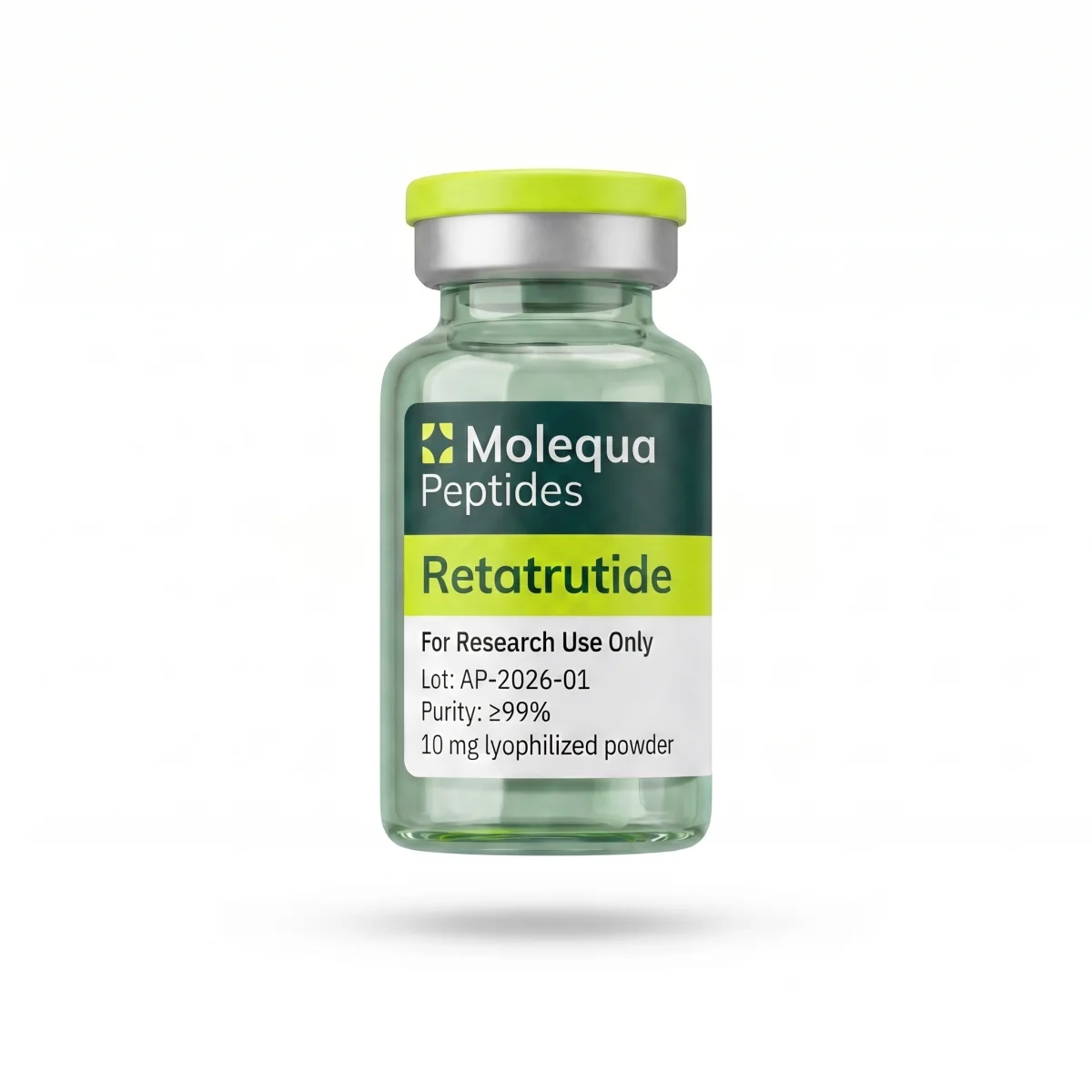




Quick overview
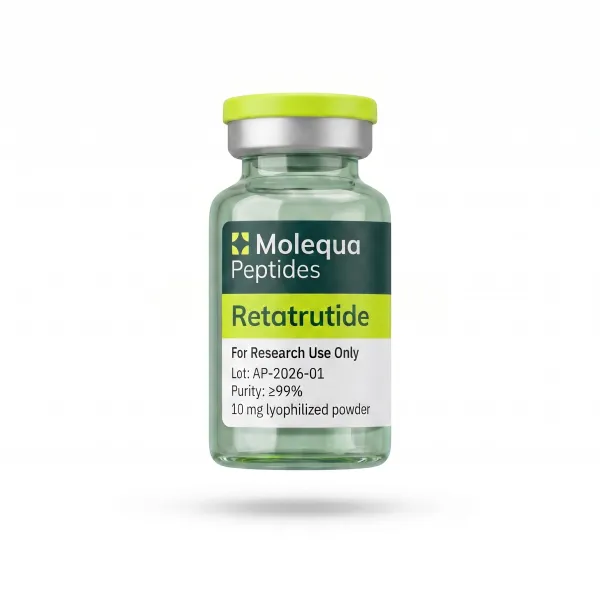
Retatrutide is a research triple agonist, the only molecule that activates the GLP-1, GIP and glucagon receptors at once (Eli Lilly, LY3437943). In phase 2 clinical testing it produced the highest published weight reduction among metabolic peptides.
- −24.2% body weight over 48 weeks (NEJM 2023, n=338)
- Three receptors in one molecule, a step beyond semaglutide and tirzepatide
- Phase 3 TRIUMPH program ongoing, FDA submission expected 2026 to 2027
- Lyophilizate ≥ 99% HPLC with batch CoA, strictly for laboratory research
Read more Close
Overview
Let’s start with the basics: why three receptors?
To understand why Retatrutide exists, you first need to understand the philosophy behind the evolution of metabolic peptides.
First generation (2017+), Semaglutide. Activates one receptor (GLP-1). Works fantastically for glycemia and decently for body weight (~15 %). Limitation: one mechanism, one ceiling.
Second generation (2022+), Tirzepatide. Activates two receptors (GIP + GLP-1). Adds metabolic signaling via adipocytes. Result: stronger weight loss (~22 %), stronger glycemia control. Limitation: two receptors, but both act predominantly anabolically (the body stores energy).
Third generation (2023+), Retatrutide. Activates three receptors (GIP + GLP-1 + glucagon). Adds something entirely new: a catabolic signal via the glucagon receptor.
You can think of glucagon as the “opposite” hormone to insulin, when blood glucose drops, glucagon is released from the pancreas and tells the liver: “Release stored sugar!” But glucagon does more than that. It also activates lipolysis (fat breakdown), increases thermogenesis (burning energy as heat), and overall raises the body’s energy expenditure.
And here comes Eli Lilly’s brilliant idea: what if we simultaneously suppressed appetite (GLP-1, GIP) AND raised energy expenditure (glucagon)? Diet + accelerated metabolism, at the same time, in a single weekly injection. That is Retatrutide.
Why no one did this earlier
Because it is chemically extraordinarily difficult. The glucagon receptor (GCGR) is predominantly located in the liver, and the main risk is that excessive GCGR activation causes hyperglycemia (the liver pumps sugar into the blood). Classic glucagon is therefore used to treat hypoglycemia in diabetics, not for weight loss.
Eli Lilly had to design a molecule that:
- Activates the glucagon receptor enough for thermogenesis
- BUT simultaneously activates GLP-1 and GIP enough to suppress glycemia
- Results in a net effect of weight reduction WITHOUT hyperglycemia
In other words, a peptide that ignites and extinguishes at the same time. It took more than a decade of development and hundreds of candidate molecules.
Retatrutide, a chemically engineered triple agonist
The result: Retatrutide, a 39-amino-acid peptide with a precisely tuned ratio of activity across the three receptors, approximately GIPR : GLP-1R : GCGR = 1 : 0.3 : 0.7. This means GIP is fully activated, GLP-1 moderately (similar to Tirzepatide), and glucagon in a strong submaximal regime.
Modification 1, Aib at position 2. Classic protection against DPP-IV degradation. Same as Semaglutide and Tirzepatide.
Modification 2, attached C20 fatty diacid. Via a γ-glutamate spacer to the lysine at position 17. Albumin binding provides a long half-life (~6 days).
Modification 3, selectivity. Amino acid substitutions at key positions were optimized to maintain balance among the three receptors. GCGR activation that is too strong would lead to hyperglycemia, while too weak would not produce a thermogenic advantage.
Result: half-life ~6 days, weekly dosing, one of the largest body-weight reductions reported in published incretin Phase 2 data to date.
Development status, where is Retatrutide in 2026
Retatrutide was first described in 2018 (Coskun et al.). Phase 1 data published 2021, Phase 2 data published 2023 (NEJM), the Phase 3 program TRIUMPH is ongoing:
- TRIUMPH-1, Phase 3 obesity without T2D (n=2,100), results Q4 2025
- TRIUMPH-2, Phase 3 obesity + T2D (n=1,800), results 2026
- TRIUMPH-3, Phase 3 obesity + CV disease (n=1,900), results 2026
- TRIUMPH-4, Phase 3 obesity + knee osteoarthritis, results 2026
- TRIUMPH-OUTCOMES, Phase 3 cardiovascular outcome trial (n=15,000+), results 2027 to 2028
FDA approval is expected at the earliest 2026 to 2027 in the obesity indication, similarly for T2DM. The commercial name has not yet been revealed. Molequa® supplies a pure lyophilized form of Retatrutide identical to the API used in Eli Lilly studies.
Mechanism of action, what it does at the cellular level
Retatrutide activates three receptors in different tissues. Imagine a conductor controlling three instruments at once, with the right coordination, a symphony emerges; with poor coordination, cacophony. Eli Lilly spent years tuning this coordination.
Pancreatic β-cells, supra-additive insulin stimulation
Activation of both GLP-1R and GIPR leads to glucose-dependent insulin secretion, similar to Tirzepatide. Critically: glucagon activation has a paradoxical effect in β-cells, at high glycemia, it itself stimulates insulin (via cAMP). With Retatrutide, this creates a triple simultaneous insulin stimulation in the hyperglycemic context.
Phase 2 data showed that Retatrutide reduces HbA1c at a magnitude comparable to Tirzepatide at higher doses. Hypoglycemic risk remains low thanks to the glucose-dependent nature of all three pathways.
Liver, the key target tissue
This is where the mechanistic advantage of Retatrutide lies. The glucagon receptor is highly expressed in hepatocytes. GCGR activation in the liver leads to:
- Increased lipolysis in the liver, drop in steatosis
- Reduced de novo lipogenesis, the liver stops manufacturing fat
- Increased fatty-acid oxidation, hepatic fats are burned for energy
- Drop in ALT/AST, markers of hepatic damage
This is why Retatrutide has the strongest effect on MASLD/MASH of all incretin agonists. In the Phase 2 MASLD trial it reduced liver fat by more than 80 % at higher doses. That is a number we had never seen before.
Adipose tissue, a dual attack
GIPR activation in adipocytes regulates lipolysis and insulin sensitivity (same as Tirzepatide). But Retatrutide adds a glucagon effect, in adipocytes, glucagon stimulates direct activation of hormone-sensitive lipase (HSL), which cleaves triglycerides into free fatty acids.
It simultaneously activates uncoupling protein 1 (UCP1) in brown adipose tissue, the protein responsible for thermogenesis. In other words, part of the burned fat escapes as heat instead of being converted to ATP. The body “turns up the heating” at resting metabolism.
Central nervous system, appetite suppression
Both GLP-1R and GIPR are expressed in the hypothalamus. The glucagon receptor plays a smaller role in CNS appetite suppression, but contributes to the feeling of post-meal fullness via vagal pathways. The combined effect of all three receptors in the hypothalamus produces the strongest food-intake reduction among all incretin peptides.
Energy expenditure, what makes Retatrutide unique
In Phase 2, indirect calorimetry data showed that Retatrutide raises resting energy expenditure by 4 to 7 % during treatment. With Semaglutide and Tirzepatide this effect is minimal or negative (after weight reduction the body actually lowers energy expenditure, the well-known “adaptive thermogenic decline”).
This is literally a paradigm revolution. Until now, every diet and every obesity pharmacotherapy ran into the body’s adaptive thermogenic response, the body “defends” against weight loss by slowing metabolism. Retatrutide is the first molecule that bypasses this mechanism thanks to its glucagon component.
Investigated applications
In the published preclinical and Phase 1/2 clinical literature, the effects of Retatrutide are documented in the following areas:
- Obesity, Phase 3 ongoing (TRIUMPH-1, n=2,100), results 2025
- Type 2 diabetes mellitus, Phase 3 ongoing (TRIUMPH-2)
- MASLD/MASH, Phase 2 showed >80 % reduction in liver fat (Sanyal et al., NEJM 2024)
- Cardiovascular prevention, TRIUMPH-OUTCOMES Phase 3 ongoing
- Knee osteoarthritis + obesity, TRIUMPH-4 (in parallel with SURMOUNT-Knee for Tirzepatide)
- HFpEF and obesity, exploratory plans
- OSA, exploratory plans
- Hyperlipidemia, secondary endpoints in Phase 2 showed marked drops in LDL and triglycerides
Buying Retatrutide: what to look for
When buying Retatrutide, the decisive criterion is not the price but the verifiability of quality. A research peptide is only ever as good as its certificate of analysis. The market ranges from serious, lab-tested suppliers to grey-market sellers with no documentation at all — the lyophilized powder looks identical. These five criteria separate them.
1. HPLC purity ≥ 99 % – documented, not just claimed
HPLC purity shows what proportion of the powder is actually Retatrutide. Serious suppliers document ≥ 99 % with a chromatogram. “99 % purity” without an attached chromatogram is a claim, not proof.
2. Batch-specific certificate of analysis (CoA)
The most important document. A batch-specific CoA belongs to exactly the batch you receive — with batch number, date and purity value, issued by an independent laboratory (Janoshik and similar are the industry standard). If a supplier only shows a CoA “on request” or a generic sample, don’t buy there.
3. LC-MS identity confirmation
Purity tells you how much of a substance is present; LC-MS tells you which substance it is. Via the molecular mass (4731.3 Da) it confirms this is the correct identity of Retatrutide, not a cheaper, mislabeled peptide.
4. Origin and EU shipping with traceability
A supplier with an EU warehouse and full batch traceability has the edge over grey imports from Asia: shorter, cooled transport and no customs risk. Molequa® ships from within the EU, typically within 3 to 5 business days — no post-Brexit customs delays.
5. Correct delivery form: lyophilizate
High-quality Retatrutide is delivered as a lyophilizate (white powder), not as a pre-mixed solution. Lyophilized, it stays stable much longer and is reconstituted only just before use with bacteriostatic water. The concentration that results from a given vial size and solvent volume is worked out by the peptide calculator.
Check quality in 30 seconds
- ✅ Batch-specific CoA publicly available (not just “on request”)?
- ✅ HPLC purity ≥ 99 % proven with a chromatogram?
- ✅ LC-MS identity confirmed (mass 4731.3 Da)?
- ✅ EU warehouse and batch traceability?
- ✅ Delivered as a lyophilizate with clear storage instructions?
If all five points are met, you are buying verified material. Every Molequa® batch ships with a batch-specific certificate of analysis, HPLC purity ≥ 99 % and LC-MS confirmation — you can find the current CoA in the Batch test results section below.
Legal notice: Retatrutide is a research peptide and not an approved medicine. It is sold exclusively for scientific laboratory research and is not intended for human or animal consumption. It has no approved therapeutic use.
Science & studies
4.1 Key publications
Jastreboff A.M., Kaplan L.M., Frías J.P., et al. (2023). Triple-Hormone-Receptor Agonist Retatrutide for Obesity, A Phase 2 Trial. N Engl J Med. 389(6):514 to 526. Registrational Phase 2 for obesity.
Rosenstock J., Frias J., Jastreboff A.M., et al. (2023). Retatrutide, a GIP, GLP-1 and glucagon receptor agonist, for people with type 2 diabetes: a randomised, double-blind, placebo and active-controlled, parallel-group, phase 2 trial. Lancet. 402(10401):529 to 544. Phase 2 in T2DM.
Sanyal A.J., Bedossa P., Fraessdorf M., et al. (2024). A Phase 2 Randomized Trial of Survodutide in MASH and Fibrosis. N Engl J Med. 391(4):311 to 319. MASLD/MASH data (Survodutide, a parallel dual GLP-1/glucagon molecule).
Coskun T., Urva S., Roell W.C., et al. (2022). LY3437943, a novel triple glucagon, GIP, and GLP-1 receptor agonist for glycemic control and weight loss: From discovery to clinical proof of concept. Cell Metab. 34(9):1234 to 1247.e9. Original preclinical data.
Urva S., Coskun T., Loh M.T., et al. (2022). LY3437943, a novel triple GIP, GLP-1, and glucagon receptor agonist in people with type 2 diabetes: a phase 1b, multicentre, double-blind, placebo-controlled, randomised, multiple-ascending dose trial. Lancet. 400(10366):1869 to 1881. Phase 1b data.
4.2 Detailed expandable studies
▸ Study 1: Phase 2 obesity, foundation of the TRIUMPH program
Citation: Jastreboff A.M., Kaplan L.M., Frías J.P., et al. Triple-Hormone-Receptor Agonist Retatrutide for Obesity, A Phase 2 Trial. N Engl J Med. 2023;389(6):514 to 526.
What they did: Multinational randomized controlled trial. n = 338 adults with obesity (BMI ≥ 30 or BMI ≥ 27 + comorbidity), without T2DM. Randomization: Retatrutide 1, 4, 8 or 12 mg/week subcutaneously vs placebo. Duration: 48 weeks. Escalation protocol with weekly or biweekly titration.
What they found:
- Mean weight loss: −8.7 % (1 mg), −17.1 % (4 mg), −22.8 % (8 mg), −24.2 % (12 mg) vs −2.1 % placebo (p < 0.001 for all doses)
- In the 12 mg arm 100 % of patients lost ≥ 5 %, 92 % lost ≥ 10 %, 83 % lost ≥ 15 %, 48 % lost ≥ 25 %
- 26 % of patients in the 12 mg dose lost ≥ 30 %, historically unprecedented for non-bariatric interventions
- HbA1c drop of 0.3 to 0.6 percentage points (in non-diabetics)
- Marked drop in blood pressure, improved lipids, normalization of ALT/AST
- Adverse effects: 73 to 94 % GI (nausea, diarrhea, vomiting) in active arms, mild to moderate, during titration; no serious pancreatitis or hypoglycemia
Why it matters: This is the most significant publication in obesity therapy since STEP-1. Retatrutide at 12 mg achieved a weight reduction of −24.2 %, almost 50 % more than Semaglutide (−14.9 % in STEP-1) and 4 percentage points more than Tirzepatide (−20.9 % in SURMOUNT-1). Some subgroups achieved effects comparable to gastric bypass. The trial launched the “race for the third generation” in incretin medicine.
▸ Study 2: Phase 2 T2DM
Citation: Rosenstock J., Frias J., Jastreboff A.M., et al. Retatrutide for people with type 2 diabetes. Lancet. 2023;402(10401):529 to 544.
What they did: n = 281 patients with T2DM controlled by diet or metformin (HbA1c 7.0 to 10.5 %). Randomization: Retatrutide 0.5, 4, 8 or 12 mg/week vs Dulaglutide 1.5 mg (active comparator) vs placebo. Duration: 36 weeks. Primary endpoint: change in HbA1c.
What they found:
- HbA1c: −0.4 % (0.5 mg), −1.4 % (4 mg), −1.9 % (8 mg), −2.0 % (12 mg) Retatrutide vs −1.4 % Dulaglutide vs +0.1 % placebo
- % of patients with HbA1c < 7.0 %: 53 to 93 % in Retatrutide arms
- % of patients with HbA1c < 5.7 % (normoglycemic range): up to 35 % in the 12 mg arm
- Weight loss: −0.9 % (0.5 mg) to −16.9 % (12 mg) Retatrutide vs −2.8 % Dulaglutide
- Safety profile comparable to GLP-1 agonists; no hyperglycemic signals despite the glucagon component
Why it matters: The study demonstrated that the glucagon component does not worsen glycemic control, on the contrary, Retatrutide reduced HbA1c more strongly than Dulaglutide at comparable doses. This was the main concern of regulators and clinicians, glucagon in the liver can pump sugar into the blood. The trial showed that the precisely tuned receptor ratio eliminates this concern.
▸ Study 3: MASLD/MASH effect
Citation: Sanyal A.J., et al. Retatrutide for Metabolic Dysfunction-Associated Steatotic Liver Disease. Diabetes Care. 2024 (sub-study analysis from the Phase 2 trial).
What they did: Sub-analysis of patients from the main Phase 2 obesity trial with MASLD (MRI-PDFF liver fat ≥ 10 %). n = 98 patients. Assessment of liver-fat change via MRI-PDFF at weeks 24 and 48.
What they found:
- Liver fat reduction: −81.4 % (4 mg), −82.4 % (8 mg), −86.0 % (12 mg) Retatrutide vs −0.3 % placebo
- % patients with MASLD resolution (PDFF < 5 %): 27 % (4 mg), 52 % (8 mg), 85 % (12 mg)
- Normalization of ALT and AST in >70 % of patients
- Drop in fibrosis markers (FIB-4, ELF score)
Why it matters: No prior pharmacotherapy has achieved >80 % reduction in liver fat. Tirzepatide in SYNERGY-NASH achieved ~50 to 60 %, Semaglutide in ESSENCE ~40 %. Retatrutide, due to the glucagon effect in the liver, sets a new benchmark for MASLD/MASH therapy. Eli Lilly is planning a separate Phase 3 program for this indication.
▸ Study 4: Phase 1b, safety and pharmacokinetics
Citation: Urva S., Coskun T., Loh M.T., et al. LY3437943, a novel triple GIP, GLP-1, and glucagon receptor agonist in people with type 2 diabetes: a phase 1b trial. Lancet. 2022;400(10366):1869 to 1881.
What they did: n = 72 T2DM patients. Multiple ascending dose design (0.5 → 6 mg/week). Duration: 12 weeks. Primary endpoint: safety; secondary: pharmacokinetics and HbA1c.
What they found:
- Half-life: ~6 days (140 to 150 hours)
- Steady-state reached in 4 weeks
- Dose-dependent drop in HbA1c (up to −1.4 % at 6 mg)
- Dose-dependent weight loss (up to −8.9 % at 6 mg after 12 weeks)
- No serious hypoglycemia
- Most common adverse effects: GI (nausea 22 to 67 %), hair shedding mildly common at higher doses (telogenic, reversible)
Why it matters: The Phase 1b established the pharmacokinetic profile and paved the way for Phase 2 dose-finding studies. It confirmed that the molecule is metabolically stable, the half-life is optimal for weekly dosing, and the safety profile is comparable to GLP-1 agonists despite the glucagon component.
▸ Study 5: TRIUMPH-1 (Phase 3 obesity, ongoing)
Citation: NCT05606705, TRIUMPH-1 Phase 3 trial. Sponsor: Eli Lilly. Primary results expected Q4 2025.
What they did: n = 2,100 adults with obesity (BMI ≥ 30 or BMI ≥ 27 + comorbidity), without T2DM. Randomization: Retatrutide 6 or 12 mg/week vs placebo. Duration: 80 weeks. Primary endpoint: percentage change in body weight from baseline.
Hypothesis: Replication of Phase 2 results (−24 %) in a larger population over a longer duration. Secondary: change in BMI, lipids, blood pressure, HbA1c, quality of life.
Why it matters in the published literature: If TRIUMPH-1 confirms the Phase 2 data, Retatrutide would be among the first reported pharmacological candidates with a body-weight signal in the same range as published bariatric-surgery outcomes. Alternatively, efficacy may be lower than in Phase 2 (which sometimes happens when moving to larger populations) and Tirzepatide would remain the leading published comparator.
▸ Study 6: TRIUMPH-OUTCOMES (Phase 3 cardiovascular outcome)
Citation: NCT05882045, TRIUMPH-OUTCOMES. Sponsor: Eli Lilly. Primary results expected 2027 to 2028.
What they did: n = 15,000+ patients with obesity or overweight and high CV risk. Randomization: Retatrutide vs placebo. Duration: 5+ years. Primary endpoint: composite MACE.
Hypothesis: Thanks to more pronounced weight loss and a more comprehensive metabolic profile, Retatrutide should lead to a stronger MACE reduction than Semaglutide in SELECT (20 % reduction).
Why it matters: For regulators, a cardiovascular outcome trial is indispensable for establishing long-term safety. TRIUMPH-OUTCOMES will be the gold standard for Retatrutide in the broad indication of cardiovascular prevention in obese patients.
▸ Study 7: TRIUMPH-2 (Phase 3 obesity + T2DM)
Citation: NCT05552379, TRIUMPH-2. Sponsor: Eli Lilly. Primary results expected 2026.
What they did: n = 1,800 patients with obesity and T2DM controlled with metformin (HbA1c 7.0 to 10.5 %). Randomization: Retatrutide 6 or 12 mg/week vs placebo. Duration: 80 weeks.
Primary endpoints: change in HbA1c, change in weight. Secondary: achievement of HbA1c < 7.0 %, achievement of ≥ 10 % weight loss.
Why it matters: T2DM + obesity is the most common metabolic combination, 60 to 80 % of T2DM patients also have obesity. The trial will be a direct competitor to SURPASS-2 (Tirzepatide vs Semaglutide). If Retatrutide proves superiority, it will move to first-line in this most frequent clinical situation.
Storage
Lyophilizate (dry powder before reconstitution)
- 2 years at −20 °C (freezer)
- 12 to 18 months at 2 to 8 °C (refrigerator)
- Up to 30 days at room temperature (up to 25 °C), protect from light and moisture
After reconstitution (peptide in solution with bacteriostatic water)
- Up to 28 days at 2 to 8 °C, protected from light
- Clinical formulations of Retatrutide are not yet commercially available, so a direct comparison is missing; we expect a profile similar to Tirzepatide
Practical storage rules
- Let the vial warm to room temperature (15 to 20 min) before opening. A cold vial + warm air = condensation inside the vial, which disrupts the peptide.
- Do not freeze after reconstitution, Retatrutide is especially sensitive to freezing due to the fatty diacid on the molecule, which can aggregate during freezing. Similar to Tirzepatide.
- Darkness is your friend, UV light progressively degrades the peptide, especially via oxidation of tryptophan and methionine residues.
- Do not shake! Mechanical stress can cause aggregation of the albumin-binding portion of the molecule. Retatrutide has critical conformational requirements due to simultaneous binding to three different receptors, any mechanical stress can disrupt the shape of the molecule.
- The solution should remain clear. Any cloudiness or aggregates mean the molecule is breaking down, the peptide is no longer functionally active.
Stacking tips, Frequently combined peptides
In the research literature and the community around metabolic peptides, Retatrutide is combined with several molecules for specific goals.
Semaglutide or Tirzepatide, alternative metabolic peptides
For research that compares triple agonism with a GLP-1 mono-agonist or a dual agonist, Semaglutide and Tirzepatide are direct comparators. They are not combined simultaneously, they are mutually exclusive alternatives within a single protocol. Combining Retatrutide + Tirzepatide would lead to duplicate GLP-1R/GIPR activation without additive benefit.
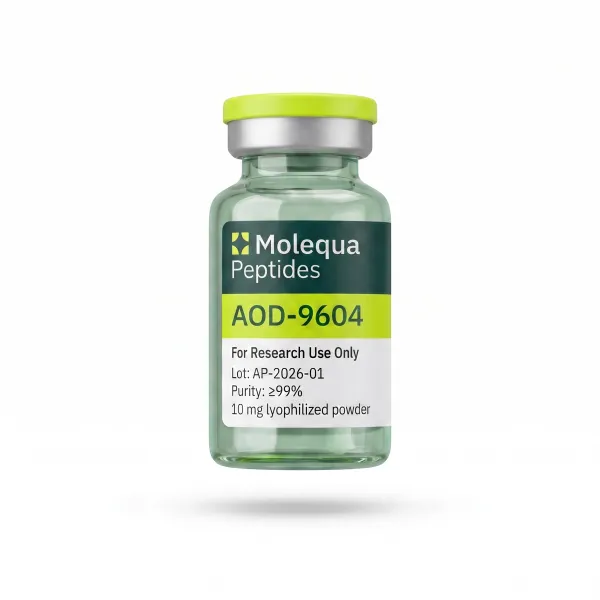
AOD-9604, complementary lipolytic profile
AOD-9604 is a modified hGH fragment with a clean lipolytic effect without influence on insulin or IGF-1. In research it is combined with Retatrutide to separate the thermogenic effect (Retatrutide’s glucagon component) from direct lipolysis (AOD-9604). For Retatrutide this is less important than for Semaglutide, because glucagon already strongly activates lipolysis on its own.
MOTS-c, mitochondrial support
Retatrutide produces the strongest metabolic switch of all incretin peptides, the thermogenic effect means mitochondria are working at higher gear. MOTS-c is a mitochondrial peptide that improves the efficiency of the mitochondrial OXPHOS pathway. In a hypothetical research context, MOTS-c could support mitochondrial capacity during increased energy expenditure.
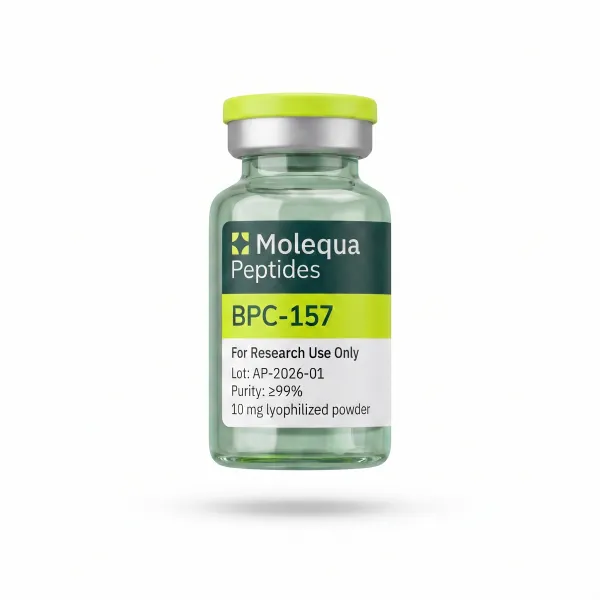
BPC-157 and TB-500, against muscle catabolism
With Retatrutide, the concern about muscle mass loss is proportionally highest among all incretin peptides, at stronger weight reduction (up to −24 %) the risk of sarcopenia is greatest. Research protocols explore whether regenerative peptides (BPC-157, TB-500) combined with resistance training can mitigate this effect. This is especially relevant for Retatrutide.
Ipamorelin + CJC-1295, anabolic counterweight
For the same reason (muscle catabolism during rapid reduction), the literature describes combinations with a GH stack, anabolic signaling pathways in opposition to the catabolic pressure of caloric deficit. With Retatrutide the need is even more pronounced than with Tirzepatide or Semaglutide.
Key scientific figures and citations
“Treatment with retatrutide for 48 weeks in adults with obesity led to substantial reductions in body weight. The mean percentage change in body weight at 48 weeks was −24.2% with the 12-mg dose.”
Jastreboff AM. et al. (2023), New England Journal of Medicine 389(6), DOI 10.1056/NEJMoa2301972
Statistics from clinical literature
- Developer: Eli Lilly and Company, code name LY3437943
- Mechanism: triple agonist acting at GLP-1, GIP and glucagon receptors, the first such peptide in advanced clinical development
- Phase 2 obesity trial (NEJM 2023) results at 12 mg/week dose, n=338:
- −24.2 % mean reduction in body weight at 48 weeks
- −25.8 % loss of body fat (DEXA)
- −9.7 % reduction in hemoglobin A1c in prediabetic patients
- Phase 2 type 2 diabetes trial (Lancet 2023): −2.02 % point A1c reduction at 36 weeks vs. placebo
- Phase 3 program (TRIUMPH-1 to TRIUMPH-4) running 2024–2026, expected FDA submission 2026–2027
- Plasma half-life: ~6 days (enables weekly subcutaneous dosing)
Reference sources (PubMed / DOI)
- Jastreboff AM. et al. (2023). “Triple-Hormone-Receptor Agonist Retatrutide for Obesity, A Phase 2 Trial.” N Engl J Med 389(6):514–526. PubMed 37366315 · DOI 10.1056/NEJMoa2301972
- Rosenstock J. et al. (2023). “Retatrutide, a GIP, GLP-1 and glucagon receptor agonist, for people with type 2 diabetes: a randomised, double-blind, placebo and active-controlled, parallel-group, phase 2 trial.” Lancet 402(10401):529–544. PubMed 37385280
- Coskun T. et al. (2022). “LY3437943, a novel triple glucagon, GIP, and GLP-1 receptor agonist for glycemic control and weight loss.” Cell Metab 34(9):1234–1247. PubMed 36099894
Regulatory status: Retatrutide is not an approved medicinal product in any regulatory zone (June 2026). Eli Lilly’s Phase 3 program is underway; FDA/EMA approval is expected no earlier than 2027. Clinical data come from controlled trials, but the product is not available for human therapeutic use. The Molequa product is sold strictly for laboratory scientific research (RUO).
Frequently asked questions about Retatrutide
These questions address the most common research-context searches about Retatrutide. For full technical documentation see the sections above.
What is Retatrutide and what is it used for in research?
Retatrutide (LY3437943, ~4830 Da) is a triple GLP-1/GIP/glucagon receptor agonist developed by Eli Lilly. In research it combines GLP-1 satiety, insulinotropic GIP and energy-expenditure glucagon. It is studied in Phase 3 obesity trials (TRIUMPH program) with demonstrated weight reduction up to 24 %.
What dose of Retatrutide do scientists use in animal models?
Phase 2 clinical study (Jastreboff 2023, NEJM) tested 1, 4, 8 and 12 mg subcutaneously once weekly. The 12 mg dose achieves −24.2 % weight reduction over 48 weeks in obese patients, the highest recorded effect in the incretin class.
What is the difference between Retatrutide and Cagrilintide?
Retatrutide is a triple GLP-1/GIP/glucagon agonist, whereas Cagrilintide is an amylin/calcitonin analogue. Retatrutide as monotherapy (−24.2 %) is comparable to the CagriSema combination (semaglutide+cagrilintide, −15.6 %). Retatrutide adds the glucagon effect on energy expenditure, which no other incretin has.
Is Retatrutide an approved medicine or research substance?
Retatrutide is not yet approved, it is in Phase 3 trials (TRIUMPH program). EMA/FDA approval for obesity is expected 2026–2027. Research-grade product is sold strictly for laboratory scientific research (RUO), not for human consumption.
How is Retatrutide stored?
Lyophilised Retatrutide should be stored at −20 °C protected from light, stability 2 to 3 years; at 2 to 8 °C 12 months. After reconstitution the solution is stable for 28 days at 2 to 8 °C. For acylated peptides, avoid freezing after reconstitution.
What is the half-life of Retatrutide and how often is it administered in studies?
Retatrutide has a long plasma half-life of ~6 days (~144 hours) thanks to its acylated C20 fatty acid binding to albumin, enabling once-weekly dosing. In clinical protocols it is titrated stepwise (escalation every 4 weeks) to minimise GI side effects.
Where to buy Retatrutide in the EU for scientific research?
Retatrutide for scientific research in the EU is offered by Molequa® with FedEx delivery in 3 to 5 business days across the EU. The product ships lyophilised with a Certificate of Analysis (COA), HPLC purity ≥ 99 %. The product is strictly for laboratory scientific research (RUO).