



Quick overview
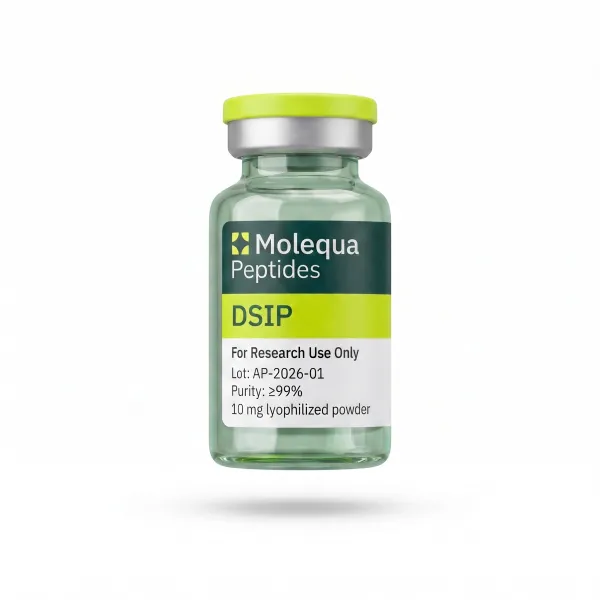
DSIP (delta sleep-inducing peptide) is a nonapeptide isolated in 1977 from the brain during sleep. It is one of the oldest and most mysterious molecules of sleep research.
- Discovered in 1977 at the University of Lausanne
- Studied in delta-phase sleep and the stress response
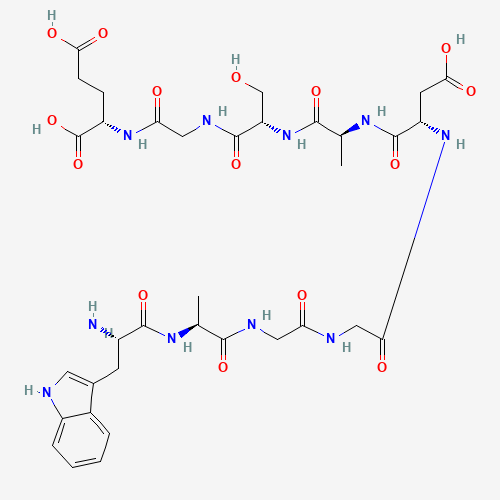
- An exact 9-amino-acid sequence documented by LC-MS
- A fragile molecule, supplied lyophilized
Read more Close
Overview
Where it comes from and why it was created
The story of DSIP begins in Basel in the 1970s, at the neurophysiology institute of the University of Lausanne. The team of Marcel Monnier and later Guido Schoenenberger ran an experiment that sounds like science fiction today: they electrically stimulated a specific part of the thalamus in rabbits (intralaminar nuclei) to artificially induce delta waves, slow sleep waves characteristic of deep regenerative sleep.
During this stimulation, they collected blood from cerebral veins. And then came the discovery: in the blood of sleeping rabbits they found a bioactive substance that, when injected into another animal, induced delta sleep. It was as if you had a “sleep transfusion”.
After years of fractionation and purification, they isolated the active molecule, a short chain of 9 amino acids. They named it Delta Sleep-Inducing Peptide, or DSIP for short. Schoenenberger published the first complete characterization in 1977. It was a sensation, an endogenous “sleep hormone” that the body makes itself to induce deep sleep.
A more complicated reality
But then further studies came and the picture became more complex. It turned out that:
- DSIP is present in human CSF, blood and brain, but concentrations do not correlate with sleep level. Some people with insomnia have normal levels, some excellent sleepers have low levels.
- The DSIP effect on sleep is inconsistent. In some clinical trials it worked, in others it did not. Sleep induction was not as reliable as expected.
- A receptor for DSIP has never been unambiguously identified. After fifty years of research, we still do not have a characterized specific DSIP receptor, this is very unusual for an endogenous peptide.
- The half-life is very short (7 to 10 minutes). With the classic injectable form, the peptide should degrade before it has time to induce sleep. The mechanism of action is likely cascading, DSIP initiates a signal that continues through secondary mediators even after its own degradation.
These questions led to DSIP never reaching commercial approval as a sleep drug. In Western pharmaceutical medicine, it remained in the category of “an interesting research molecule with an unclear full profile”.
Second life in Russian and post-Soviet medicine
In the Soviet Union and post-Soviet space, however, DSIP developed in a different direction. The team of academician Konstantin Sudakov (Institute of Normal Physiology, Moscow) studied DSIP not only for sleep, but also for stress protection, the concept that DSIP protects the brain from the negative effects of chronic stress.
In the 1980s and 1990s, DSIP was used in Russian clinical practice as an adjuvant in:
- Treatment of alcohol and opioid withdrawal syndrome
- Chronic pain (particularly migraines, phantom pain)
- Post-traumatic stress disorder (PTSD)
- Adaptation to time-zone changes (jet lag)
- Geriatric cachexia
Some of these applications were documented in the Russian clinical literature, but without double-blind placebo-controlled studies by Western standards. For the research community outside Russia, this means that most of the evidence is open-label, observational or preclinical.
Mechanism of action, multiple pathways, no clear receptor
DSIP is unique in this: it has no known single primary receptor. The mechanism of action is multi-target and still a subject of research. Here are the main hypotheses supported at least partially by experimental data.
Modulation of GABAergic signaling
The most accepted hypothesis. DSIP likely allosterically modulates GABA-A receptors in thalamocortical pathways. GABA is the main inhibitory neurotransmitter in the brain, strengthening its signal leads to a decrease in neuronal excitability, which allows transition to deep sleep.
Mechanically, it is not as strong as with benzodiazepines (which are direct GABA-A allosterics), but sufficient to modulate sleep architecture, increasing the proportion of delta waves (NREM 3) without significant daytime sedation.
Modulation of the HPA axis (hypothalamus-pituitary-adrenals)
DSIP suppresses CRH release (corticotropin-releasing hormone) from the hypothalamus and thus reduces production of ACTH and cortisol. This is the mechanism that explains its anti-stress effects.
Sudakov and colleagues demonstrated in the 1980s that DSIP prevents the rise of cortisol in stress models in rats (immobilization stress, electric shock). This effect is dose-dependent and reversible.
Modulation of melatonin and the circadian rhythm
DSIP increases melatonin secretion in the pineal gland, particularly during the dark phase of the day. This is a secondary mechanism that contributes to its sleep effect.
Some studies suggest that DSIP can help resynchronize the circadian rhythm after jet lag or with disruption of the sleep cycle (shift workers).
Antioxidant and neuroprotective effects
In preclinical models (Khavinson and colleagues in St. Petersburg), DSIP reduces production of free radicals in neurons exposed to oxidative stress. The mechanism is likely via modulation of glutathione pathways and activity of antioxidant enzymes (SOD, catalase).
This effect is secondary, but may explain the long-term neuroprotective properties described in the Russian literature.
Modulation of endogenous opioids
Some studies suggest that DSIP modulates the endogenous opioid system, increasing levels of β-endorphins and enkephalins in the central nervous system. This could explain the use of DSIP in withdrawal syndromes (alcohol, opioids), the peptide helps “calm” hyperactive signaling on cessation of an addictive substance.
Investigated applications
In the published preclinical and clinical literature (including Russian), effects of DSIP are documented in the following areas:
- Chronic primary insomnia, the most original indication, variable results
- Stress protection and HPA modulation, robustly demonstrated in animal models
- Withdrawal syndromes, alcohol, opioids (particularly Russian clinical experience)
- Chronic pain, migraines, phantom pain, neuropathic pain
- Post-traumatic stress disorder (PTSD), exploratory clinical experience
- Jet lag and circadian rhythm disorders, preclinical data
- Geriatric cachexia and sarcopenia, exploratory
- Aging research (Khavinson Petersburg group), developing line
Buying DSIP: what to look for
When buying DSIP, the decisive criterion is not the price but the verifiability of quality. A research peptide is only ever as good as its certificate of analysis. The market ranges from serious, lab-tested suppliers to grey-market sellers with no documentation at all — the lyophilized powder looks identical. These five criteria separate them.
1. HPLC purity ≥ 99 % – documented, not just claimed
HPLC purity shows what proportion of the powder is actually DSIP. Serious suppliers document ≥ 99 % with a chromatogram. “99 % purity” without an attached chromatogram is a claim, not proof.
2. Batch-specific certificate of analysis (CoA)
The most important document. A batch-specific CoA belongs to exactly the batch you receive — with batch number, date and purity value, issued by an independent laboratory (Janoshik and similar are the industry standard). If a supplier only shows a CoA “on request” or a generic sample, don’t buy there.
3. LC-MS identity confirmation
Purity tells you how much of a substance is present; LC-MS tells you which substance it is. Via the molecular mass (848.9 Da) it confirms this is the correct identity of DSIP, not a cheaper, mislabeled peptide.
4. Origin and EU shipping with traceability
A supplier with an EU warehouse and full batch traceability has the edge over grey imports from Asia: shorter, cooled transport and no customs risk. Molequa® ships from within the EU, typically within 3 to 5 business days — no post-Brexit customs delays.
5. Correct delivery form: lyophilizate
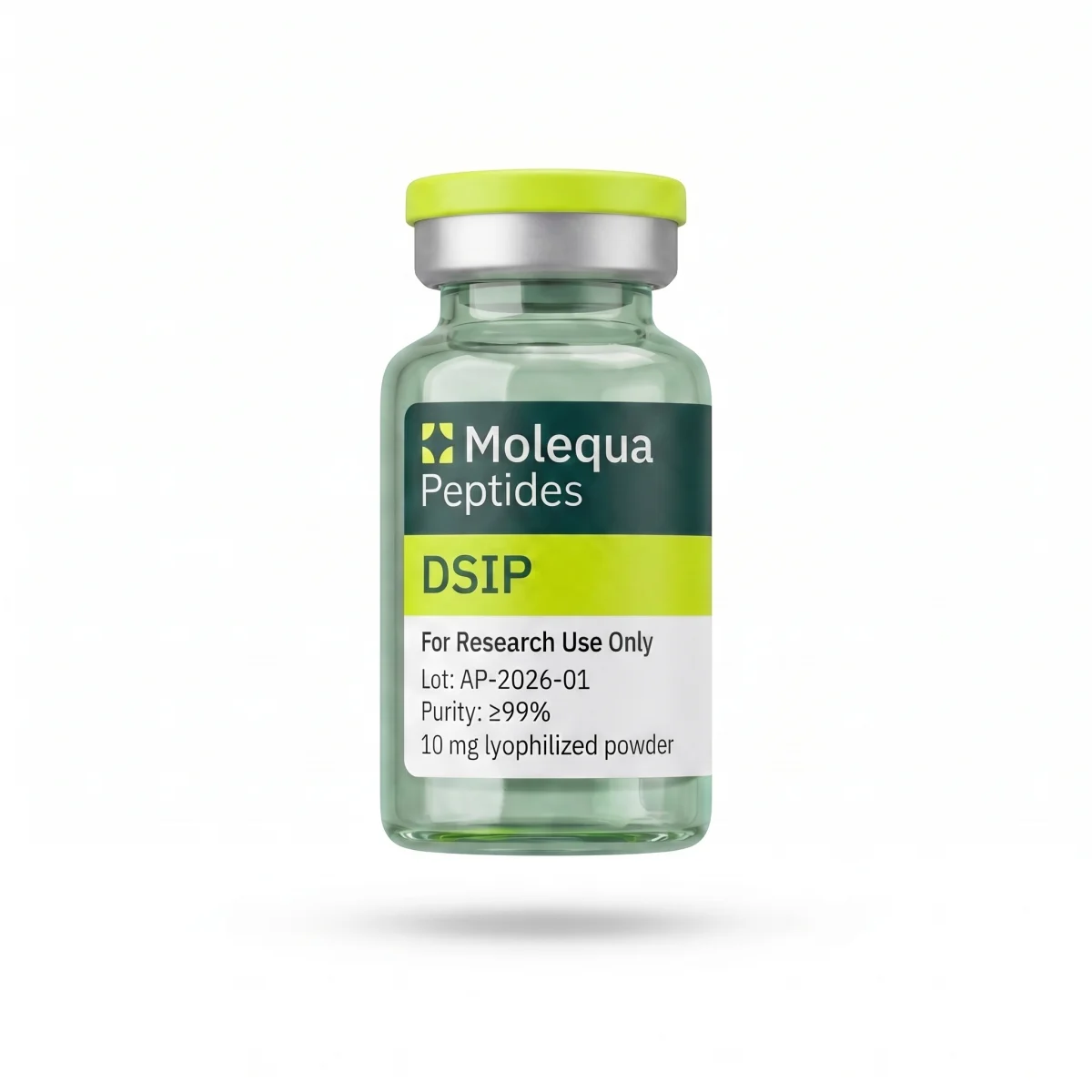
High-quality DSIP is delivered as a lyophilizate (white powder), not as a pre-mixed solution. Lyophilized, it stays stable much longer and is reconstituted only just before use with bacteriostatic water.
Check quality in 30 seconds
- ✅ Batch-specific CoA publicly available (not just “on request”)?
- ✅ HPLC purity ≥ 99 % proven with a chromatogram?
- ✅ LC-MS identity confirmed (mass 848.9 Da)?
- ✅ EU warehouse and batch traceability?
- ✅ Delivered as a lyophilizate with clear storage instructions?
If all five points are met, you are buying verified material. Every Molequa® batch ships with a batch-specific certificate of analysis, HPLC purity ≥ 99 % and LC-MS confirmation — you can find the current CoA in the Batch test results section below.
Legal notice: DSIP is a research peptide and not an approved medicine. It is sold exclusively for scientific laboratory research and is not intended for human or animal consumption.
Science & Studies
4.1 Key publications
Schoenenberger G.A., Monnier M. (1977). Characterization of a delta-electroencephalogram (-sleep)-inducing peptide. Proc Natl Acad Sci USA. 74(3):1282 to 1286., Original isolation and characterization.
Schneider-Helmert D., Schoenenberger G.A. (1983). Effects of DSIP in man: Multifunctional psychophysiological properties besides induction of natural sleep. Neuropsychobiology. 9(4):197 to 206., Clinical follow-up in humans.
Schoenenberger G.A. (1984). Characterization, properties and multivariate functions of delta-sleep-inducing peptide (DSIP). Eur Neurol. 23(5):321 to 345., Review article by the original discoverer.
Sudakov K.V., Ivanov V.T., Koplik E.V., et al. (1995). Delta-sleep inducing peptide (DSIP) as a stress-protector under emotional stress. Patol Fiziol Eksp Ter. (4):17 to 20., Sudakov’s Russian stress models.
Khvatova E.M., Samartzev V.N., Zagoskin P.P., et al. (2003). Antioxidant effects of DSIP under oxidative stress conditions. Bull Exp Biol Med. 135(2):143 to 145., Antioxidant profile.
Mendelson W.B., Gillin J.C., Pisner G., Wyatt R.J. (1983). Arginine vasotocin and sleep in the rat. Brain Res. 285(1):29 to 33., Critical publication that did not confirm the DSIP sleep effect in animal models.
4.2 Detailed expandable studies
▸ Study 1: Schoenenberger & Monnier 1977, original isolation
Citation: Schoenenberger G.A., Monnier M. Characterization of a delta-electroencephalogram (-sleep)-inducing peptide. Proc Natl Acad Sci USA. 1977;74(3):1282 to 1286.
What they did: Multiphase isolation study. The team electrically stimulated the intralaminar nuclei of the thalamus in rabbits, this stimulation induces delta EEG waves (characteristic of deep sleep). Simultaneously, they collected blood from cerebral veins. After dozens of rounds of fractionation (gel filtration, ion-exchange chromatography, HPLC), they isolated the active substance and characterized its amino acid sequence by classic methods (Edman degradation).
What they found:
- Isolated active molecule with sequence Trp-Ala-Gly-Gly-Asp-Ala-Ser-Gly-Glu
- When injected into the brain ventricles of naive rabbits, it caused the appearance of delta waves on EEG within 5 to 10 minutes
- The effect was dose-dependent in the range 10⁻⁸ to 10⁻⁶ M
- The synthetic version of the molecule had identical activity to the natural one, confirming the sequence
Why it matters: This was the first isolation of an endogenous sleep peptide. For neurophysiology, it was a sensation, the idea that the body makes its own “sleep hormone” opened a whole new field of research. Although later studies showed a more complex reality, the original isolation remains a classic.
▸ Study 2: Schneider-Helmert & Schoenenberger 1983, clinical follow-up in humans
Citation: Schneider-Helmert D., Schoenenberger G.A. Effects of DSIP in man. Neuropsychobiology. 1983;9(4):197 to 206.
What they did: n = 7 patients with chronic primary insomnia. Open-label study. DSIP administered subcutaneously at a dose of 25 µg/kg daily for 5 nights. Assessment by polysomnography (EEG during sleep), sleep questionnaires, monitoring of cortisol and TSH.
What they found:
- Increased proportion of delta sleep (NREM 3 + 4) by 20 to 30 % vs baseline
- Reduction of sleep latency (time needed to fall asleep) by 30 to 50 %
- Decrease in nocturnal cortisol by ~25 %
- Patients subjectively reported “higher quality” sleep without morning sedation
- Effects persisted 2 to 3 nights after discontinuation
Why it matters: This was the first clinical demonstration of the effect in humans. Limitations: small sample, no placebo, open design. Nevertheless, the results were clinically interesting, particularly the persistent effects after discontinuation, suggesting that DSIP does not act as a classic sedative but rather as a modulator of sleep architecture.
▸ Study 3: Sudakov 1995, stress protection
Citation: Sudakov K.V., Ivanov V.T., Koplik E.V., et al. Delta-sleep inducing peptide as a stress-protector. Patol Fiziol Eksp Ter. 1995;(4):17 to 20.
What they did: n = 60 rats divided into groups: control, stress (immobilization + electric shocks), stress + DSIP (pretreatment 30 minutes before stressor). Assessment: plasma cortisol, ulcerogenic gastric lesions, performance in the open-field test, heart rate.
What they found:
- DSIP pretreatment reduced gastric lesions induced by stress by ~60 %
- Prevented the rise in cortisol during acute stress
- Behavioral activity preserved in the open-field test (control animals under stress had freezing-like behavior)
- Normalization of heart rate during and after stressor exposure
Why it matters: Sudakov thereby established DSIP as a stress-protective peptide, a concept that became the main Russian application of DSIP. Stress protection is mechanistically distinct from sleep induction and opened a new research line that continues to this day (particularly in the Khavinson Petersburg school).
▸ Study 4: Bes et al. 1992, critical sleep study
Citation: Bes F., Hofman W., Schuur J., Van Boxtel A. Effects of delta-sleep inducing peptide (DSIP) on sleep of chronic insomniac patients. Eur J Pharmacol. 1992;218(2-3):347 to 349.
What they did: n = 16 patients with chronic primary insomnia. Double-blind placebo-controlled study, at that time a rare design for DSIP. DSIP 25 µg/kg IV vs placebo for 5 nights. Cross-over design. Polysomnographic assessment.
What they found:
- No statistically significant difference between DSIP and placebo in the main sleep parameters
- A slight numerical improvement in delta sleep (~5 %), but without significance
- Subjectively, patients could not distinguish DSIP from placebo
- Favorable safety profile, no side effects
Why it matters: This was the most rigorous sleep study of DSIP and the result was negative. Together with other similar failures (Mendelson 1983 in animal models), it led to DSIP never being approved as a sleep drug. For honest research framing, it is essential to know also the negative data.
▸ Study 5: Khvatova 2003, antioxidant profile
Citation: Khvatova E.M., Samartzev V.N., Zagoskin P.P., et al. Antioxidant effects of DSIP under oxidative stress conditions. Bull Exp Biol Med. 2003;135(2):143 to 145.
What they did: Assessment of DSIP in two models of oxidative stress: isolated mitochondria from rat neurons exposed to pro-oxidant conditions (high glutamate concentration, hypoxia/reoxygenation). DSIP added at concentrations 10⁻⁹ to 10⁻⁶ M. Measurement: ROS production, lipid peroxidation, mitochondrial membrane permeability.
What they found:
- Dose-dependent reduction of ROS by 30 to 55 %
- Decrease in lipid peroxidation by ~40 %
- Stabilization of mitochondrial membrane, decrease in transition pore permeability
- Increase in superoxide dismutase (SOD) activity by 25 to 35 %
Why it matters: It opened a new research line for DSIP as an antioxidant and neuroprotectant. This mechanism is independent of sleep induction and HPA modulation, it suggests that DSIP has a pleiotropic profile similar to BPC-157 (multiple mechanisms, multiple potential indications).
▸ Study 6: Sudakov & Umrukhin 2010, withdrawal syndrome
Citation: Sudakov K.V., Umrukhin A.E., Kosobaev S.S. Modulating effect of DSIP on alcohol withdrawal syndrome in rats. Vestn Ross Akad Med Nauk. 2010;(8):24 to 28.
What they did: Rats exposed to chronic alcohol intoxication (4 weeks) and then abruptly withdrawn. Behavioral signs of withdrawal syndrome assessed 24, 48 and 72 hours after discontinuation. Randomization to DSIP (60 µg/kg IP) or placebo during the withdrawal phase.
What they found:
- Reduction of behavioral signs of withdrawal: tremor, agitation, hyperactivity
- Decrease in autonomic symptoms: heart rate, blood pressure
- Normalization of sleep architecture, which is markedly disturbed in withdrawal
- Reduction of craving behavior in voluntary alcohol consumption tests
Why it matters: It validated the Russian clinical indication of DSIP for withdrawal syndromes. In Russia, DSIP is used off-label as an adjuvant in detoxification of alcoholics and persons dependent on opioids, this is preclinical support for that practice. In Western medicine, this indication is reflected in similar studies with other peptides (oxytocin, somatostatin analogs).
▸ Study 7: Schoenenberger 1984 review, complete profile
Citation: Schoenenberger G.A. Characterization, properties and multivariate functions of delta-sleep-inducing peptide. Eur Neurol. 1984;23(5):321 to 345.
What they did: Review article summarizing 7 years of DSIP research since the original isolation. Covers: chemical characterization, animal models, clinical experience, mechanism, pharmacokinetics.
What they found:
- Half-life in plasma only 7 to 10 minutes, but biological effect persists for hours
- Hypothesis of a cascade mechanism, DSIP initiates a signal that continues through secondary mediators
- Distribution: crosses the blood-brain barrier despite peptide nature
- Summarized clinical indications: insomnia, stress, withdrawal, pain, depression
- Safety profile: no serious adverse events in >300 monitored patients
Why it matters: This is the reference article for the entire research line of DSIP. It is still cited today in every DSIP publication. Schoenenberger’s summary provided the intellectual framework for what DSIP is (a multifunctional neuropeptide) and what it is not (a simple hypnotic).
Storage
Lyophilizate (dry powder before reconstitution)
- 2 years at −20 °C (freezer)
- 18 months at 2 to 8 °C (refrigerator)
- Up to 30 days at room temperature (up to 25 °C), protect from light and moisture
After reconstitution (peptide in solution with bacteriostatic water)
- Up to 21 days at 2 to 8 °C, protected from light
- DSIP is less stable in solution than BPC-157 or TB-500 due to the oxidative sensitivity of tryptophan
Practical storage rules
- Allow the vial to warm to room temperature (15 to 20 min) before opening.
- Avoid light completely, DSIP is particularly sensitive due to tryptophan (Trp absorbs UV light and oxidizes). Use a dark box in the refrigerator.
- Avoid contact with strong oxidizing agents, peroxides, free radicals.
- Do not shake! Mechanical stress can disrupt the conformation, although in a small molecule (9 aa) the risk is lower than in larger peptides.
- The solution should remain clear. Yellowish coloring is the first sign of tryptophan oxidation.
Combination tips, Frequently combined peptides
DSIP appears in the research literature in combination with several molecules for specific goals.
Selank and Semax, cognitive combination
Selank and Semax are Russian nootropic peptides with an anxiolytic and cognitive profile. DSIP adds the sleep and stress-protective component, the resulting “complex neurological combination” covers sleep, anxiety and cognitive function. This is a popular combination in the Russian research tradition (Khavinson Petersburg).
Epitalon, aging research
Epitalon is a tetrapeptide with longevity properties (telomerase activation). DSIP adds the regulatory component of sleep and stress, two known drivers of biological aging. In Khavinson’s protocols, this combination is described as a “neuroendocrine rejuvenation combination”.
Melatonin, circadian synchronization
For research focused on circadian rhythm disorders (jet lag, shift work), DSIP is combined with melatonin. Melatonin regulates the timing of sleep, DSIP modulates depth and quality. Synergistic effect in animal models.
BPC-157 and TB-500, for chronic pain
In the research context of chronic pain (fibromyalgia models, neuropathic pain), DSIP is combined with regenerative peptides. DSIP modulates central perception of pain, BPC-157/TB-500 support regeneration of damaged tissues. Complementary mechanisms.
Ipamorelin + CJC-1295, combination for sleep optimization
GH has its strongest secretion during delta sleep (NREM 3 + 4). DSIP increases the proportion of delta sleep, the GH combination stimulates endogenous secretion during this phase. Hypothetical synergy, with naturally deeper sleep, GH pulses should be stronger. This is a popular combination in the research literature around regeneration and aging.
Key scientific figures and citations
“Delta sleep-inducing peptide (DSIP) is a nonapeptide first isolated from the cerebral venous blood of rabbits during electrically induced sleep, and has been shown to modulate sleep architecture and stress responses in various mammalian models.”
Schoenenberger GA., Monnier M. (1977), Proc Natl Acad Sci USA 74(3), PubMed 265581
Statistics from preclinical literature
- DSIP (Delta Sleep-Inducing Peptide), a nonapeptide, sequence Trp-Ala-Gly-Gly-Asp-Ala-Ser-Gly-Glu, molecular weight 848.81 Da
- Isolated in 1977 by the group of Guido Schoenenberger and Marcel Monnier (University of Basel, Switzerland) from the venous blood of rabbits during electrically induced sleep
- Standard experimental dose in animal models: 25–50 nmol/kg intracerebroventricularly or intraperitoneally
- Mechanism: the exact receptor is still not identified; modulation of GABAergic pathways, suppression of the HPA axis (lowered cortisol)
- In studies by Kovalzon and Strekalova (1996–2003), modulation of delta waves (NREM stages 3–4) in rat EEG was documented
- Half-life in blood: ~7 minutes (rapid degradation by peptidases)
- Status: never reached Phase 3, small Phase 2 trials in the 1980s (Schneider-Helmert, alcohol withdrawal and chronic insomnia)
- Approximately 150+ publications in PubMed (1977–2024), predominantly preclinical
Reference sources (PubMed)
- Schoenenberger GA., Monnier M. (1977). “Characterization of a delta-electroencephalogram (-sleep)-inducing peptide.” Proc Natl Acad Sci USA 74(3):1282–1286. PubMed 265581
- Schneider-Helmert D., Schoenenberger GA. (1983). “Effects of DSIP in man. Multifunctional psychophysiological properties besides induction of natural sleep.” Neuropsychobiology 9(4):197–206. PubMed 6361643
- Kovalzon VM., Strekalova TV. (2006). “Delta sleep-inducing peptide (DSIP): a still unresolved riddle.” J Neurochem 97(2):303–309. PubMed 16539670
Regulatory status: DSIP is not an approved human medicinal product in any Western regulatory zone (FDA, EMA, or any national medicines agency). Small clinical trials took place in Switzerland and Germany in the 1980s and 1990s; no development program was commercialized. Existing data come predominantly from preclinical (animal) literature. The product is sold strictly for laboratory scientific research (RUO).
Frequently asked questions about DSIP
These questions address the most common research-context searches about DSIP. For full technical documentation see the sections above.
What is DSIP and what is it used for in research?
DSIP (Delta Sleep-Inducing Peptide, sequence Trp-Ala-Gly-Gly-Asp-Ala-Ser-Gly-Glu) is a nine-amino-acid neuropeptide isolated in the 1970s from rabbit brain during thalamic electrical stimulation. In research it modulates EEG delta waves and is studied in animal models of sleep, stress and pain. The mechanism is not fully elucidated, GABAergic pathway modulation is hypothesised.
What dose of DSIP do scientists use in animal models?
In clinical studies (Schneider-Helmert 1980s) DSIP was applied 25 to 50 µg/kg intravenously or subcutaneously in the evening before sleep. Animal studies use doses of 0.1 to 1 mg/kg intraperitoneally. Phase 1 trials in chronic insomnia showed a signal at 25 µg/kg.
What is the difference between DSIP and Epithalon?
DSIP and Epithalon are both short neuropeptides influencing the circadian rhythm, but DSIP targets acute delta-sleep modulation via GABA pathways, whereas Epithalon (tetrapeptide Ala-Glu-Asp-Gly) acts long-term through the pineal gland on melatonin production and telomerase expression. DSIP has rapid onset (minutes), Epithalon requires a multi-day regimen.
Is DSIP an approved medicine or research substance?
DSIP is not an approved human medicine in any regulatory zone (FDA, EMA, or any national medicines agency). Clinical development halted after the 1980s due to inconsistent Phase 2 results. The product is sold strictly for laboratory scientific research (RUO), not for the treatment of insomnia.
How is DSIP stored?
Lyophilised DSIP should be stored at −20 °C protected from light, stability 2 to 3 years; at 2 to 8 °C 12 months. After reconstitution the solution is stable for 28 days at 2 to 8 °C. Standard concentration: 1 mg/ml.
What is the half-life of DSIP and how often is it administered in studies?
DSIP has a very short plasma half-life (7 to 15 minutes), but its EEG effect on delta waves persists for several hours. In clinical studies it is administered once in the evening subcutaneously 30 to 60 minutes before planned sleep.
Where to buy DSIP in the EU for scientific research?
DSIP for scientific research in the EU is offered by Molequa® with FedEx delivery in 3 to 5 business days across the EU. The product ships lyophilised with a Certificate of Analysis (COA), HPLC purity ≥ 99 %. The product is strictly for laboratory scientific research (RUO).