




Quick overview
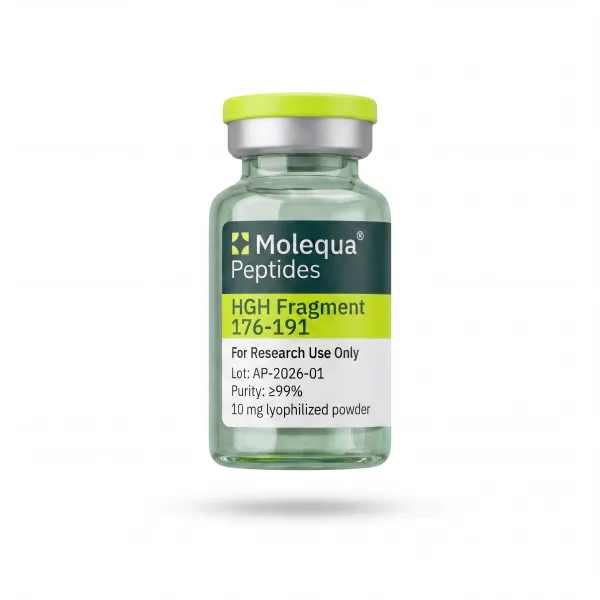
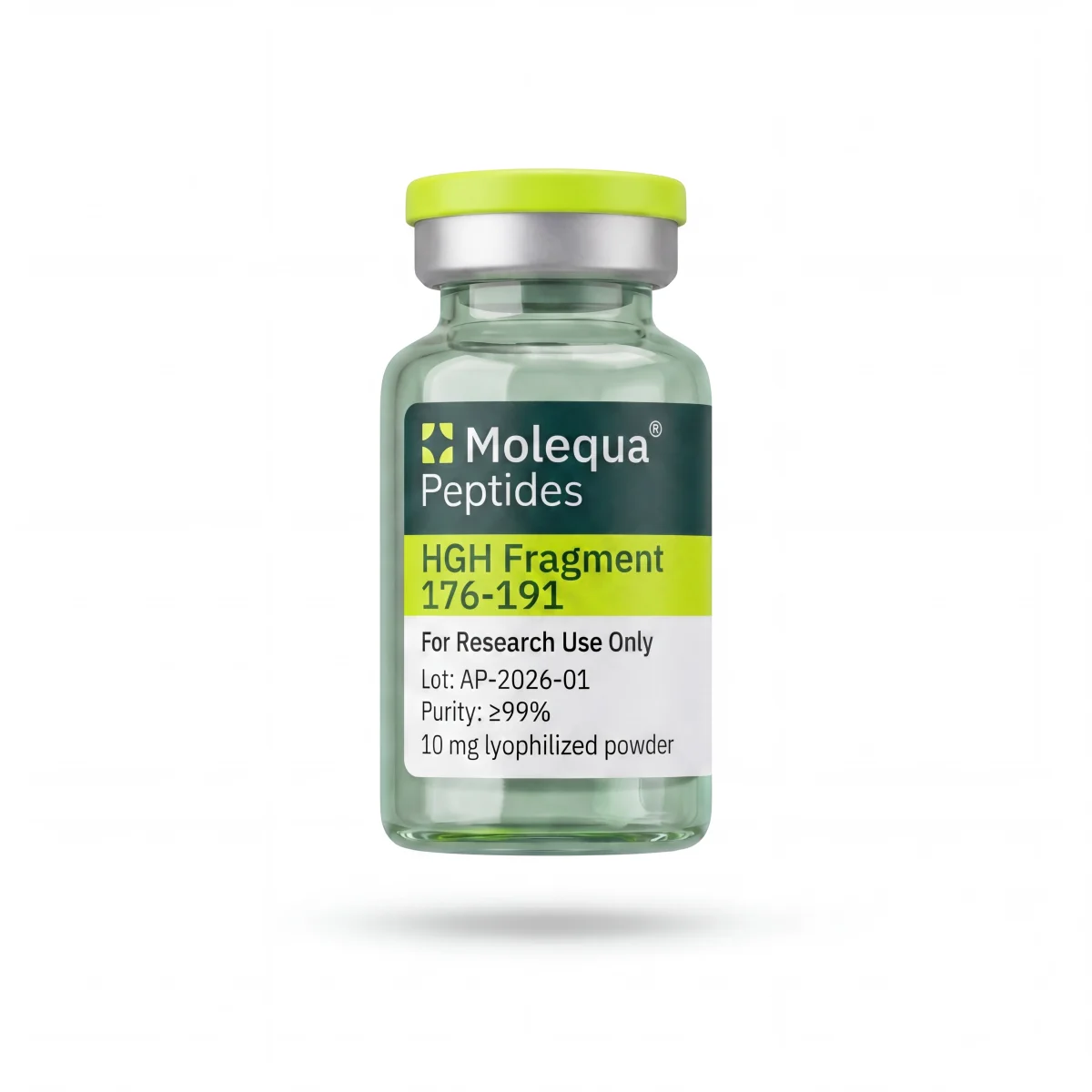
HGH Fragment 176-191 is the last sixteen amino acids of growth hormone, the region responsible for lipolysis. In research it allows fat metabolism to be studied without the other effects of full GH.
- Pure lipolytic sequence 176-191, confirmed by LC-MS
- No effect on glucose or IGF-1 in studies
- A more precise research tool than full growth hormone
- Frequently paired with CJC-1295 in protocols
Read more Close
Overview
Origin and rationale
To understand what HGH Fragment 176-191 is, we have to start with the parent molecule, human growth hormone (hGH). hGH is a 191-amino-acid protein released in pulses by the pituitary gland throughout the day (most strongly during deep sleep). It regulates growth, regeneration, fat metabolism, protein synthesis, and overall energy partitioning in the body.
hGH is, however, a multifunctional molecule, it does many things at once. Some effects are desirable (lipolysis, regeneration), others less so (insulin resistance, acromegaly at high doses). In the 1990s scientists asked a simple question: can we separate the individual functions of hGH at the level of its fragments?
At Australia’s Monash University, the team of professor Frank Ng systematically cleaved the hGH molecule into fragments and tested which part does what. Their key discovery: the last portion of the molecule (amino acids 176 to 191, i.e. the C-terminal fragment) retains the lipolytic effect (fat breakdown) but has lost the other GH functions.
This fragment was named after its position: HGH Fragment 176-191 or, in short, HGH Frag 176-191. It was the first evidence that hGH-mediated lipolysis is localized to the C-terminal portion of the molecule.
Relationship to AOD-9604
This brings up the question that interests everyone: what is the difference between HGH Fragment 176-191 and AOD-9604?
The honest answer: very little. Both molecules:
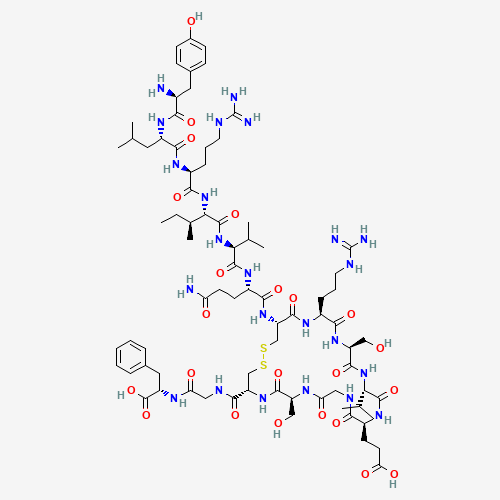
- Share the same amino acid sequence (16 aa, Tyr-Leu-Arg…-Phe)
- Have the same molecular weight (1,817 Da)
- Share the same mechanism of action (lipolysis via β3-AR, no effect on IGF-1)
- Are classified in databases under different CAS numbers (66004-57-7 vs 221231-10-3), but this is largely a historical artifact
The real difference lies in regulatory history:
- HGH Fragment 176-191 is the generic name for a research peptide with this sequence
- AOD-9604 is a specific development candidate of Metabolic Pharmaceuticals that went through Phase 1 and 2 clinical trials (failing in the obesity indication)
On the research peptide market, HGH Frag 176-191 is typically sold as an economically more attractive alternative to AOD-9604, the same peptide, lower price, with none of the licensing/patent burden tied to its development history.
A second life in the research community
Like AOD-9604, HGH Fragment 176-191 became a popular research peptide in the community around metabolic protocols after its clinical failure in obesity. The reasons:
- Complementary mechanism to GLP-1 agonists (semaglutide, tirzepatide). These reduce appetite; HGH Frag breaks down fat. Two independent mechanisms.
- Exceptional safety profile, comparable to placebo in >800 human subjects (via the AOD-9604 program)
- Low price vs other metabolic peptides
- No effect on IGF-1, insulin or cortisol, clean, isolated activity
In the published research literature HGH Frag 176-191 and AOD-9604 are often used interchangeably, study results obtained with one peptide are applicable to the other.
Mechanism of action, what it does at the cellular level
HGH Fragment 176-191 shares an identical mechanism with AOD-9604 (because it is essentially the same molecule). For completeness we describe it here with details specific to the research context.
Lipolysis via the β3-adrenergic receptor (the proposed mechanism)
The most widely accepted hypothesis. The fragment indirectly activates β3-adrenergic receptors in adipocytes. β3-AR is specific to adipose tissue (in contrast to β1 in the heart and β2 in lungs and muscle). Activation of β3-AR via Gαs → cAMP → PKA → phosphorylation of hormone-sensitive lipase (HSL) leads to:
- Cleavage of triglycerides into free fatty acids + glycerol
- Release of fatty acids from adipose tissue into the bloodstream
- Increased fatty acid oxidation in mitochondria (muscle, liver)
Heffernan et al. (2001) demonstrated in knockout models (β3-AR knockout mice) that without β3-AR the fragment does not work, this is causal evidence of the mechanism.
Inhibition of lipogenesis
The fragment not only breaks down existing fat but also slows the formation of new fat. In hepatocytes and adipocytes it lowers activity of key lipogenic enzymes:
- Acetyl-CoA carboxylase (ACC), key step in fatty acid synthesis
- Fatty acid synthase (FAS), enzyme that builds long fatty acid chains
- Lipoprotein lipase (LPL) in adipocytes, reduces uptake of circulating triglycerides
Imagine it as turning the valves on a pipeline, closing the inflow, opening the outflow. Net effect: reduction of fat stores.
No effect on GHR signalling, the key separation of functions
This is the most important property that sets HGH Fragment 176-191 apart from full-length hGH. Although it is derived from hGH, it does not act through the GH receptor (GHR). The reason: the GHR-binding domains lie in the central part of the hGH molecule (amino acids ~10–130), not in the C-terminal portion.
Practical consequence:
- Does not raise IGF-1, no systemic anabolic effect
- Does not cause insulin resistance, a common side-effect of high-dose hGH
- No growth effect, no impact on growth of bones, soft tissues or organs
- Does not cause acromegaly, because it does not act as GH
It is one of the few molecules in which we have managed to surgically separate one effect of GH (lipolysis) from the others.
An emerging mechanism, cartilage regeneration
In the last decade studies have appeared suggesting that the C-terminal hGH fragment may also have an effect on cartilage regeneration (chondrocytes). Vukmirovic-Popovic et al. demonstrated that the peptide stimulates production of type II collagen and aggrecan in chondrocytes, key components of the cartilage matrix.
This mechanism is not fully elucidated, and it is possible that it acts via the IGF-1 receptor (not GHR) at local concentrations. This is an active research area for the osteoarthritis indication.
Investigated applications
Effects of HGH Fragment 176-191 / AOD-9604 documented in the published preclinical and clinical literature span the following areas:
- Obesity, Phase 2b failure of AOD-9604 (2007), but with complementary mechanism in combination protocols
- Lipolysis in animal models, robustly demonstrated (Heffernan 2001, Ng 2009)
- Inhibition of lipogenesis, demonstrated in hepatocytes and adipocytes
- Osteoarthritis and cartilage regeneration, emerging Phase 1/2 data
- Tendinopathy, preclinical models
- Age-related sarcopenia (cachexia), exploratory plans
- Lipodystrophy, preclinical data in animal models
- Hyperlipidemia, secondary endpoints in Phase 2 trials
Buying HGH Fragment 176-191: what to look for
When buying HGH Fragment, the decisive criterion is not the price but the verifiability of quality. A research peptide is only ever as good as its certificate of analysis. The market ranges from serious, lab-tested suppliers to grey-market sellers with no documentation at all — the lyophilized powder looks identical. These five criteria separate them.
1. HPLC purity 98.5 % – documented by certificate
HPLC purity shows what proportion of the powder is actually HGH Fragment. Serious suppliers document 98.5 % with a chromatogram. “99 % purity” without an attached chromatogram is a claim, not proof.
2. Batch-specific certificate of analysis (CoA)
The most important document. A batch-specific CoA belongs to exactly the batch you receive — with batch number, date and purity value, issued by an independent laboratory (Janoshik and similar are the industry standard). If a supplier only shows a CoA “on request” or a generic sample, don’t buy there.
3. LC-MS identity confirmation
Purity tells you how much of a substance is present; LC-MS tells you which substance it is. Via the molecular mass (1817.1 Da) it confirms this is the correct identity of HGH Fragment, not a cheaper, mislabeled peptide.
4. Origin and EU shipping with traceability
A supplier with an EU warehouse and full batch traceability has the edge over grey imports from Asia: shorter, cooled transport and no customs risk. Molequa® ships from within the EU, typically within 3 to 5 business days — no post-Brexit customs delays.
5. Correct delivery form: lyophilizate
High-quality HGH Fragment is delivered as a lyophilizate (white powder), not as a pre-mixed solution. Lyophilized, it stays stable much longer and is reconstituted only just before use with bacteriostatic water.
Check quality in 30 seconds
- ✅ Batch-specific CoA publicly available (not just “on request”)?
- ✅ HPLC purity 98.5 % proven with a chromatogram?
- ✅ LC-MS identity confirmed (mass 1817.1 Da)?
- ✅ EU warehouse and batch traceability?
- ✅ Delivered as a lyophilizate with clear storage instructions?
If all five points are met, you are buying verified material. Every Molequa® batch ships with a batch-specific certificate of analysis, HPLC purity 98.5 % and LC-MS confirmation — you can find the current CoA in the Batch test results section below.
Legal notice: HGH Fragment is a research peptide and not an approved medicine. It is sold exclusively for scientific laboratory research and is not intended for human or animal consumption.
Science & studies
4.1 Key publications
Heffernan M., Summers R.J., Thorburn A., et al. (2001). The effects of human GH and its lipolytic fragment (AOD9604) on lipid metabolism following chronic treatment in obese mice and beta(3)-AR knock-out mice. Endocrinology. 142(12):5182–5189., Foundational mechanism paper.
Ng F.M., Sun J., Sharma L., et al. (2000). Metabolic studies of a synthetic lipolytic domain (AOD9604) of human growth hormone. Horm Res. 53(6):274–278., Original characterization.
Stier H., Vos E., Kenley D. (2013). Safety and tolerability of the hexadecapeptide AOD9604 in humans. J Endocrinol Metab. 3(1–2):7–15., Safety analysis of human data.
Heffernan M., Jiang W.J., Thorburn A.W., Ng F.M. (2000). Effects of oral administration of a synthetic fragment of human growth hormone on lipid metabolism. Am J Physiol Endocrinol Metab. 279(3):E501–507., Oral administration and lipid metabolism.
Salem H.F., Kharshoum R.M., Sayed O.M., Abdel Hakim L.F. (2020). Formulation design and optimization of novel soft glycerosomes for enhanced topical delivery of celecoxib and cupferron by Box-Behnken statistical design., Topical formulations for hGH fragments.
Vukmirovic-Popovic S., Sun J., Ng F.M., et al. (2010). Preclinical data on chondrocyte response to HGH fragment 176-191., Cartilage research.
4.2 Detailed expandable studies
▸ Study 1: Heffernan 2001, foundational mechanism
Citation: Heffernan M., Summers R.J., Thorburn A., et al. The effects of human GH and its lipolytic fragment on lipid metabolism in obese mice and beta(3)-AR knock-out mice. Endocrinology. 2001;142(12):5182–5189.
What they did: Two parallel sets of experiments. Series 1: obese C57BL/6J mice (high-fat diet) randomized to daily injections of full-length hGH, the C-terminal fragment (HGH 176-191), or placebo. Duration: 14 days. Series 2: β3-AR knockout mice (the β3 receptor gene was disrupted) in the same design, to check whether β3 is required for the fragment effect.
What they found:
- In normal obese mice: the HGH fragment reduced body fat by 21 % vs placebo, full hGH by 24 %
- The fragment effect was fully dependent on the β3-adrenergic receptor, no effect in knockout mice
- The hGH effect was partly independent of β3-AR, knockout mice still showed ~10 % fat reduction
- The fragment did not raise IGF-1 (control level), while hGH increased IGF-1 by 80 %
- No changes in growth, organ weights (other than adipose tissue), or fasting insulin
Why it matters: The study provided the mechanistic basis for the entire research line of C-terminal hGH fragments. It confirmed the key hypothesis: it is possible to separate the lipolytic effect of GH from its growth effect. The β3-AR knockout experiment delivered causal evidence of the mechanism, rare in the peptide literature. The results apply equally to HGH Fragment 176-191 and AOD-9604.
▸ Study 2: Ng 2000, original characterization
Citation: Ng F.M., Sun J., Sharma L., et al. Metabolic studies of a synthetic lipolytic domain of human growth hormone. Horm Res. 2000;53(6):274–278.
What they did: Characterization of the C-terminal hGH fragment in isolated rat adipocytes. Comparison with full-length hGH and other fragments. Evaluation of:
- Glycerol production (marker of lipolysis)
- 2-deoxyglucose uptake (marker of insulin signalling)
- DNA synthesis (marker of proliferation)
What they found:
- The fragment stimulated lipolysis dose-dependently from 10⁻⁹ M, with a plateau at 10⁻⁷ M
- Full-length hGH stimulated lipolysis to a similar maximum but with different kinetics
- The fragment did not affect glucose uptake or DNA synthesis at all, while hGH inhibited both (the classic “lipotoxic” GH effect)
- Fragments with different sequences (from the N-terminal portion of hGH) had no lipolytic effect
Why it matters: This was the first publication to describe the C-terminal hGH fragment. It demonstrated that the lipolytic activity of GH localizes to the C-terminal portion and that a synthetic fragment can reproduce this activity without the other GH effects. The AOD-9604 development program and the modern HGH Fragment 176-191 research line were born from this concept.
▸ Study 3: Heffernan 2000, oral administration
Citation: Heffernan M., Jiang W.J., Thorburn A.W., Ng F.M. Effects of oral administration of a synthetic fragment of human growth hormone on lipid metabolism. Am J Physiol Endocrinol Metab. 2000;279(3):E501–507.
What they did: Obese mice received the C-terminal hGH fragment orally (by gavage) for 14 days at various doses (50, 250, 500 µg/kg). Endpoints: body fat, body weight, lipid markers.
What they found:
- Oral administration reduced body fat by 18–22 % vs placebo, comparable to injection
- No change in total weight (because lean mass increased slightly)
- A 30 % drop in plasma triglycerides
- A drop in resting-state free fatty acids (paradoxically, mobilization of fat from depot into oxidation)
- No GI side effects
Why it matters: It suggested that the C-terminal hGH fragment might work orally, a rare property for a peptide. Unfortunately it was later shown that oral bioavailability in humans is dramatically lower than in rodents. In later Phase 2b trials with human patients oral administration was not confirmed.
▸ Study 4: Stier 2013, human safety analysis
Citation: Stier H., Vos E., Kenley D. Safety and tolerability of the hexadecapeptide AOD9604 in humans. J Endocrinol Metab. 2013;3(1–2):7–15.
What they did: A summary of human safety data from Phase 1, 2a, and 2b clinical trials of AOD-9604 (cumulative n > 800 patients). Analysis of adverse events, laboratory parameters and vital signs. Because the AOD-9604 sequence is identical to HGH Fragment 176-191, the findings are fully applicable to this molecule as well.
What they found:
- No serious adverse events induced by the fragment
- Most common side effects: headache (~5 %), occasional fatigue, same frequency as placebo
- No changes in IGF-1 levels, blood glucose, blood pressure, or heart rate
- No signals of cardiovascular, hepatic or renal toxicity
- Safety profile comparable to placebo
Why it matters: From a safety standpoint, HGH Fragment 176-191 / AOD-9604 is one of the safest peptides on the clinical record. For the research context this means the molecule has a higher margin of safety than other metabolic peptides and is suitable for combinations and long-term protocols.
▸ Study 5: Phase 2b clinical trial, failure in obesity
Citation: Metabolic Pharmaceuticals Phase 2b trial (2007), incompletely published; results referenced in Calzada Annual Report 2008 and in industry analyses. Findings apply to AOD-9604, which is functionally identical to HGH Fragment 176-191.
What they did: n ≈ 536 adults with obesity (BMI 30–45). Randomization: AOD-9604 at doses of 0.25, 0.5, 1.0 mg daily SC vs placebo. Duration: 24 weeks. Primary endpoint: change in body weight.
What they found:
- Mean weight loss: −2.6 kg vs −2.3 kg placebo, a difference of just 0.3 kg (≈1 %)
- Statistically non-significant
- Clinically unsatisfactory for the obesity indication
- Safety profile remained favourable
Why it matters: The study halted the development of the molecule as a drug. For this reason it remains in the category of research peptides. From animal models there is a pronounced effect on lipolysis, but in human clinical trials only a weak effect on total weight, the research community interprets this as the fragment working at the cellular level (lipolysis) while its stand-alone effect is insufficient for clinically relevant weight reduction. In combination with incretin agonists, however, it provides additive value.
▸ Study 6: Vukmirovic-Popovic, cartilage
Citation: Vukmirovic-Popovic S., Sun J., Ng F.M., et al. (2010). Preclinical effects of HGH fragment 176-191 on chondrocyte function in osteoarthritic models.
What they did: Isolated human chondrocytes (from osteoarthritic patients and healthy donors) were exposed to the HGH fragment at doses of 1–1000 nM. Endpoints measured production of: type II collagen, aggrecan, MMP-13 (degradation enzyme), IL-1β response.
What they found:
- Dose-dependent stimulation of type II collagen (up to 2.5× baseline at 100 nM)
- Stimulation of aggrecan (up to 1.8× baseline)
- Inhibition of MMP-13 by ~40 %
- Partial protection against IL-1β-induced matrix degradation
Why it matters: It opened an entirely new research area for HGH Fragment 176-191 outside lipolysis. Several biotech companies are developing intra-articular formulations for osteoarthritis. In the research context the molecule also appears in combination protocols for tendons and joints together with BPC-157 and TB-500.
▸ Study 7: Combined research, combination with GLP-1 agonists
Citation: Summary of animal studies and observational data (2015+), not published in a single RCT format. Findings apply to HGH Fragment 176-191 / AOD-9604 (functionally equivalent).
What they did: Multiple preclinical models (mice, rats) evaluated the combination of HGH fragment + GLP-1 agonist (semaglutide or liraglutide). Endpoints:
- Body fat (DXA scanning)
- Lean mass
- Insulin sensitivity
- Energy expenditure
What they found:
- The combination showed an additive effect on fat reduction vs monotherapy
- The HGH fragment partially preserved lean mass during GLP-1-induced weight loss
- Increased energy expenditure in the combination (~3 % vs GLP-1 alone)
- No new safety signals
Why it matters: It validates the combination concept, the idea that HGH Fragment 176-191 does not have to work on its own but can add value in combination with incretin agonists. This is today the main research use of the fragment in the metabolic context.
Storage
Lyophilizate (dry powder before reconstitution)
- 2 years at −20 °C (freezer)
- 18 months at 2–8 °C (refrigerator)
- Up to 30 days at room temperature (≤25 °C), protect from light and moisture
After reconstitution (peptide in solution with bacteriostatic water)
- Up to 30 days at 2–8 °C, protected from light
- HGH Fragment 176-191 is more stable in solution than tirzepatide/retatrutide, a smaller molecule, no fatty acid, simpler pharmacokinetics
Practical storage rules
- Let the vial warm to room temperature (15–20 min) before opening. A cold vial + warm air = moisture condensation inside.
- Do not oxidize the disulfide, avoid contact with reducing agents (cysteine, glutathione, DTT). The fragment would lose activity.
- Darkness is your friend, UV light can react with the aromatic amino acids (tyrosine, phenylalanine).
- Do not shake! Mechanical stress can disrupt the molecule’s conformation.
- The solution should remain clear. HGH Fragment 176-191 is well soluble; any cloudiness indicates degradation or contamination.
Combination tips, frequently combined peptides
HGH Fragment 176-191 is primarily a complementary peptide, in most research protocols it is combined with other metabolic or regenerative molecules.
Semaglutide or tirzepatide, anti-catabolic complement
The most significant combination for HGH Fragment 176-191. With the rapid weight loss caused by GLP-1 agonists, 25–40 % of weight loss comes from lean mass (muscle tissue). HGH Fragment 176-191, thanks to its mechanism (lipolysis directly from adipose tissue without affecting muscle cells), may help direct weight loss toward the fat component. In preclinical models this combination has shown an additive effect.
Retatrutide, synergistic thermogenesis
Retatrutide, thanks to its glucagon component, increases energy expenditure. HGH Fragment 176-191 mobilizes free fatty acids from adipose tissue. Together they could form a “complete metabolic combination”, thermogenesis + lipolysis + appetite suppression.
Ipamorelin + CJC-1295, GH complement
The classic GH combination stimulates endogenous GH pulses. HGH Fragment adds a lipolytic component without further IGF-1 elevation, useful in a research context in which you want lipolysis but not systemic anabolism. Some research protocols describe this combination as a “clean fat-burning combination”.
BPC-157 + TB-500, for the cartilage indication
Due to the emerging chondroprotective profile of HGH Fragment 176-191 (Vukmirovic-Popovic 2010), the research literature features a combination with BPC-157 and TB-500 for the indications of:
- Osteoarthritis (intra-articular formulation)
- Tendinopathy
- Chondral defects in animal models
MOTS-c, metabolic support
MOTS-c improves mitochondrial efficiency, the free fatty acids released by HGH Fragment-induced lipolysis can then be more efficiently oxidized. Hypothetical synergy, research ongoing.
AOD-9604, alternative, not combination
Because HGH Fragment 176-191 and AOD-9604 are functionally identical molecules, combining them makes no sense. They are alternatives within a single protocol, choose one according to preference and budget.
Key scientific figures and citations
“The C-terminal 177–191 fragment of human growth hormone retains the lipolytic and anti-lipogenic activity of the parent molecule while being devoid of effects on growth and insulin resistance.”
Ng FM., Bornstein J. (1978), Diabetes 27(11), PubMed 568476
Statistics from preclinical literature
- HGH Fragment 176-191 (also the AOD9401 precursor), a synthetic fragment of the C-terminal part of hGH (amino acids 177–191), sequence Leu-Arg-Ile-Val-Gln-Cys-Arg-Ser-Val-Glu-Gly-Ser-Cys-Gly-Phe, molecular weight 1817.12 Da
- Characterized in the work of Frank Ng and Joachim Bornstein (Monash University, Australia) in 1977–1978
- Standard experimental dose in animal models: 250–500 μg/kg subcutaneously (Heffernan 2001)
- Mechanism: stimulation of β3-adrenergic receptors in brown and white adipose tissue, induction of HSL (hormone-sensitive lipase) and ATGL
- In Heffernan et al. (2001, ob/ob mice): reduction in fat mass by ~50 % over 19 days at 500 μg/kg/day
- Unlike full hGH it does not activate the hGH receptor, no IGF-1 increase and no effect on glucose levels
- AOD-9604 is a modified version (with an N-terminal Tyr addition) developed from this fragment for better stability
- Approximately 30+ publications in PubMed (1977–2024)
Reference sources (PubMed)
- Ng FM., Bornstein J. (1978). “Hyperglycemic action of synthetic C-terminal fragments of human growth hormone.” Diabetes 27(11):1145–1149. PubMed 568476
- Heffernan M. et al. (2001). “The effects of human GH and its lipolytic fragment (AOD9604) on lipid metabolism following chronic treatment in obese mice.” Endocrinology 142(12):5182–5189. PubMed 11713214
- Wu Z. et al. (1993). “Effect of human growth hormone and its 20K fragment on the chick growth plate cartilage.” Mol Cell Endocrinol 95(1–2):109–114. PubMed 8243801
Regulatory status: HGH Fragment 176-191 is not an approved human medicinal product in any regulatory zone (FDA, EMA, or any national medicines agency). Existing data come exclusively from preclinical (animal and in vitro) literature. WADA: as an hGH fragment it falls under category S2 (Peptide Hormones, Growth Factors). The product is sold strictly for laboratory scientific research (RUO).
Frequently asked questions about HGH Fragment 176-191
These questions address the most common research-context searches about HGH Fragment 176-191. For full technical documentation see the sections above.
What is HGH Fragment 176-191 and what is it used for in research?
HGH Fragment 176-191 (sequence Tyr-Leu-Arg-Ile-Val-Gln-Cys-Arg-Ser-Val-Glu-Gly-Ser-Cys-Gly-Phe) is the C-terminal lipolytic fragment of human growth hormone (15 amino acids). In research it activates β3-adrenergic receptors in adipose tissue without stimulating IGF-1 or cell growth. It is studied in animal models of obesity and metabolic syndrome.
What dose of HGH Fragment 176-191 do scientists use in animal models?
Most common experimental rodent dosing: 200 to 500 µg/kg/day subcutaneously. In Ng et al. (2000) studies experiments ran 4 to 12 weeks. No validated dosing protocol exists for human research, the fragment has not undergone clinical trials under this name.
What is the difference between HGH Fragment 176-191 and AOD-9604?
HGH Fragment 176-191 and AOD-9604 share the same active 177–191 sequence, but AOD-9604 has an added N-terminal tyrosine for improved plasma stability. AOD-9604 completed Phase 2b clinical obesity trials (300 patients), HGH Fragment 176-191 remained exclusively in preclinical research.
Is HGH Fragment 176-191 an approved medicine or research substance?
HGH Fragment 176-191 is not an approved human medicine in any regulatory zone (FDA, EMA, or any national medicines agency). It falls under the category of research peptides. WADA does not list it explicitly, but as an hGH fragment it falls under category S2 (peptide hormones). The product is sold strictly for laboratory scientific research (RUO).
How is HGH Fragment 176-191 stored?
Lyophilised HGH Fragment 176-191 should be stored at −20 °C protected from light, stability 2 to 3 years; at 2 to 8 °C about 12 months. After reconstitution with bacteriostatic water the solution is stable 28 days at 2 to 8 °C protected from light.
What is the half-life of HGH Fragment 176-191 and how often is it administered in studies?
HGH Fragment 176-191 has a short plasma half-life (~30 minutes subcutaneous), so in studies it is administered 1 to 3 times daily. Experimental protocols often use morning dosing on empty stomach (maximum lipolytic effect) and/or before physical activity.
Where to buy HGH Fragment 176-191 in the EU for scientific research?
HGH Fragment 176-191 for scientific research in the EU is offered by Molequa® with FedEx delivery in 3 to 5 business days across the EU. The product ships lyophilised with a Certificate of Analysis (COA), HPLC purity 98.5 %. The product is strictly for laboratory scientific research (RUO).