




Quick overview
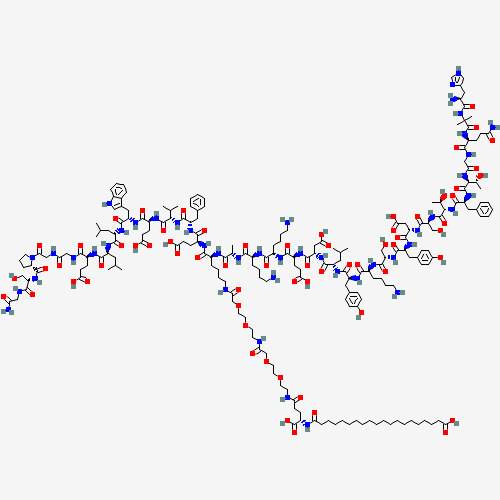
Mazdutide is a dual agonist of the GLP-1 and glucagon receptors. The glucagon component adds increased energy expenditure to appetite suppression, and its phase 3 clinical program is already complete.
- GLP-1 + glucagon: targets both energy intake and expenditure
- Phase 3 clinical program completed
- The newest addition to the metabolic family of the catalogue
- LC-MS identity for every batch
Read more Close
Regulatory status. Mazdutide is in active clinical development. An investigational compound intended exclusively for research and scientific purposes.
Overview
Let’s start with the basics: what is oxyntomodulin and why it matters
To understand what Mazdutide is, we need to go back to one of the lesser-known endogenous peptides, oxyntomodulin. Most people are not familiar with it, although it is continuously active in the body.
In the intestinal wall you have L-cells (the same cells that produce GLP-1). When an L-cell releases proglucagon (a precursor protein), it can be cleaved into different fragments depending on the enzymatic context. In the gut, most proglucagon is cleaved into:
- GLP-1 (Glucagon-Like Peptide-1), the well-known incretin
- GLP-2 (Glucagon-Like Peptide-2), regulates intestinal integrity
- Oxyntomodulin, the natural dual GLP-1/glucagon agonist
Oxyntomodulin contains the entire glucagon sequence + 8 C-terminal amino acids. It activates both receptors simultaneously, GLP-1R and the glucagon receptor (GCGR). In doing so it does something no other incretin hormone can: it combines appetite suppression (GLP-1 effect) with thermogenic energy burning (glucagon effect).
When eating, the body releases oxyntomodulin in order to:
- Suppress further appetite (via GLP-1R)
- Increase energy expenditure for digesting and metabolizing the energy taken in (via GCGR)
- Slow gastric emptying
- Help with glycemic control
This is an elegant physiological mechanism, the body itself creates a dual agonist to balance energy metabolism.
Why we can’t use native oxyntomodulin
Native oxyntomodulin has a very short half-life (4–7 minutes), the same as native GLP-1. The body rapidly degrades it via DPP-IV and other peptidases. For a practical therapeutic, chemical stabilization is needed, similar to the development of Semaglutide from GLP-1.
This was the motivation for developing synthetic analogues of oxyntomodulin, molecules that:
- Activate both GLP-1R and GCGR (preserved dual activity)
- Are DPP-IV resistant
- Have a long half-life (weekly dosing)
- Have a balanced activity ratio between the two receptors (critical for clinical effect)
Several pharmaceutical companies started parallel development, Eli Lilly, Novo Nordisk, Boehringer Ingelheim, Hanmi. These programs produced several candidate molecules, including Survodutide (Boehringer Ingelheim) and Mazdutide (Eli Lilly / Innovent).
Mazdutide, the Lilly + Innovent story
Eli Lilly developed the molecule LY3305677 as its dual GLP-1/glucagon agonist. In 2019 it signed a licensing agreement with China’s Innovent Biologics, which acquired rights for development and commercialization in China. Innovent named the molecule Mazdutide (China code name IBI362).
This was a strategically interesting deal:
- Lilly focused primarily on its Tirzepatide (Mounjaro/Zepbound) in the US and Europe, Mazdutide was a “backup” molecule
- Innovent gained the opportunity to quickly commercialize in China, where obesity and type 2 diabetes are a massive problem
Chinese clinical trials were fast and robust. Phase 3 trial GLORY-1 (n = 610, double-blind placebo-controlled) showed a weight loss of ~14 % at a 6 mg/week dose over 48 weeks. Phase 3 in T2DM (DREAMS-1) demonstrated HbA1c reduction of −2.3 % and weight loss of −9.7 %.
In June 2025 the NMPA (China’s National Medical Products Administration) approved Mazdutide for chronic weight management in obese populations. That was the first regulatory milestone for the molecule.
In the US and EU, Eli Lilly is continuing its Phase 3 program. Given the dominance of Tirzepatide in Lilly’s portfolio, it is unclear whether Mazdutide will be actively commercialized in those markets. Molequa® supplies a pure lyophilized form of Mazdutide identical to the API used in Innovent Phase 3 trials.
Mechanism of action, dual GLP-1/GCGR agonism
Mazdutide activates two receptors in different tissues, similar to Tirzepatide, but with a different combination. Tirzepatide combines GIP + GLP-1; Mazdutide combines glucagon + GLP-1. This difference is critical for the clinical profile.
GLP-1 receptor (GLP-1R), anti-appetite component
GLP-1R activation via Gαs → cAMP → PKA has an identical profile to Semaglutide:
- Appetite suppression via the arcuate nucleus of the hypothalamus
- Glucose-dependent insulin secretion from β-cells
- Glucagon suppression from α-cells
- Slowing of gastric emptying
- Cardiovascular protection (presumed, still being verified)
Glucagon receptor (GCGR), energy expenditure and hepatic component
Here Mazdutide differs from all other incretin molecules in the Molequa® portfolio (with the exception of Retatrutide). GCGR activation:
In the liver (hepatocytes), the most important target:
- Increased lipolysis in the liver, drop in steatosis
- Reduced de novo lipogenesis, the liver stops manufacturing fat
- Increased fatty-acid oxidation
- Drop in ALT/AST, markers of hepatic damage
- Anti-fibrotic effect in MASLD/MASH
In brown adipose tissue (BAT):
- Activation of UCP1, thermogenesis (burning energy as heat)
- “Beiging” of white adipose tissue, conversion to a metabolically active form
In the central nervous system:
- Increased energy expenditure by ~3–6 % at rest
- Contributes to appetite suppression via vagal pathways
Balanced activity ratio
Mazdutide was designed with a balanced activity ratio between GLP-1R and GCGR (~1 : 1 in isolated systems). This is important because:
- GCGR activation that is too strong would lead to hyperglycemia (the liver would pump sugar into the blood)
- GCGR activation that is too weak would not produce a thermogenic advantage
The optimal setting is “dual balanced agonism”, enough glucagon activity for thermogenesis and hepatic effect, but enough GLP-1 activity to compensate for glucagon-induced hyperglycemia via insulin stimulation.
Difference from Retatrutide and Tirzepatide
To understand why Mazdutide exists in parallel with Retatrutide and Tirzepatide:
| Receptor | Tirzepatide | Mazdutide | Retatrutide |
|---|---|---|---|
| GLP-1R | Partial | Full | Partial |
| GIPR | Full | None | Full |
| GCGR | None | Full | Submaximal |
| Class | Dual GIP/GLP-1 | Dual GLP-1/GCG | Triple GIP/GLP-1/GCG |
| Primary strength | Weight + glycemia | MASLD/MASH | Maximum weight loss |
| Approval | FDA 2022 (Mounjaro) | NMPA 2025 (China) | Phase 3 (2026?) |
Mazdutide is therefore a “hepatically focused” molecule, where Tirzepatide dominates in weight and diabetology, Mazdutide excels in MASLD/MASH thanks to the strong glucagon effect on the liver.
Investigated applications
In the published preclinical and clinical literature, the effects of Mazdutide are documented in the following areas:
- Obesity, approved Chinese indication (NMPA 2025)
- Type 2 diabetes, Phase 3 DREAMS-1 (HbA1c −2.3 %)
- MASLD/MASH, emerging data, liver fat reduction >75 %
- Pediatric obesity, Phase 2 in China
- Cardiovascular prevention, Phase 3 outcome trials (CVOT) in preparation
- HFpEF (heart failure with preserved EF), exploratory data
- OSA (obstructive sleep apnea), exploratory
- Renal outcomes in T2DM, secondary endpoints
Science & studies
4.1 Key publications
Ji L., Jiang H., Du Z., et al. (2023). Mazdutide for the treatment of obesity in Chinese adults: a multicentre, randomised, double-blind, placebo-controlled, phase 2 trial. Lancet., Phase 2 obesity.
Innovent Biologics (2024). GLORY-1 Phase 3 Topline Results, Mazdutide in Chinese adults with obesity., Pivotal Phase 3 for NMPA approval.
Innovent Biologics / Eli Lilly (2024). DREAMS-1 Phase 3, Mazdutide vs Dulaglutide in Chinese adults with T2DM., Phase 3 T2DM.
Brandt S.J., Götz A., Tschöp M.H., Müller T.D. (2018). Gut hormone polyagonists for the treatment of type 2 diabetes. Peptides. 100:190–201., Review article on dual agonists.
Day J.W., Ottaway N., Patterson J.T., et al. (2009). A new glucagon and GLP-1 co-agonist eliminates obesity in rodents. Nat Chem Biol. 5(10):749–757., Foundational preclinical work.
Habegger K.M., Heppner K.M., Geary N., et al. (2010). The metabolic actions of glucagon revisited. Nat Rev Endocrinol. 6(12):689–697., Glucagon biology.
4.2 Detailed expandable studies
▸ Study 1: Ji 2023, Phase 2 obesity in the Chinese population
Citation: Ji L., Jiang H., Du Z., et al. Mazdutide for the treatment of obesity in Chinese adults: a phase 2 trial. Lancet. 2023.
What they did: Multinational randomized controlled trial in China. n = 248 Chinese adults with obesity (BMI ≥ 30 or BMI ≥ 27 + comorbidity). Randomization: Mazdutide 3 mg, 4.5 mg or 6 mg/week SC vs placebo. Duration: 24 weeks. 8-week titration.
What they found:
- Mean weight loss: −7.1 % (3 mg), −9.1 % (4.5 mg), −11.0 % (6 mg) vs −0.8 % placebo
- Drop in BMI of 2.5–4.0 in active arms
- Drop in HbA1c (in the sub-group with prediabetes) of 0.3–0.5 %
- Marked drop in ALT/AST, liver markers indicating hepatoprotection
- Drop in liver fat on MRI-PDFF of 35–55 %
- GI adverse effects: nausea 28–40 %, diarrhea 18–25 %, comparable to Semaglutide
- No serious adverse events
Why it matters: This was the first large clinical validation of Mazdutide in the Chinese population. It demonstrated a robust anti-obesity effect and a surprising hepatic profile, the liver-fat reduction data was key for the later-developed MASLD program. For the research context it established the dosing range.
▸ Study 2: GLORY-1 Phase 3, pivotal registrational study
Citation: Innovent Biologics (2024). GLORY-1: A Phase 3 trial of Mazdutide in Chinese adults with overweight or obesity. Topline results for NMPA submission.
What they did: Multinational randomized controlled trial. n = 610 Chinese adults with obesity or overweight with comorbidity. Randomization: Mazdutide 4 mg or 6 mg/week SC vs placebo. Duration: 48 weeks. Primary endpoint: percentage change in body weight.
What they found:
- Mean weight loss: −10.1 % (4 mg), −13.8 % (6 mg) vs −0.5 % placebo
- Peak weight loss in the 4 mg arm: −14.4 % in completer analysis
- Peak weight loss in the 6 mg arm: −18.6 %
- Drop in adipose tissue (DXA) significantly greater than the drop in lean mass
- Drop in liver fat (MRI-PDFF) of >75 % in MASLD patients
- Drop in BMI on average by 4.4 units
- Safety profile consistent with Phase 2 data
Why it matters: GLORY-1 led to the NMPA approval of Mazdutide for obesity in June 2025. That was the first regulatory milestone for the molecule globally. For the Molequa® portfolio it is the first dual GLP-1/GCGR agonist with regulatory approval anywhere in the world. The weight data (−18.6 % in completer analysis) are comparable to Tirzepatide in SURMOUNT-1, although via a different mechanism.
▸ Study 3: DREAMS-1 Phase 3, Mazdutide vs Dulaglutide in T2DM
Citation: Innovent Biologics / Eli Lilly (2024). DREAMS-1: Phase 3 head-to-head Mazdutide vs Dulaglutide in Chinese adults with T2DM.
What they did: n = 567 Chinese patients with T2DM inadequately controlled on metformin. Open active-controlled trial. Mazdutide 4 mg or 6 mg/week vs Dulaglutide 1.5 mg/week. Duration: 52 weeks. Primary endpoint: change in HbA1c.
What they found:
- HbA1c reduction: −1.75 % (4 mg Mazdutide), −2.30 % (6 mg Mazdutide) vs −1.38 % Dulaglutide
- Weight loss: −7.5 kg (4 mg), −9.7 kg (6 mg) vs −2.2 kg Dulaglutide
- Drop in liver enzymes (ALT −20 %, AST −12 %), more pronounced than with Dulaglutide
- % patients achieving HbA1c < 7.0 %: 87 % (Mazdutide 6 mg) vs 58 % (Dulaglutide)
- Safety profile, GI adverse effects mildly higher with Mazdutide
Why it matters: The study demonstrated that Mazdutide is superior to an existing GLP-1 agonist (Dulaglutide) in a T2DM population. The hepatic profile (stronger drop in ALT/AST) is becoming a clinical differentiator for Mazdutide, T2DM patients often have concurrent MASLD and Mazdutide addresses both problems simultaneously.
▸ Study 4: Day 2009, foundational preclinical work
Citation: Day J.W., Ottaway N., Patterson J.T., et al. A new glucagon and GLP-1 co-agonist eliminates obesity in rodents. Nat Chem Biol. 2009;5(10):749–757.
What they did: Original preclinical characterization of the glucagon/GLP-1 co-agonist concept. Researchers (Müller’s lab, Cincinnati) developed a synthetic peptide with balanced activity at both receptors and tested it in obese mouse models. Assessment: body weight, body composition, glycemic control, energy expenditure, liver fat.
What they found:
- Elimination of obesity in obese mice, return to normal weight
- Increased energy expenditure by ~15 %, thermogenic effect via glucagon
- Drop in liver fat of >90 %
- Glycemic control preserved (not hyperglycemia despite the glucagon signal)
- Additive effect of GLP-1 + glucagon vs the individual monotherapies
Why it matters: This was the foundational preclinical publication that established the entire field of dual GLP-1/glucagon agonists. Day and colleagues showed that the combination works in animal models and paved the way for pharmaceutical development. Mazdutide, Survodutide and Cotadutide are all continuations of this idea.
▸ Study 5: MASLD/MASH data, emerging research
Citation: Innovent Biologics / Eli Lilly (2024). Mazdutide for MASLD: sub-study analysis from Phase 2/3 trials.
What they did: Sub-analysis of patients with MASLD (MRI-PDFF liver fat ≥ 10 %) from Phase 2 and 3 Mazdutide trials. n = ~150. Assessment of liver-fat change via MRI-PDFF and secondary fibrosis markers (FIB-4, ELF score).
What they found:
- Liver fat reduction: −65 % (4 mg), −78 % (6 mg) vs −5 % placebo
- % patients with MASLD resolution (PDFF < 5 %): 60 % (6 mg) vs 8 % placebo
- Normalization of ALT/AST in >75 % of patients
- Drop in fibrosis markers (FIB-4, ELF score)
Why it matters: Mazdutide has a stronger hepatic profile than Tirzepatide in SYNERGY-NASH (−50–60 % liver-fat reduction). It is on par with Retatrutide (>80 % reduction). This positions Mazdutide as “the strongest incretin molecule for MASLD/MASH”, the advantage of the glucagon component in the liver. Eli Lilly and Innovent are planning a separate Phase 3 program for this indication.
▸ Study 6: Habegger 2010, glucagon biology
Citation: Habegger K.M., Heppner K.M., Geary N., et al. The metabolic actions of glucagon revisited. Nat Rev Endocrinol. 2010;6(12):689–697.
What they did: Review article in Nature Reviews Endocrinology. Covers the complex biology of glucagon, from the classic “insulin counter-hormone” concept to the modern perspective of glucagon as a regulator of energy metabolism. Discusses the therapeutic potential of glucagon agonism in obesity.
What they found (summary):
- Glucagon has two main metabolic effects: hepatic glucose production (classic) and increased energy expenditure (relatively new insight)
- The thermogenic effect of glucagon proceeds via brown adipose tissue (BAT) and beige adipose
- In a balanced combination with GLP-1: the glycemic negative effect is compensated and the thermogenic benefit remains
- MASLD and steatohepatitis are sensitive to glucagon agonism
Why it matters: The review provides context for understanding why dual GLP-1/glucagon agonism makes mechanistic sense. Without this theoretical framework, no one would dare develop a glucagon agonist for obesity, the classical hypothesis would predict catastrophic hyperglycemia.
▸ Study 7: Brandt 2018, review article on dual agonists
Citation: Brandt S.J., Götz A., Tschöp M.H., Müller T.D. Gut hormone polyagonists for the treatment of type 2 diabetes. Peptides. 2018;100:190–201.
What they did: Review article in Peptides, from Müller’s laboratory, which initiated the entire field of dual and triple agonists. Covers: the chemical development of polyagonists, clinical data available in 2018, therapeutic perspectives.
What they found (summary):
- Polyagonists (dual, triple) are the natural evolution of GLP-1 mono-agonists
- Three main combinations in clinical development:
- GLP-1/GIP (Tirzepatide)
- GLP-1/glucagon (Mazdutide, Survodutide, Cotadutide)
- GLP-1/GIP/glucagon (Retatrutide)
- Balanced activity ratios are critical for clinical outcome
- The liver indication (MASLD/MASH) is unique to molecules with a glucagon component
Why it matters: Brandt’s review established the conceptual framework for the entire polyagonist field. For the research context it makes it possible to understand why Mazdutide exists in parallel with Tirzepatide and Retatrutide, these are molecules with different mechanisms for different clinical indications, not strict competitors.
CoA, Certificate of Analysis
Quality specification (CoA with the first batch)
The values below are the release specification the first batch is tested against. The signed CoA is added as soon as it is issued.
- Purity: ≥ 99.1 % (HPLC-UV at 220 nm)
- Identity: confirmed by mass spectrometry (MS, ESI+, MW 4 822.53 Da)
- Endotoxins: < 0.5 EU/mg (LAL test, measurement of bacterial-toxin contamination)
- Microbial contamination: meets USP <61>
- Residual solvents: meets ICH Q3C
- TFA residues: < 1.0 %
- Related-impurity profile: deamidated forms, oxidized forms, des-amino versions < 0.5 % each
- Chiral impurity control: D-forms of amino acids < 0.3 %
[Download CoA (PDF)] · [Download SDS (PDF)]
Independent analytical laboratory (3rd-party verification). Original manufacturing CoA available upon request for B2B partners.
Note on identity: Mazdutide has structural similarity to other dual/triple agonists (Tirzepatide, Retatrutide, Survodutide, Cotadutide), the molecules are in the same family. For each batch Molequa® performs an extended MS/MS fragmentation analysis to confirm the exact molecular weight and sequence. For Mazdutide correct identification is especially critical due to the structural similarity.
Storage
Lyophilizate (dry powder before reconstitution)
- 2 years at −20 °C (freezer)
- 12–18 months at 2–8 °C (refrigerator)
- Up to 30 days at room temperature (up to 25 °C), protect from light and moisture
After reconstitution (peptide in solution with bacteriostatic water)
- Up to 28 days at 2–8 °C, protected from light
- The Mazdutide clinical formulations (Innovent) have stability of ~21 days at room temperature after first opening
Practical storage rules
- Let the vial warm to room temperature (15–20 min) before opening. A cold vial + warm air = condensation inside the vial, which disrupts the peptide.
- Do not freeze after reconstitution, Mazdutide is especially sensitive to freezing due to the fatty diacid on the molecule, which can aggregate during freezing. Similar to Tirzepatide and Retatrutide.
- Darkness is your friend, UV light progressively degrades the peptide, especially via oxidation of tryptophan and methionine residues.
- Do not shake! Mechanical stress can cause aggregation of the albumin-binding portion of the molecule. Mazdutide has the same sensitivities as other lipidated peptides in the portfolio.
- The solution should remain clear. Any cloudiness or aggregates mean the molecule is breaking down, the peptide is no longer functionally active.
Stacking tips, Frequently combined peptides
In the research literature and the community around metabolic peptides, Mazdutide is combined with several molecules for specific goals.
Semaglutide, Tirzepatide, Retatrutide, alternatives, NOT a combination
For research that compares dual GLP-1/glucagon agonism with a GLP-1 mono-agonist, a dual GIP/GLP-1 or a triple agonist, Semaglutide, Tirzepatide and Retatrutide are direct comparators. They are not combined simultaneously, they are mutually exclusive alternatives within a single protocol. Combining Mazdutide + Semaglutide would lead to duplicate GLP-1R activation without additive benefit.
Cagrilintide, synergistic combination (amylin complement)
An interesting hypothetical combination. Mazdutide addresses GLP-1 + glucagon pathways; Cagrilintide addresses the amylin pathway. Three independent mechanisms of appetite suppression + thermogenesis + amylin signaling, theoretically the strongest incretin combination. Clinical data are not yet available, but in the research context it is a logical exploratory combination (a parallel to CagriSema, but with Mazdutide instead of Semaglutide).
AOD-9604 / HGH Fragment 176-191, complementary lipolytic profile
AOD-9604 is a modified hGH fragment with a clean lipolytic effect without influence on insulin or IGF-1. In research it is combined with Mazdutide to separate the thermogenic effect (Mazdutide’s glucagon component) from direct lipolysis (AOD-9604). For Mazdutide this is less important than for Semaglutide, because the glucagon component already strongly activates lipolysis on its own.
MOTS-c, mitochondrial support
Mazdutide produces a strong metabolic switch due to the glucagon thermogenic effect, mitochondria work at higher gear. MOTS-c is a mitochondrial peptide that improves the efficiency of the mitochondrial OXPHOS pathway. In a hypothetical research context, MOTS-c could support mitochondrial capacity during increased energy expenditure.
BPC-157 and TB-500, against muscle catabolism
With Mazdutide, the concern about muscle mass loss is proportionally high, at stronger weight reduction the risk of sarcopenia exists. Research protocols explore whether regenerative peptides (BPC-157, TB-500) combined with resistance training can mitigate this effect. This is especially relevant for Mazdutide.
Ipamorelin + CJC-1295, anabolic counterweight
For the same reason (muscle catabolism during rapid reduction), the literature describes combinations with a GH stack, anabolic signaling pathways in opposition to the catabolic pressure of caloric deficit.
Key scientific figures and citations
“Mazdutide (IBI362), a dual glucagon-like peptide-1 and glucagon receptor agonist, produced significant and dose-dependent reductions in body weight in Chinese adults with overweight or obesity.”
Ji L. et al. (2023), Lancet Reg Health West Pac 39, PubMed 37927988
Statistics from preclinical literature
- Mazdutide (development codes IBI362, previously LY3305677), a synthetic dual GLP-1/glucagon receptor agonist, a 39-amino-acid peptide derived from oxyntomodulin
- Originally developed at Eli Lilly, licensed to the Chinese company Innovent Biologics in 2019 for development in China
- Standard dose in clinical trials: 3, 4.5, 6, 9 mg/week subcutaneously
- Mechanism: simultaneous activation of GLP-1R (insulin secretion, appetite suppression) + GCGR (increased energy expenditure, lipolysis)
- Phase 2 (Ji 2023, 248 Chinese adults): weight reduction 11.3 % with 9 mg over 24 weeks vs 1.0 % with placebo
- Phase 3 GLORY-1 (2024, preliminary data): weight reduction ~14.4 % with 6 mg over 48 weeks
- Status: approved in China (NMPA) June 2025 for obesity under the brand Xinerlai, the world’s first GLP-1/GCG dual agonist
- Approximately 20+ peer-reviewed publications in PubMed (2021–2024)
Reference sources (PubMed)
- Ji L. et al. (2023). “A phase 2 randomised controlled trial of mazdutide in Chinese overweight adults or adults with obesity.” Nat Commun 14(1):8129. PubMed 38097627
- Ji L. et al. (2023). “Efficacy and safety of mazdutide in Chinese patients with type 2 diabetes: a randomised, double-blind, placebo-controlled, multiple-ascending-dose phase 1b trial.” Lancet Reg Health West Pac 39:100887. PubMed 37927988
- Coskun T. et al. (2022). “LY3437943, a novel triple glucagon, GIP, and GLP-1 receptor agonist.” Cell Metab 34(9):1234–1247. PubMed 36044901
Regulatory status: Mazdutide was approved by the Chinese NMPA in June 2025 for the treatment of obesity (Innovent, brand Xinerlai). In the EU (EMA) and the USA (FDA) it is not approved as of the publication date. Existing data come predominantly from Phase 2/3 clinical trials in China. The product is sold strictly for laboratory scientific research (RUO).
Frequently asked questions about Mazdutide
These questions address the most common research-context searches about Mazdutide. For full technical documentation see the sections above.
What is Mazdutide and what is it used for in research?
Mazdutide (LY3305677, IBI362, 4822 Da) is a dual GLP-1/glucagon receptor agonist developed by Eli Lilly and licensed to Innovent Biologics for the Chinese market. In research it combines GLP-1 satiety with increased glucagon-driven energy expenditure. It is studied in Phase 3 obesity and type 2 diabetes trials.
What dose of Mazdutide do scientists use in animal models?
Phase 2 and 3 clinical trials test 3, 6 and 9 mg subcutaneously once weekly (Innovent GLORY-1 trial). The 9 mg dose achieves weight reduction of ~14.8 % over 48 weeks in obese patients.
What is the difference between Mazdutide and Retatrutide?
Mazdutide is a dual GLP-1/glucagon agonist, whereas Retatrutide is a triple GLP-1/GIP/glucagon agonist. Retatrutide adds the GIP component (improved glycemic control, additional adipose effect) and in Phase 2 achieves a stronger effect (−24 % vs −14.8 %). Mazdutide is approved by China NMPA (2025).
Is Mazdutide an approved medicine or research substance?
Mazdutide was approved by NMPA in China in 2025 for adult obesity. In the EU and USA Phase 3 trials are ongoing, approval expected after 2027. Research-grade product is sold strictly for laboratory scientific research (RUO), not for human consumption.
How is Mazdutide stored?
Lyophilised Mazdutide should be stored at −20 °C protected from light, stability 2 to 3 years; at 2 to 8 °C 12 months. After reconstitution the solution is stable for 28 days at 2 to 8 °C. For acylated peptides, avoid freezing after reconstitution.
What is the half-life of Mazdutide and how often is it administered in studies?
Mazdutide has a long plasma half-life (~120 hours, ~5 days) thanks to its acylated C20 fatty acid binding to albumin, enabling once-weekly dosing. In clinical protocols it is titrated stepwise (escalation every 4 weeks) to minimise GI side effects.
Where to buy Mazdutide in the EU for scientific research?
Mazdutide for scientific research in the EU is offered by Molequa® with FedEx delivery in 3 to 5 business days across the EU. The product ships lyophilised with a Certificate of Analysis (COA). The product is strictly for laboratory scientific research (RUO).