




Quick overview
PT-141 (bremelanotide) is a selective MC4R receptor agonist, chemically derived from Melanotan 2. Its clinical derivative Vyleesi was approved by the FDA in 2019; here you will find the research form with a CoA.
- The only molecule in the catalogue with an FDA-approved derivative
- MC4R selectivity instead of broad receptor activation
- Studied in both men and women
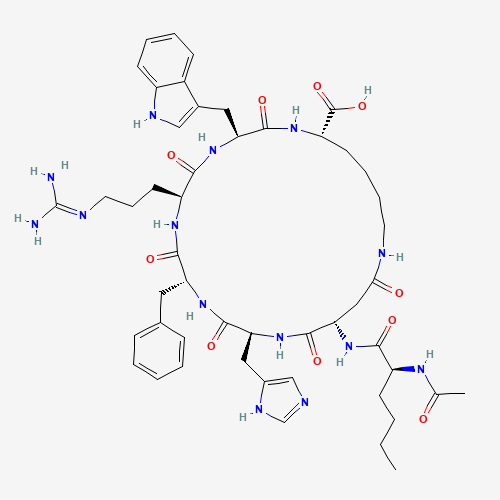
- A cyclic heptapeptide with a stable structure
Read more Close
Overview
Where it comes from and why it was created
The story of PT-141 is really a continuation of the story of Melanotan 2. In the 1990s, Hadley and Hruby at the University of Arizona developed Melanotan 2 as a tanning peptide (an alternative to UV tanning). Phase 1 trials, however, showed that the molecule had a strong unexpected side effect, causing sexual arousal and spontaneous erections in male subjects.
The researchers asked themselves: what if we isolated this “side effect” as the primary indication? Sexual dysfunction is a huge therapeutic market, millions of people, especially women, suffer from hypoactive sexual desire disorder (HSDD), for which virtually no effective pharmacotherapy existed. Viagra and PDE5 inhibitors work peripherally (a vasodilator effect), which works in men for erectile dysfunction, but does not work in women, because female sexual function is more centrally (brain) regulated.
Palatin Technologies (founded in the 1990s specifically for the development of melanocortin agonists) took Melanotan 2 and began to chemically optimize it for selectivity at MC4R, the receptor that mediates central sexual effects. After hundreds of candidate molecules, they identified PT-141, later named Bremelanotide.
Bifurcation from Melanotan 2, key improvements
PT-141 and Melanotan 2 are chemically related (both cyclic heptapeptides, both with a lactam bridge), but with important differences:
| Property | PT-141 (Bremelanotide) | Melanotan 2 |
|---|---|---|
| Selectivity | MC4R-preferential (~10×) | Non-selective (all MC receptors) |
| C-terminus | Free carboxyl | Amidated |
| Tanning effect | Minimal | Strong |
| Sexual effect | Strong | Strong |
| Appetite effect | Mild | Moderate |
| Regulatory status | FDA-approved (Vyleesi) | Research peptide |
Practical consequence: PT-141 retains the central sexual effects of Melanotan 2 (via MC4R), but minimizes the side cutaneous and metabolic effects (via weaker activity at MC1R and MC5R).
FDA approval as Vyleesi (2019)
After two decades of development and several Phase 3 trials, Palatin Technologies obtained FDA approval for Bremelanotide in June 2019 under the brand name Vyleesi. Indication: hypoactive sexual desire disorder (HSDD) in premenopausal women.
Vyleesi is a significant regulatory milestone:
- The first FDA-approved peptide sexual stimulant for women
- The second drug for female HSDD (after Addyi/flibanserin, 2015), but with a completely different mechanism
- A demonstration that the melanocortin system is a legitimate therapeutic target for sexual dysfunction
Vyleesi is supplied in a single-use autoinjector with a dose of 1.75 mg subcutaneously. It is applied 45 minutes before planned sexual activity. Maximum 1× per 24 hours, 8× per month.
In the EU, PT-141 is not approved, but some centers use it off-label via special access programs. Molequa® supplies PT-141 for research purposes, for laboratory research and replication of clinical experiments.
Male use, off-label
Although Vyleesi is approved only for women, PT-141 is also studied in research contexts in men, particularly for indications:
- Erectile dysfunction (where PDE5 inhibitors do not work well, especially neurogenic forms)
- PSSD (Post-SSRI Sexual Dysfunction), persistent sexual dysfunction after discontinuation of antidepressants
- Anorgasmia
- Low libido in men with normal testosterone
These uses are not formally approved, but several clinical trials are ongoing.
Mechanism of action, central, not peripheral
This is the most important aspect of PT-141, which distinguishes it from other sexual stimulants.
MC4R activation in the hypothalamus
PT-141 crosses the blood-brain barrier and activates MC4R in the hypothalamus, especially in two areas:
- Medial preoptic area (MPA), the main center for integration of sexual behavior
- Paraventricular nucleus (PVN), the coordinator of neuroendocrine and autonomic responses
Activation of MC4R in these areas via Gαs → cAMP → PKA leads to:
- Increased dopaminergic signaling in dopaminergic pathways (especially the mesolimbic pathway with the reward system)
- Activation of oxytocinergic neurons
- Inhibition of prolactin (which is a libido suppressor)
- Modulation of serotonin in pathways negatively affecting sexual function
Clinical manifestation
The result of these central changes:
- Increased sexual desire
- Better subjective arousal
- In men: erections via centrally activated parasympathetic pathways
- In women: vaginal lubrication and clitoral arousal via autonomic pathways
Difference from PDE5 inhibitors (Viagra)
This is the key mechanistic difference:
| Aspect | PT-141 | PDE5 inhibitors (Viagra) |
|---|---|---|
| Target | MC4R in CNS | PDE5 in smooth muscle |
| Mechanism | Central, dopaminergic signaling | Peripheral, vasodilation |
| Effect without sexual stimulation | Yes, acts on desire | No, requires stimulation |
| Works in women | Yes, approved for HSDD | Not effectively |
| Works in psychogenic dysfunction | Yes | Often not |
| Independent of testosterone | Yes | Yes |
PT-141 thus acts at the level of desire and arousal in the brain, while Viagra acts at the level of vascular response in the genitals. These are two completely different mechanisms and in clinical practice they can complement each other.
Investigated applications
In the published preclinical and clinical literature, effects of PT-141 are documented in the following areas:
- Hypoactive sexual desire disorder (HSDD) in women, the approved indication (Vyleesi, 2019)
- Erectile dysfunction in men, Phase 2 trials (did not reach Phase 3 approval)
- PSSD (Post-SSRI Sexual Dysfunction), developing research in the indication of persistent sexual dysfunction after antidepressants
- Sexual dysfunction from diabetes, preclinical and Phase 2 data
- Sexual dysfunction from multiple sclerosis, preclinical
- Anorgasmia, exploratory clinical experiences
- Hemorrhagic shock, preclinical models (via MC4R-mediated cardiovascular effect)
- Reactive hyperemia, preclinical
Buying PT-141: what to look for
When buying PT-141, the decisive criterion is not the price but the verifiability of quality. A research peptide is only ever as good as its certificate of analysis. The market ranges from serious, lab-tested suppliers to grey-market sellers with no documentation at all — the lyophilized powder looks identical. These five criteria separate them.
1. Certificate of analysis will be supplied with the next batch
HPLC purity shows what proportion of the powder is actually PT-141. Serious suppliers document ≥ 99 % with a chromatogram. “99 % purity” without an attached chromatogram is a claim, not proof.
2. Batch-specific certificate of analysis (CoA)
The most important document. A batch-specific CoA belongs to exactly the batch you receive — with batch number, date and purity value, issued by an independent laboratory (Janoshik and similar are the industry standard). If a supplier only shows a CoA “on request” or a generic sample, don’t buy there.
3. LC-MS identity confirmation
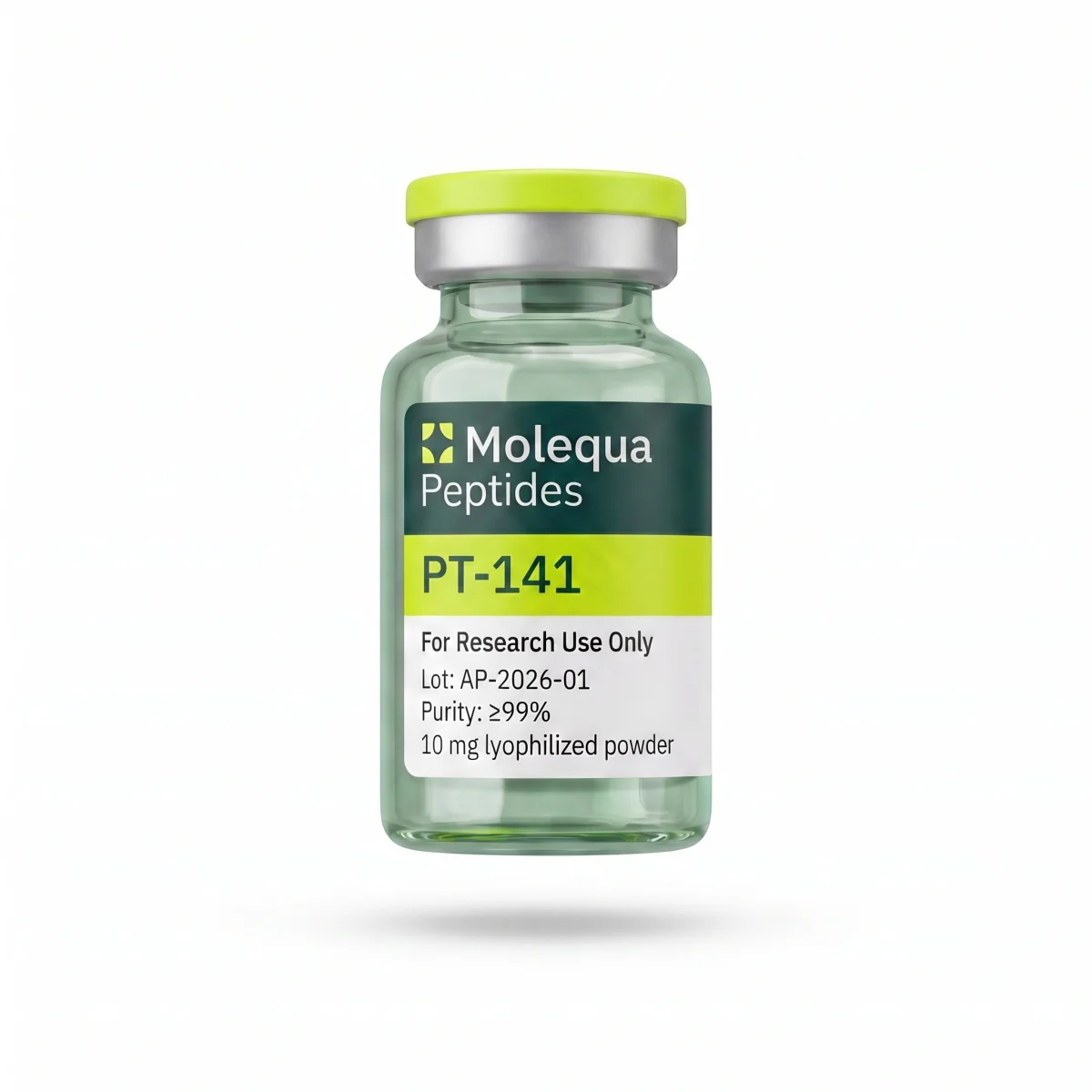
Purity tells you how much of a substance is present; LC-MS tells you which substance it is. Via the molecular mass (1025.2 Da) it confirms this is the correct identity of PT-141, not a cheaper, mislabeled peptide.
4. Origin and EU shipping with traceability
A supplier with an EU warehouse and full batch traceability has the edge over grey imports from Asia: shorter, cooled transport and no customs risk. Molequa® ships from within the EU, typically within 3 to 5 business days — no post-Brexit customs delays.
5. Correct delivery form: lyophilizate
High-quality PT-141 is delivered as a lyophilizate (white powder), not as a pre-mixed solution. Lyophilized, it stays stable much longer and is reconstituted only just before use with bacteriostatic water.
Check quality in 30 seconds
- ✅ Batch-specific CoA publicly available (not just “on request”)?
- ✅ Purity proven with a chromatogram?
- ✅ LC-MS identity confirmed (mass 1025.2 Da)?
- ✅ EU warehouse and batch traceability?
- ✅ Delivered as a lyophilizate with clear storage instructions?
If all five points are met, you are buying verified material. Every Molequa® batch ships with a batch-specific certificate of analysis, and LC-MS confirmation — you can find the current CoA in the Batch test results section below.
Legal notice: PT-141 is a research peptide and not an approved medicine. It is sold exclusively for scientific laboratory research and is not intended for human or animal consumption.
Science & Studies
4.1 Key publications
Kingsberg S.A., Clayton A.H., Portman D., et al. (2019). Bremelanotide for the Treatment of Hypoactive Sexual Desire Disorder: Two Randomized Phase 3 Trials. Obstet Gynecol. 134(5):899 to 908., FDA registration study.
Clayton A.H., Althof S.E., Kingsberg S., et al. (2016). Bremelanotide for female sexual dysfunctions in premenopausal women: a randomized, placebo-controlled dose-finding trial. Womens Health (Lond). 12(3):325 to 337., Phase 2b dose-finding.
Diamond L.E., Earle D.C., Heiman J.R., et al. (2006). An effect on the subjective sexual response in premenopausal women with sexual arousal disorder by bremelanotide (PT-141). J Sex Med. 3(4):628 to 638., Early Phase 2 data.
Wessells H., Fuciarelli K., Hansen J., et al. (1998). Synthetic melanotropic peptide initiates erections in men with psychogenic erectile dysfunction. J Urol. 160(2):389 to 393., Foundational article for the erectogenic mechanism.
Pfaus J.G., Shadiack A., Van Soest T., et al. (2007). Selective facilitation of sexual solicitation in the female rat by a melanocortin receptor agonist. Proc Natl Acad Sci USA. 101(27):10201 to 10204., Mechanism in animals.
Simon J.A., Kingsberg S.A., Goldstein I., et al. (2018). Long-term safety and efficacy of bremelanotide for hypoactive sexual desire disorder. Obstet Gynecol. 134(5):909 to 917., Long-term safety.
4.2 Detailed expandable studies
▸ Study 1: Kingsberg 2019, FDA registration study
Citation: Kingsberg S.A., Clayton A.H., Portman D., et al. Bremelanotide for HSDD: Two Randomized Phase 3 Trials (RECONNECT). Obstet Gynecol. 2019;134(5):899 to 908.
What they did: Two parallel Phase 3 studies (RECONNECT 301 and RECONNECT 302). n = 1,247 premenopausal women with HSDD. Randomized double-blind placebo-controlled. Bremelanotide 1.75 mg SC self-administered as needed (before planned sexual activity) vs placebo. Duration: 24 weeks. Primary endpoints: Female Sexual Function Index (FSFI), Female Sexual Distress Scale (FSDS-DAO).
What they found:
- Significant improvement in FSFI desire score vs placebo in both trials
- Significant reduction of FSDS-DAO (sexual distress and disturbance)
- 24.6 % responder rate in Bremelanotide vs 17.1 % in placebo (statistical significance)
- Side effects: nausea (40 %), flushing (20 %), headache (11 %), injection site reaction (12 %)
- 8.8 % discontinued due to nausea
Why it matters: This was the FDA registration study for Vyleesi. After 20 years of development, it finally demonstrated clinically relevant efficacy in a difficult indication (HSDD is notoriously difficult for clinical trials due to high placebo responses and subjective endpoints). Approval in June 2019 was a historical moment for melanocortin therapeutics.
▸ Study 2: Clayton 2016, Phase 2b dose-finding
Citation: Clayton A.H., Althof S.E., Kingsberg S., et al. Bremelanotide for female sexual dysfunctions in premenopausal women. Womens Health (Lond). 2016;12(3):325 to 337.
What they did: n = 397 premenopausal women with HSDD and/or female sexual arousal disorder (FSAD). Randomization: Bremelanotide 0.75, 1.25 or 1.75 mg SC vs placebo. Duration: 12 weeks. Assessment: Sexual Encounter Profile (SEP), FSFI, FSDS-R.
What they found:
- Dose-dependent improvement of sexual endpoints
- The 1.75 mg dose had the best efficacy vs side effects ratio, this dose was chosen for Phase 3
- 0.75 mg was subtherapeutic
- Side effects: predominantly mild to moderate, dose-dependent
Why it matters: The study defined the optimal dose for the clinical program. Identification of 1.75 mg as the sweet spot between efficacy and tolerability was critical for success in Phase 3. From a research perspective, it is a reference for dosing protocols.
▸ Study 3: Diamond 2006, early Phase 2
Citation: Diamond L.E., Earle D.C., Heiman J.R., et al. An effect on the subjective sexual response in premenopausal women with sexual arousal disorder by bremelanotide (PT-141). J Sex Med. 2006;3(4):628 to 638.
What they did: n = 18 premenopausal women with sexual arousal disorder. Double-blind placebo-controlled study. PT-141 20 mg intranasally (the then-tested route of administration) vs placebo. Assessment: subjective sexual responses, physiological markers (vaginal photoplethysmograph), safety.
What they found:
- Significant improvement in sexual desire vs placebo
- Improvement in subjective arousal and genital congestion
- No serious side effects
- Mild nausea in some subjects
- Mild increase in blood pressure in the hours after administration
Why it matters: This was one of the first clinical studies of PT-141 in women. It validated the concept that an MC4R agonist can be effective in women (unlike Viagra). The route of administration was later changed from intranasal to subcutaneous (for safety reasons, intranasal PT-141 caused higher blood pressures).
▸ Study 4: Wessells 1998, foundational erectogenic study
Citation: Wessells H., Fuciarelli K., Hansen J., et al. Synthetic melanotropic peptide initiates erections in men with psychogenic erectile dysfunction: double-blind, placebo controlled crossover study. J Urol. 1998;160(2):389 to 393.
What they did: n = 10 men with psychogenic erectile dysfunction. Double-blind placebo-controlled crossover study with Melanotan 2 (more precisely the predecessor of PT-141) 0.025 mg/kg SC vs placebo. Assessment: RigiScan tumescence, duration of erection, side effects.
What they found:
- Erectile response in 80 % of subjects in the active group vs 20 % placebo
- Mean time to erection: 45 minutes
- Mean duration of erection: 90 minutes
- Subjectively satisfactory penetrative capability in 70 %
- Nausea in 50 %, flushing in 30 %
Why it matters: This was the foundational article for the entire field of melanocortin erectogenesis and sexual stimulation. Wessells and colleagues showed that the melanocortin mechanism acts via central pathways and works even when the peripheral PDE5-mediated pathway (Viagra) fails. This was the spark that led to the development of PT-141 as a more selective derivative.
▸ Study 5: Pfaus 2007, animal mechanism
Citation: Pfaus J.G., Shadiack A., Van Soest T., et al. Selective facilitation of sexual solicitation in the female rat by a melanocortin receptor agonist. Proc Natl Acad Sci USA. 2007;101(27):10201 to 10204.
What they did: Female rats in various endocrine states (proestrus, diestrus, ovariectomized) received PT-141 or placebo. Assessment: proceptive sexual behavior (solicitation, hops, darts, these are specific movements by which the female signals interest in the male), receptive behavior (lordosis), motor activity.
What they found:
- PT-141 selectively increased proceptive (solicitation) behavior, i.e., the female’s initiative for sexual contact
- Receptive behavior (lordosis, passive receptivity) did not change
- c-fos activation in the medial preoptic area (MPA) of the hypothalamus, a key center of sexual behavior
- The effect did not depend on endocrine status and worked also in ovariectomized females (without estrogen)
Why it matters: This is a mechanistic study that explains why PT-141 works in women. “Proceptive behavior” is the translation of the concept of sexual desire and initiative from an animal model, precisely what PT-141 stimulates in human subjects. Central action in the MPA of the hypothalamus provides the anatomical basis for the clinical effect.
▸ Study 6: Simon 2018, long-term safety
Citation: Simon J.A., Kingsberg S.A., Goldstein I., et al. Long-term safety and efficacy of bremelanotide. Obstet Gynecol. 2018;134(5):909 to 917.
What they did: n = 684 women who completed Phase 3 trials (RECONNECT) and continued in an open-label extension. PT-141 1.75 mg SC self-administered for 52 weeks. Assessment: sustained efficacy, cumulative safety, blood pressure, heart rate, skin changes.
What they found:
- Efficacy was maintained during 52 weeks of follow-up
- No new safety signals vs Phase 3 data
- Nausea decreased with repeated use (initial desensitization)
- Mild increase in blood pressure after each dose, but no cumulative effect
- No pigmentation changes or new nevi, a key difference from Melanotan 2
- No case of cardiac ischemic incident (cardiovascular concern was the main one for regulators)
Why it matters: The study was critical for FDA approval, demonstrating that long-term use is safe and clinically effective. The absence of cutaneous changes (in contrast to Melanotan 2) confirmed the advantages of MC4R selectivity. After publication, FDA approved Vyleesi in June 2019.
▸ Study 7: King 2016, safety review article
Citation: King S.H., Mayorov A.V., Balse-Srinivasan P., et al. Melanocortin receptor agonists, structure-activity relationships, and applications in the treatment of obesity. Curr Top Med Chem. 2016;7(11):1098 to 1106.
What they did: Review article covering the pharmacology and safety of melanocortin agonists, PT-141, Melanotan 2, Setmelanotide, other candidates. Discussion: receptor selectivity, clinical data, safety profiles, regulatory perspectives.
What they found (summary):
- MC4R-selective agonists (PT-141, Setmelanotide) have a better safety profile than non-selective ones (Melanotan 2)
- Main side effects of all melanocortin agonists: nausea, flushing, mild increase in blood pressure
- Pigmentation changes are tied to MC1R activity; selective MC4R agonists do not have them
- Setmelanotide (Imcivree) was later approved by the FDA for rare genetic obesities (2020)
Why it matters: Review context allows understanding of why PT-141 was clinically more successful than Melanotan 2. Selectivity is key for clinical tolerance in melanocortin pharmacology. This principle led to the development of even more selective molecules (Setmelanotide for obesity, further generations in the Palatin pipeline).
Storage
Lyophilizate (dry powder before reconstitution)
- 2 years at −20 °C (freezer)
- 18 months at 2 to 8 °C (refrigerator)
- Up to 30 days at room temperature (up to 25 °C), protect from light and moisture
After reconstitution (peptide in solution with bacteriostatic water)
- Up to 30 days at 2 to 8 °C, protected from light
- The cyclic structure makes PT-141 relatively stable in solution, more stable than most linear peptides
Practical storage rules
- Allow the vial to warm to room temperature (15 to 20 min) before opening.
- Avoid light completely, PT-141 contains tryptophan and histidine, which are sensitive to UV degradation. Use a dark box in the refrigerator.
- Avoid contact with strong oxidizing agents.
- Do not shake! Although the cyclic form is more robust, mechanical stress can disrupt the conformation.
- The solution should remain clear to very slightly yellowish. Darker coloring indicates oxidation, do not use.
Combination tips, Frequently combined peptides and molecules
PT-141 is in the research literature used predominantly alone (for the sexual indication), but some combinations are described in exploratory protocols.
Melanotan 2, alternative, not combination
This is an alternative, not a combination. Melanotan 2 is a non-selective MC agonist (stronger tanning effect, more side effects), PT-141 is MC4R-selective (weaker tanning effect, cleaner sexual effect). For research focused only on the sexual pathway, PT-141 is the cleaner molecule.
Melanotan I (Afamelanotide), for parallel cutaneous indication
If research wants to combine controlled tanning (via Afamelanotide, an MC1R agonist) with an independent sexual effect (via PT-141, an MC4R agonist), this is a mechanistically valid combination. The selectivity of each molecule minimizes the mutual overlap of effects.
Oxytocin, complementary sexual axis
Oxytocin is a peptide acting in parasympathetic and central social pathways. During sexual activity, oxytocin mediates bonding and the orgasmic response. PT-141 mediates initial desire and arousal. Together they could cover a broader spectrum of sexual function. A hypothetical research combination, clinical data are lacking.
PDE5 inhibitors (Viagra, Cialis), for men
In erectile dysfunction where PDE5 inhibitors alone are insufficient (for example in psychogenic or neurogenic etiology), combination with PT-141 can cover both central and peripheral components. Caution: the combination may amplify vasoactive effects (increase in blood pressure from PT-141, vasodilation from PDE5), requires caution in cardiovascular patients.
Kisspeptin, hormonal axis
Kisspeptin regulates GnRH and thus testosterone/estrogen. PT-141 acts independently of sex hormones. For research in patients with low libido due to hormonal imbalances, the combination can address both levels.
No combinations with antidepressants (SSRI/SNRI)
In SSRI/SNRI-induced sexual dysfunction (PSSD-like), PT-141 is studied as monotherapy. Combination with active antidepressants may be complex, SSRIs increase serotonin, which may weaken the MC4R effect. This is an active research area.
Key scientific figures and citations
“Bremelanotide is a synthetic cyclic heptapeptide melanocortin receptor agonist that acts on the central nervous system to increase sexual desire and was approved by the U.S. FDA in June 2019 for the treatment of acquired, generalized hypoactive sexual desire disorder in premenopausal women.”
Kingsberg SA. et al. (2019), Obstet Gynecol 134(5), PubMed 31599831
Statistics from preclinical literature
- PT-141 / Bremelanotide (brand name Vyleesi®), a cyclic heptapeptide derived from Melanotan 2, sequence Ac-Nle-cyclo(Asp-His-D-Phe-Arg-Trp-Lys)-OH, molecular weight 1025.18 Da
- Developed at Palatin Technologies (USA) as an MT-II derivative with selectivity for MC4R (secondarily MC1R)
- Mechanism: central MC4R agonist in the paraventricular nucleus of the hypothalamus, modulating dopaminergic pathways (sexual arousal independent of the vascular component)
- Standard dose in the RECONNECT clinical trials: 1.75 mg subcutaneously via autoinjector on demand, max 1× per 24 h, max 8× per month
- Phase 3 RECONNECT (Kingsberg 2019, n=1247 women with HSDD): ~25 % improvement in FSFI-Desire score vs ~17 % placebo (statistically significant difference p<0.001)
- FDA approval: 21 June 2019 as Vyleesi for HSDD in premenopausal women
- EMA: withdrawn application 2020 (Amag Pharmaceuticals); Vyleesi is not registered in the EU
- Approximately 100+ peer-reviewed publications in PubMed (2003–2024)
Reference sources (PubMed)
- Kingsberg SA. et al. (2019). “Bremelanotide for the Treatment of Hypoactive Sexual Desire Disorder: Two Randomized Phase 3 Trials.” Obstet Gynecol 134(5):899–908. PubMed 31599831
- Clayton AH. et al. (2016). “Bremelanotide for female sexual dysfunctions in premenopausal women: a randomized, placebo-controlled dose-finding trial.” Womens Health (Lond) 12(3):325–337. PubMed 27181790
- Diamond LE. et al. (2004). “An effect on the subjective sexual response in premenopausal women with sexual arousal disorder by bremelanotide (PT-141), a melanocortin receptor agonist.” J Sex Med 1(1):82–90. PubMed 16422988
Regulatory status: Bremelanotide (PT-141) has been FDA approved since 21 June 2019 as Vyleesi® for the treatment of HSDD in premenopausal women (Palatin/Amag/Cosette Pharmaceuticals). In the EU it is not approved (EMA application withdrawn 2020). In SK/CZ/AT/PL it is not registered and is not available through pharmacies. The product is sold strictly for laboratory scientific research (RUO).
Frequently asked questions about PT-141
These questions address the most common research-context searches about PT-141. For full technical documentation see the sections above.
What is PT-141 and what is it used for in research?
PT-141 (Bremelanotide, 1025 Da) is a synthetic cyclic 7-amino-acid analogue of α-MSH selective for melanocortin receptors MC3R and MC4R. In research it activates central neuronal pathways in the hypothalamus supporting sexual motivation independent of vascular mechanism (unlike PDE5 inhibitors). It was FDA-approved as Vyleesi (2019) for HSDD in premenopausal women.
What dose of PT-141 do scientists use in animal models?
Approved Vyleesi clinical dose: 1.75 mg subcutaneously 45 minutes before sexual activity, max once daily, 8 times monthly. In preclinical animal studies doses of 0.1 to 1 mg/kg subcutaneously were tested. For research standard concentration is 10 mg/ml.
What is the difference between PT-141 and Melanotan 2?
PT-141 is a selective MC3R/MC4R agonist without marked MC1R effect (does not induce pigmentation), whereas Melanotan 2 is a non-selective pan-melanocortin agonist (strong pigmentation + libido + appetite reduction). PT-141 is FDA-approved (Vyleesi 2019), Melanotan 2 is not. PT-141 has shorter action (hours vs days).
Is PT-141 an approved medicine or research substance?
PT-141 (Bremelanotide) is FDA-approved as Vyleesi (2019) for HSDD in premenopausal women, marketed by AMAG Pharmaceuticals/Palatin Technologies. Not approved by EMA in the EU. Raw peptide outside the Vyleesi formulation is sold strictly for laboratory scientific research (RUO).
How is PT-141 stored?
Lyophilised PT-141 should be stored at −20 °C protected from light, stability 2 to 3 years; at 2 to 8 °C 12 months. After reconstitution the solution is stable for 28 days at 2 to 8 °C.
What is the half-life of PT-141 and how often is it administered in studies?
PT-141 has a plasma half-life of ~2.7 hours subcutaneously, the biological effect persists 8 to 12 hours. In the clinical Vyleesi protocol it is administered 45 minutes before sexual activity, max once per 24 hours and max 8 times per month.
Where to buy PT-141 in the EU for scientific research?
PT-141 for scientific research in the EU is offered by Molequa® with FedEx delivery in 3 to 5 business days across the EU. The product ships lyophilised with a Certificate of Analysis (COA). The product is strictly for laboratory scientific research (RUO).