




Quick overview
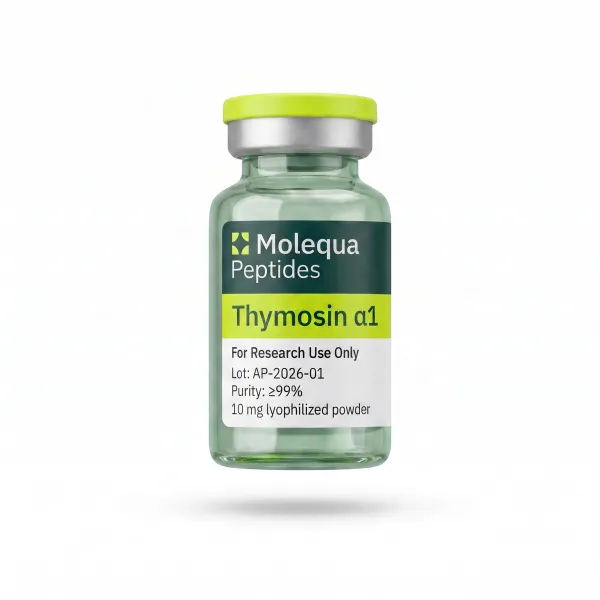
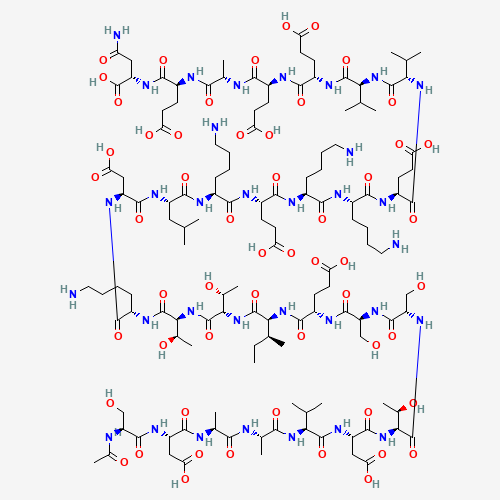
Thymosin alpha-1 is a 28-amino-acid thymus peptide that modulates the immune response. As the drug Zadaxin it is approved in more than 30 countries; here you will find the research form with a CoA.
- The most clinically validated immune peptide of the catalogue
- Approved as Zadaxin in 30+ countries (outside the EU and USA)
- Studied in immunosenescence and infections
- LC-MS identity for every batch
Read more Close
Overview
Origin and rationale
The story of Thymosin α1 begins in New York in the 1960s and 1970s, in the laboratory of Allan Goldstein at NYU Medical School. Goldstein was a young immunologist who concerned himself with one of the most fundamental questions in the immunology of his time: how do T-cells learn to be T-cells?
In the 1960s scientists knew that the thymus gland (a small organ beneath the breastbone, large in children and shrinking in adults) was somehow critical for immune function. Children born without a thymus (DiGeorge syndrome) lacked T-cells and had catastrophic immune defects. But why is the thymus so important? What signals does the thymus send?
Goldstein hypothesized that the thymus produces hormones, peptide signalling molecules that instruct T-cells how to differentiate and function. He began extracting the thymus of cattle and looking for active components. In 1972 he published the first isolation paper on “Thymosin Fraction 5”, a crude mixture of peptides from the thymus that, in animal models, restored T-cell function.
Goldstein then systematically fractionated Thymosin Fraction 5 and isolated individual peptides. The most active was a 28-amino-acid peptide with N-terminal acetylation, which he named Thymosin α1 (alpha for “first discovered” in the alpha fraction). In 1977 he published its full amino acid sequence.
Synthesis and commercialization as Zadaxin
Because Tα1 is a relatively short peptide (28 aa), in the 1980s it became available through chemical synthesis (SPPS). Synthetically produced Tα1 is chemically identical to native human Tα1, no post-translational modifications other than the N-terminal acetylation, which is performed during synthesis.
In the 1990s several companies began clinical development of synthetically produced Tα1 for chronic hepatitis B. The Italian company SciClone Pharmaceuticals obtained the first approvals in the mid-1990s (Italy 1996, China 1996). Brand name: Zadaxin (Thymalfasin INN, International Non-proprietary Name).
Approval gradually expanded to 35+ countries:
- Europe: Italy, Spain, Russia, Portugal, Greece, Bulgaria
- Asia: China (the key market, massive use), India, Philippines, Vietnam, Thailand, Malaysia
- Latin America: Mexico, Argentina, Peru, Venezuela, Colombia
- Middle East and Africa: Egypt, Saudi Arabia, United Arab Emirates
- Others: Singapore, Hong Kong
Main approved indications:
- Chronic hepatitis B, the primary indication
- Chronic hepatitis C, as adjuvant to interferon/ribavirin
- Chemotherapy adjuvant, in particular for melanoma and hepatocellular carcinoma
- Vaccination adjuvant, in immunocompromised patients (HIV, hemodialysis, elderly)
In the USA Tα1 obtained “orphan drug” status from the FDA for some indications, but never received full approval, mainly because SciClone did not complete a large Phase 3 program in the USA. There is no central EU approval, but several countries have national approvals.
In research and clinical practice Thymosin α1 is one of the most studied peptides in immunology, cumulatively >2,000 publications, >100 clinical trials, >1 million patients treated over 30 years of commercial use.
Mechanism of action, the “immune tuner”
Thymosin α1 is unique in this respect: it is neither primarily an immune stimulant nor a suppressor but a “tuner”, a molecule that modulates the immune system toward an optimal balance (homeostasis).
TLR9 activation, the primary mechanism (discovered in 2007)
After decades of searching, the primary receptor mechanism of Tα1 was identified in 2007 (Romani et al.): Toll-like Receptor 9 (TLR9). TLR9 is a recognition receptor of innate immunity that normally recognizes bacterial CpG DNA. Activation of TLR9 by Tα1:
- Activates dendritic cells (DCs), the key “antigen presenters” of the immune system
- Induces production of IL-12 and other pro-helper cytokines
- Shifts the immune response toward a Th1 profile (a stronger anti-viral and anti-tumor response)
- At the same time modulates regulatory T-cells (Tregs), preventing an excessive immune response
Activation and maturation of T-cells
Tα1 stimulates T-cell maturation in the thymus (especially in individuals with preserved residual thymus, children, some adults). Clinically this translates into:
- An increase in CD4+ helper T-cells
- An increase in the CD4/CD8 ratio (normalization in immunosenescence)
- Improved T-cell responsiveness to mitogens and antigens
This is particularly relevant for immunocompromised patients, HIV-positive, geriatric, post-chemotherapy and hemodialysis patients.
Cytokine modulation
Tα1 shifts the cytokine profile toward an anti-viral and anti-tumor environment:
- Increase: IL-2, IFN-γ, IL-12 (Th1 cytokines)
- Decrease in chronic inflammatory states: IL-6, TNF-α (paradoxical anti-inflammatory effect in certain contexts)
- Regulation: IL-10 (anti-inflammatory, regulatory)
NK cell activation
Natural killer (NK) cells are the first line of anti-viral and anti-tumor immunity. Tα1 increases the cytotoxic activity of NK cells by 30–60 % in in vitro and clinical studies.
Anti-apoptotic effect on T-cells
In chronic viral infection (especially HIV, chronic hepatitis) T-cells become exhausted and undergo apoptosis. Tα1 protects T-cells from this exhaustion-induced apoptosis, preserving immune capacity during chronic infection.
Anti-COVID-19 effect, emerging research
During the COVID-19 pandemic several Chinese and Italian clinical trials investigated Tα1 in patients with severe COVID-19. The mechanistic hypothesis:
- COVID-19 causes T-cell lymphopenia (decline in T-cells) in severe patients
- A decline in CD4+ correlates with worse outcome
- Tα1 can maintain the T-cell population during the acute phase of infection
- At the same time it modulates the cytokine storm
Liu et al. (2020) showed that Tα1 reduced mortality in severe COVID-19 patients. While not definitive proof, this opened a rapidly growing research field.
Investigated applications
Effects of Tα1 documented in the published preclinical and clinical literature span the following areas:
- Chronic hepatitis B, approved indication (Sjogren 1998, robust data)
- Chronic hepatitis C, approved as adjuvant (Andreone)
- Hepatocellular carcinoma, approved as adjuvant to oncological treatment
- Melanoma, approved as adjuvant
- Other solid tumors, exploratory in Phase 2/3 trials
- HIV/AIDS adjuvant, Phase 2 data with improvement in CD4 counts
- Sepsis, emerging research (modulation of the cytokine storm)
- COVID-19, Phase 2/3 trials (Liu 2020 and others)
- Vaccination adjuvant in immunocompromised patients, approved indication
- DiGeorge syndrome, pediatric use
- Cystic fibrosis, research in immune dysfunction
- Autoimmune conditions, controversial, with caution
- Age-related immunosenescence, research application
Buying Thymosin Alpha-1: what to look for
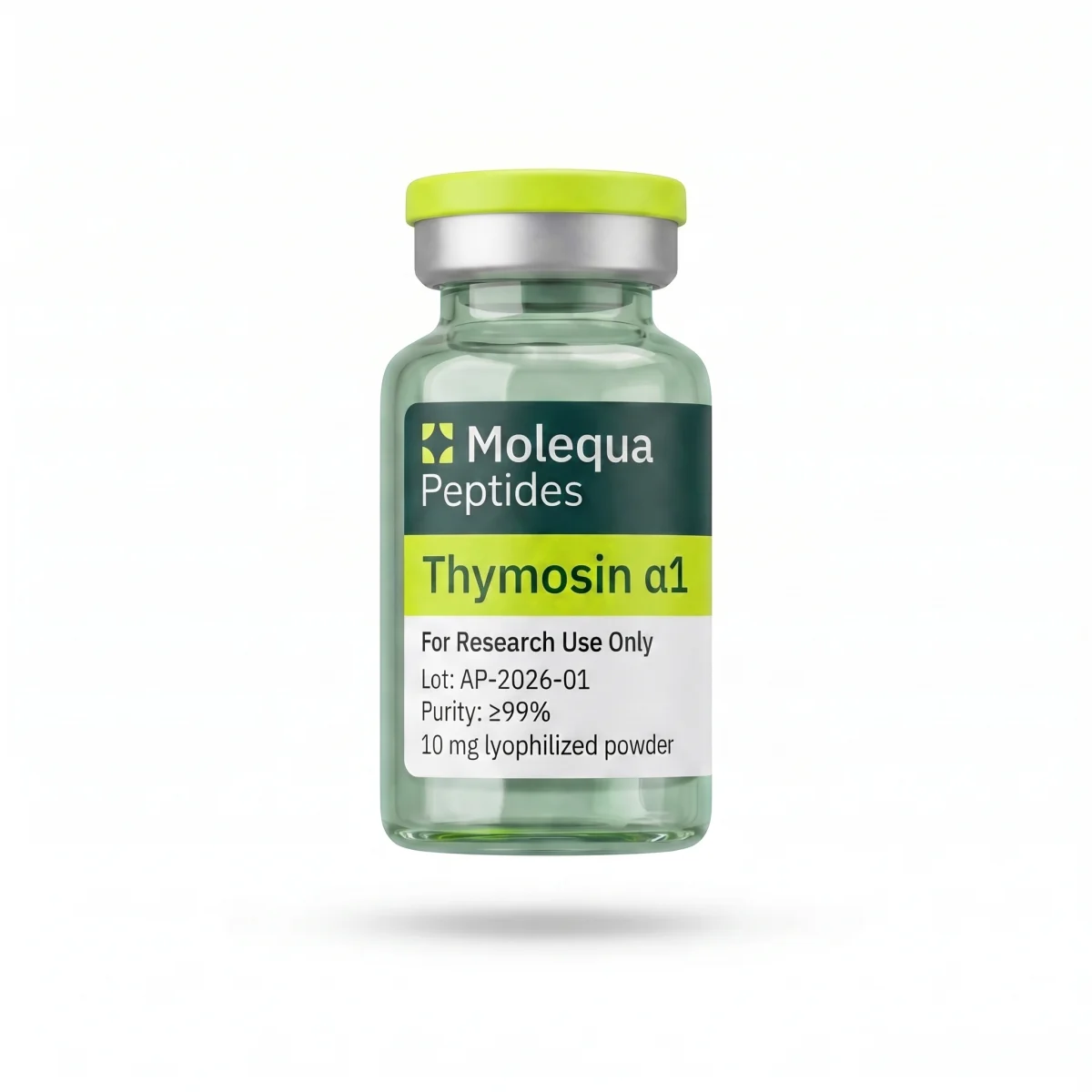
When buying Thymosin Alpha-1, the decisive criterion is not the price but the verifiability of quality. A research peptide is only ever as good as its certificate of analysis. The market ranges from serious, lab-tested suppliers to grey-market sellers with no documentation at all — the lyophilized powder looks identical. These five criteria separate them.
1. HPLC purity ≥ 99 % – documented, not just claimed
HPLC purity shows what proportion of the powder is actually Thymosin Alpha-1. Serious suppliers document ≥ 99 % with a chromatogram. “99 % purity” without an attached chromatogram is a claim, not proof.
2. Batch-specific certificate of analysis (CoA)
The most important document. A batch-specific CoA belongs to exactly the batch you receive — with batch number, date and purity value, issued by an independent laboratory (Janoshik and similar are the industry standard). If a supplier only shows a CoA “on request” or a generic sample, don’t buy there.
3. LC-MS identity confirmation
Purity tells you how much of a substance is present; LC-MS tells you which substance it is. Via the molecular mass (3108.3 Da) it confirms this is the correct identity of Thymosin Alpha-1, not a cheaper, mislabeled peptide.
4. Origin and EU shipping with traceability
A supplier with an EU warehouse and full batch traceability has the edge over grey imports from Asia: shorter, cooled transport and no customs risk. Molequa® ships from within the EU, typically within 3 to 5 business days — no post-Brexit customs delays.
5. Correct delivery form: lyophilizate
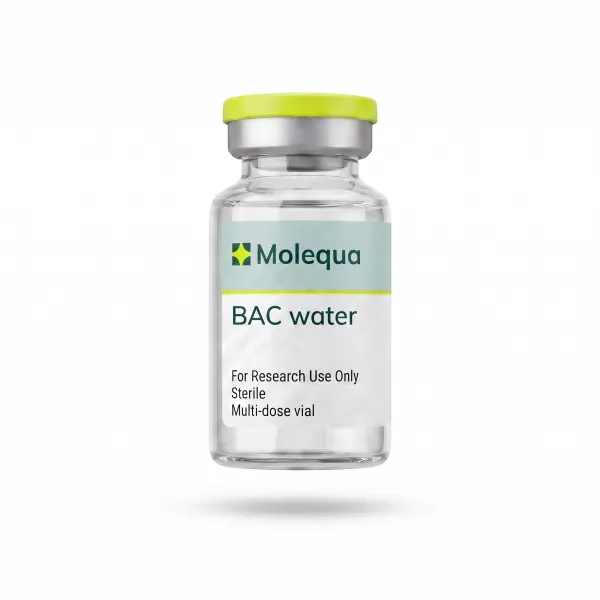
High-quality Thymosin Alpha-1 is delivered as a lyophilizate (white powder), not as a pre-mixed solution. Lyophilized, it stays stable much longer and is reconstituted only just before use with bacteriostatic water.
Check quality in 30 seconds
- ✅ Batch-specific CoA publicly available (not just “on request”)?
- ✅ HPLC purity ≥ 99 % proven with a chromatogram?
- ✅ LC-MS identity confirmed (mass 3108.3 Da)?
- ✅ EU warehouse and batch traceability?
- ✅ Delivered as a lyophilizate with clear storage instructions?
If all five points are met, you are buying verified material. Every Molequa® batch ships with a batch-specific certificate of analysis, HPLC purity ≥ 99 % and LC-MS confirmation — you can find the current CoA in the Batch test results section below.
Legal notice: Thymosin Alpha-1 is a research peptide and not an approved medicine. It is sold exclusively for scientific laboratory research and is not intended for human or animal consumption.
Science & studies
4.1 Key publications
Goldstein A.L., Hannappel E., Sosne G., Kleinman H.K. (2012). Thymosin β4: a multi-functional regenerative peptide. Expert Opin Biol Ther. 12(1):37–51., A foundational review article by the field’s founder.
Sjogren M.H., Sjogren R., Lyons M.F., et al. (1998). Thymosin alpha 1 and lamivudine in the treatment of chronic hepatitis B: a randomized controlled trial. Hepatology. 28(suppl 2):378A., Pivotal hepatitis B trial.
Andreone P., Cursaro C., Gramenzi A., et al. (1996). A randomized controlled trial of thymosin-α1 versus interferon alfa treatment in patients with hepatitis B e antigen antibody and hepatitis B virus DNA positive chronic hepatitis B. Hepatology. 24(4):774–777., Head-to-head vs interferon.
Romani L., Bistoni F., Gaziano R., et al. (2007). Thymosin α1 activates dendritic cells for antifungal Th1 resistance through toll-like receptor signaling. Blood. 108(7):2265–2274., TLR9 mechanism.
Garaci E., Pica F., Rasi G., Favalli C. (2000). Thymosin alpha 1 in the treatment of cancer: from basic research to clinical application. Int J Immunopharmacol. 22(12):1067–1076., Oncology review article.
Liu Y., Pan Y., Hu Z., et al. (2020). Thymosin alpha 1 reduces the mortality of severe COVID-19 by restoration of lymphocytopenia and reversion of exhausted T cells. Clin Infect Dis. 71(16):2150–2157., COVID-19 clinical data.
4.2 Detailed expandable studies
▸ Study 1: Sjogren 1998, pivotal hepatitis B trial
Citation: Sjogren M.H., Sjogren R., Lyons M.F., et al. Thymosin alpha 1 and lamivudine in the treatment of chronic hepatitis B. Hepatology. 1998;28(suppl 2):378A.
What they did: Phase 3 randomized controlled trial. n = 350 patients with chronic hepatitis B (HBeAg positive, elevated ALT). Four arms: lamivudine + Tα1, lamivudine alone, Tα1 alone, placebo. Tα1 dosing: 1.6 mg SC twice weekly. Duration: 24 weeks of treatment + 24 weeks of follow-up. Primary endpoint: virological response (HBeAg seroconversion, HBV DNA undetectable).
What they found:
- Virological response: lamivudine + Tα1 41 % vs lamivudine 18 % vs Tα1 26 % vs placebo 7 %
- Long-term durability of the response was higher in Tα1-containing arms (12-month follow-up)
- The decline in ALT (a marker of hepatic damage) was significantly greater
- No serious adverse events in Tα1 arms
- The Tα1 safety profile was comparable to placebo
Why it matters: The study was key for the global approval of Tα1 as Zadaxin. It demonstrated that the combination of antiviral + immunomodulator delivers a superior response compared with antiviral therapy alone. This is a landmark principle in hepatology, to address the virus and the immune response at the same time.
▸ Study 2: Andreone 1996, head-to-head vs interferon
Citation: Andreone P., Cursaro C., Gramenzi A., et al. Thymosin-α1 versus interferon alfa treatment in chronic hepatitis B. Hepatology. 1996;24(4):774–777.
What they did: n = 30 patients with anti-HBe positive chronic hepatitis B (precore mutant form, harder to treat). Randomization: Tα1 1.6 mg SC twice weekly for 6 months vs interferon α 6 MIU 3× weekly. Endpoints: virological response, biochemical response (ALT), safety profile.
What they found:
- Virological response: Tα1 73 % vs interferon 60 %
- Biochemical response (ALT normalization): Tα1 80 % vs interferon 67 %
- Safety dramatically better in the Tα1 group:
- Interferon: 90 % flu-like symptoms, 30 % depression, 20 % withdrawal due to toxicity
- Tα1: 0 % serious side effects, 0 % withdrawals
Why it matters: The study showed that Tα1 can be clinically superior to interferon α, the then gold standard for treating hepatitis B, with a dramatically better safety profile. It opened the conceptual framework that an immunomodulator can be a better choice than an immunostimulant in chronic viral infection. For the research context this is an unusual head-to-head study against an established drug.
▸ Study 3: Romani 2007, TLR9 mechanism
Citation: Romani L., Bistoni F., Gaziano R., et al. Thymosin α1 activates dendritic cells for antifungal Th1 resistance through toll-like receptor signaling. Blood. 2007;108(7):2265–2274.
What they did: A mechanistic study. After 30 years of clinical use of Tα1, scientists still lacked an exact molecular target. Romani et al. tested the interaction of Tα1 with various immune receptors. They used: dendritic cells (DCs) from mice with knockouts of various TLRs (Toll-like receptors), in vivo models of candidiasis and aspergillosis, and biochemical binding studies.
What they found:
- Tα1 directly activates TLR9, the receptor for bacterial CpG DNA
- Tα1 binds into the TLR9 pocket with high affinity (Kd ~10 nM)
- TLR9 knockout mice do not respond to Tα1, causal evidence of the mechanism
- TLR9 activation → MyD88 → IRF7 → type I IFN, IL-12
- Anti-fungal protection in candidiasis and aspergillosis via this mechanism
Why it matters: This was a breakthrough publication, after decades of research it finally identified the primary molecular target of Tα1. For the research context this is key to understanding how Tα1 works. TLR9 activation explains why Tα1 functions as an “immune tuner”, TLR9 naturally modulates innate immunity toward an anti-viral and anti-fungal response.
▸ Study 4: Garaci 2000, oncology review article
Citation: Garaci E., Pica F., Rasi G., Favalli C. Thymosin alpha 1 in the treatment of cancer: from basic research to clinical application. Int J Immunopharmacol. 2000;22(12):1067–1076.
What they did: A review article summarizing clinical experience with Tα1 in oncology. Covers 15 published oncology clinical trials with a combined n > 1000 patients. Indications: melanoma, hepatocellular carcinoma, non-small-cell lung cancer, colorectal cancer, breast.
What they found (summary):
- Melanoma Phase 3 (Maio et al.): Tα1 + DTIC + interferon markedly prolonged survival vs DTIC alone
- Hepatocellular carcinoma: Tα1 improved response rate and survival as adjuvant after resection
- Mechanism: increased tumor-infiltrating lymphocytes, NK activation, reduction of chemotherapy-induced immunosuppression
- Safety: Tα1 minimizes the side effects of chemotherapy through preservation of immunity
Why it matters: The review article established Tα1 as a legitimate oncology adjuvant in 35+ countries. Clinical experience formed the basis for its broader use. Limitations: no large US Phase 3 oncology trial has been completed, so FDA approval is lacking. For the research context this is a robust base of oncology literature.
▸ Study 5: Liu 2020, COVID-19 clinical data
Citation: Liu Y., Pan Y., Hu Z., et al. Thymosin alpha 1 reduces the mortality of severe COVID-19 by restoration of lymphocytopenia and reversion of exhausted T cells. Clin Infect Dis. 2020;71(16):2150–2157.
What they did: A retrospective observational study. n = 76 patients with severe COVID-19 hospitalized in two hospitals in China. Half received Tα1 (1.6 mg SC once daily) as part of standard care; half did not. Endpoints: 28-day mortality, T-cell kinetics, cytokines.
What they found:
- 28-day mortality: 11 % in the Tα1 group vs 30 % in the control group
- Recovery of the T-cell population in the Tα1 group, return of CD8+ and CD4+ to normal levels
- Reversal of T-cell exhaustion, decline in PD-1 and Tim-3 expression
- Shortened hospitalization in the Tα1 group
- No new safety signals
Why it matters: The study was one of the most influential COVID-19 publications early in the pandemic (published in August 2020). Tα1 became one of the recommended immunomodulators in China for severe COVID-19 cases. Limitations: retrospective design, single-site, small sample, requires validation in large RCTs. It opened massive research investments in Tα1 for COVID-19 and post-COVID syndromes.
▸ Study 6: Sztein 1989, basic immunology
Citation: Sztein M.B., Goldstein A.L. (1989). Thymosin alpha 1: an inducer of T cell maturation and function. Adv Immunol Aging.
What they did: A foundational immunology study. Characterization of Tα1 effects on T-cell development and function in vitro and in animal models (athymic nude mice, old mice with immunosenescence).
What they found:
- Tα1 induces the maturation of prethymocytes into functional T-cells in nude mice (which lack a thymus)
- Restores T-cell function in old mice (where activity declines with age)
- Increases the CD4/CD8 ratio and total T-cell count
- Activates cytotoxic T-cells against viral antigens
- Mechanism via stimulation of thymopoiesis (T-cell formation in the thymus)
Why it matters: The study provides the basic immunological framework for the clinical use of Tα1. The demonstration that the molecule can “replace” thymic function in patients with thymic deficiency or immunosenescence was revolutionary. This framework is today the basis for use of Tα1 in HIV-positive patients, hemodialysis patients, the elderly, and post-chemotherapy patients.
▸ Study 7: King 2018, vaccine adjuvant
Citation: King R., Tuthill C., et al. (2018). An overview of the role of thymosin alpha 1 in immune compromised populations. Expert Rev Vaccines.
What they did: A review article covering Tα1 clinical trials as a vaccination adjuvant in immunocompromised populations. Main indications: chronic hemodialysis (hepatitis B vaccine), HIV-positive individuals (various vaccines), elderly patients (influenza and pneumococcal vaccines).
What they found (summary):
- Hepatitis B vaccine in hemodialysis patients: response rate 40–60 % without Tα1, 75–90 % with Tα1
- Influenza vaccine in the elderly: 30–50 % higher antibody titer with Tα1 pretreatment
- HIV patients: better response to standard vaccines + better CD4 preservation
- Safety: excellent, no serious adverse events
Why it matters: Establishes Tα1 as a legitimate vaccination adjuvant in populations that have an impaired vaccination response. In the context of COVID-19 and other pandemics this becomes ever more relevant, the elderly and immunocompromised populations have the lowest vaccination efficacy, so any molecular boost is clinically valuable.
Storage
Lyophilizate (dry powder before reconstitution)
- 2 years at −20 °C (freezer)
- 18 months at 2–8 °C (refrigerator)
- Up to 30 days at room temperature (≤25 °C), protect from light and moisture
After reconstitution (peptide in solution with bacteriostatic water)
- Up to 30 days at 2–8 °C, protected from light
- Thymosin α1 is relatively stable in solution thanks to N-acetylation and a hydrophilic profile
Practical storage rules
- Let the vial warm to room temperature (15–20 min) before opening.
- Avoid contact with bases, the N-acetyl group can be cleaved at strongly alkaline pH. Bacteriostatic water (pH ~6.5) is safe.
- Darkness is your friend, Tα1 contains several amino acids sensitive to UV exposure.
- Do not shake! Mechanical stress can disrupt conformation.
- The solution should remain clear and colourless. Any cloudiness indicates contamination or aggregation.
Combination tips, frequently combined peptides and molecules
Thymosin α1 is often combined in the research literature with antivirals, chemotherapeutics and other immunomodulators.
Antivirals (for hepatitis B/C), approved clinical combinations
In its approved clinical indications, Tα1 is typically combined with antiviral therapy, this is NOT a “research combination” in the amateur sense but a validated clinical approach:
- Hepatitis B: Tα1 + lamivudine/entecavir/tenofovir
- Hepatitis C: Tα1 + interferon α + ribavirin (the classic triple)
- HIV: Tα1 as an adjuvant to ART (antiretroviral therapy)
Principle: the antiviral suppresses viral replication, Tα1 restores immune capacity for long-term viral control.
TB-500 (Thymosin β4), parallel thymic axis
Because both peptides originate from the thymus (Goldstein discovered both), they share a historical and functional parallel:
- Tα1: immunomodulator via T-cells and TLR9
- TB-500 / Tβ4: regenerative peptide via actin and stem cells
For research into complex states (chronic infection + tissue damage), the combination may be logical, Tα1 restores immunity, TB-500 supports regeneration of damaged tissues.
Selank, complementary immuno-neuro combination
Selank also has immunomodulatory effects (preserved from tuftsin). Together with Tα1 they can cover both the systemic immune and neuroimmune components. A hypothetical research combination.
BPC-157, for the gut immune axis
BPC-157 supports the integrity of the gastrointestinal mucosa, which is a large component of the immune system (~70 % of immune cells reside in gut-associated lymphoid tissue, GALT). Tα1 systemically modulates T-cells. Together they cover both systemic and local immunity.
Epitalon, the immune axis of longevity
The Khavinson school in St. Petersburg combines Tα1 (or thymalin) with Epitalon in geriatric protocols. Epitalon addresses the pineal axis, Tα1 the thymic axis, two centres of age-related dysfunction. The 15-year Korkushko study used precisely this combination.
Vaccines, approved adjuvant use
In some countries Tα1 is approved as an adjuvant to routine vaccination in immunocompromised patients:
- Hepatitis B vaccine in hemodialysis patients
- Influenza vaccine in the elderly
- HBV/HCV in HIV-positive patients
- Principle: Tα1 given before and during vaccination increases the antibody response
MOTS-c and NAD+, energetic support of immune regeneration
For research into age-related immunosenescence, the combination of Tα1 (immune axis) + MOTS-c/NAD+ (energy support of T-cells and NK cells). Immune cells have high energy demands, especially upon activation; support of mitochondria is theoretically synergistic.
Key scientific figures and citations
“Thymosin alpha-1, a 28-amino-acid peptide originally isolated from calf thymus by Goldstein and colleagues, has demonstrated immunomodulatory activity by enhancing T-cell maturation, NK-cell cytotoxicity and dendritic-cell function across multiple clinical settings.”
Goldstein AL., Hannappel E., Kleinman HK. (2005), Trends Mol Med 11(9), PubMed 16095969
Statistics from preclinical literature
- Thymosin Alpha-1 (Tα1), a synthetic 28-amino-acid peptide, sequence Ac-Ser-Asp-Ala-Ala-Val-Asp-Thr-Ser-Ser-Glu-Ile-Thr-Thr-Lys-Asp-Leu-Lys-Glu-Lys-Lys-Glu-Val-Val-Glu-Glu-Ala-Glu-Asn, molecular weight 3108.3 Da
- Originally isolated from bovine thymus by the group of Allan L. Goldstein (George Washington University, USA) in 1972–1977
- Commercialized as Zadaxin (thymalfasin) by SciClone Pharmaceuticals (USA/China)
- Standard dose in clinical trials: 1.6 mg twice weekly subcutaneously (chronic hepatitis B/C, sepsis, immunoadjuvant in vaccination)
- Mechanism: TLR9 agonist in plasmacytoid dendritic cells, modulation of Th1/Th2 balance, enhancement of T-cell maturation in the thymus, activation of NK cells
- In a chronic HBV meta-analysis (Andreone 2001, n=350): HBeAg seroconversion ~36 % vs ~19 % control over 12 months
- COVID-19 retrospective study (Liu 2020, n=76): reduction of mortality in severe cases from 30 % to 11 % (Wuhan)
- Approximately 1500+ publications in PubMed (1972–2024)
Reference sources (PubMed)
- Goldstein AL. et al. (2005). “Thymosins: chemistry and biological properties in health and disease.” Trends Mol Med 11(9):421–429. PubMed 16095969
- Andreone P. et al. (2001). “A randomized controlled trial of thymosin-alpha1 versus interferon alfa treatment in patients with hepatitis B e antigen antibody and hepatitis B virus DNA-positive chronic hepatitis B.” Hepatology 34(5):1054–1059. PubMed 11679979
- Liu Y. et al. (2020). “Thymosin alpha 1 reduces the mortality of severe coronavirus disease 2019 by restoration of lymphocytopenia and reversion of exhausted T cells.” Clin Infect Dis 71(16):2150–2157. PubMed 32442287
Regulatory status: Thymosin Alpha-1 (Zadaxin / thymalfasin) is an approved human medicinal product in 30+ countries (China, Italy, Mexico, Argentina, India, the Philippines and others) for indications including chronic HBV/HCV, immunostimulation in sepsis and as a vaccine adjuvant. In the USA (FDA) and the EU (EMA) it is not centrally approved; in SK/CZ/AT/PL it is not registered. Existing data come from more than 70 clinical trials. The product is sold strictly for laboratory scientific research (RUO).
Frequently asked questions about Thymosin α1
These questions address the most common research-context searches about Thymosin α1. For full technical documentation see the sections above.
What is Thymosin α1 and what is it used for in research?
Thymosin α1 (sequence of 28 amino acids, 3108 Da) is a naturally occurring peptide isolated from the thymus (Goldstein 1977). In research it activates T-cell maturation, modulates TLR signalling and supports both innate and adaptive immunity. In many countries it is registered as Zadaxin® for chronic hepatitis B and C and as a vaccination adjuvant in immunocompromised patients.
What dose of Thymosin α1 do scientists use in animal models?
Approved Zadaxin clinical dose: 1.6 mg subcutaneously twice weekly for chronic hepatitis B/C. In oncology trials (melanoma, NSCLC) doses of 3.2 mg twice weekly were tested. Experimental preclinical mouse doses: 100 to 400 µg/kg.
What is the difference between Thymosin α1 and LL-37?
Thymosin α1 is a modulator of adaptive immunity via TLR9 and T-cell maturation, whereas LL-37 is an innate-immunity antimicrobial peptide with direct bactericidal activity. Thymosin α1 is approved in 30+ countries (Zadaxin), LL-37 is not. Complementary for comprehensive immunomodulation.
Is Thymosin α1 an approved medicine or research substance?
Thymosin α1 is registered as Zadaxin® in 30+ countries (including Italy, China, Mexico, Argentina) for chronic hepatitis B/C and as a vaccination adjuvant. In the USA available via compounding pharmacies, EMA has not centrally approved. Raw peptide is sold strictly for laboratory scientific research (RUO).
How is Thymosin α1 stored?
Lyophilised Thymosin α1 should be stored at −20 °C protected from light, stability 2 to 3 years; at 2 to 8 °C 12 months. After reconstitution the solution is stable for 28 days at 2 to 8 °C.
What is the half-life of Thymosin α1 and how often is it administered in studies?
Thymosin α1 has a plasma half-life of ~2 hours subcutaneously, but the biological effect on T-cell maturation persists for days due to transcriptional changes. In the clinical Zadaxin protocol it is administered twice weekly subcutaneously (Monday/Thursday or Tuesday/Friday).
Where to buy Thymosin α1 in the EU for scientific research?
Thymosin α1 for scientific research in the EU is offered by Molequa® with FedEx delivery in 3 to 5 business days across the EU. The product ships lyophilised with a Certificate of Analysis (COA), HPLC purity ≥ 99 %. The product is strictly for laboratory scientific research (RUO).