

In short
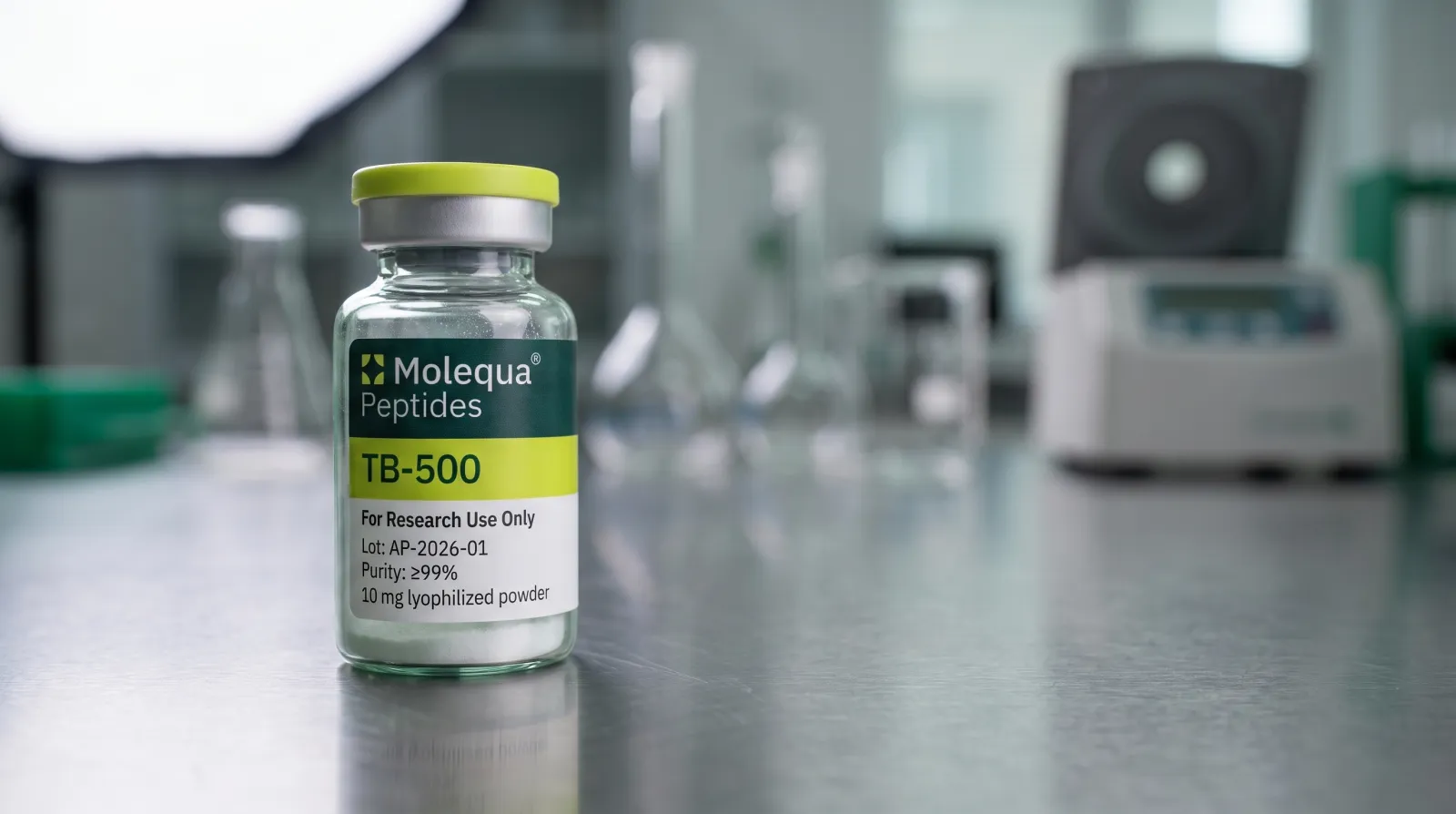
TB-500 is a synthetic peptide fragment derived from thymosin beta-4, a naturally occurring protein of 43 amino acids. The two names are often used interchangeably, and that is the single biggest source of confusion around this compound. For laboratory work the essentials are:
- Not the same molecule: thymosin beta-4 is the full protein, TB-500 is a short active fragment of it
- Core mechanism studied: binding to actin, a structural protein involved in cell movement and tissue organisation (Ying 2023, Curr Protein Pept Sci)
- Research base: cardiac and vascular models from 2007 onward, later work in wound healing and tissue repair
- Regulatory status: not approved as a medicine anywhere, sold only as reference material for laboratory research
- Prohibited in sport: listed by the World Anti-Doping Agency, which matters for any institution handling it
Everything below refers to published research and to sourcing material for laboratory purposes, not to use in humans.
What is TB-500 and how does it relate to thymosin beta-4?
Thymosin beta-4 is a naturally occurring protein made of 43 amino acids, present in most human cells and in wound fluid. TB-500 is a shorter synthetic peptide corresponding to the region of that protein responsible for actin binding. Vendors frequently label the two as identical, which they are not. A laboratory ordering one and receiving the other is not working with the material it documented.
This distinction has practical consequences. Published research overwhelmingly studies the full thymosin beta-4 protein, not the fragment. When a product page cites cardiac studies from 2007 in support of a fragment sold in a vial, the citation and the product are not describing the same substance.
That does not make the fragment uninteresting. It does mean the evidence should be read with the distinction in mind, and any serious supplier should state clearly which of the two is in the vial.
What mechanism is being investigated?
The best characterised property of thymosin beta-4 is its binding to G-actin, the monomeric form of a structural protein that cells use for movement, division and tissue repair. By sequestering actin monomers, the peptide influences how quickly cells can reorganise their internal scaffolding. A 2023 review covers the binding modes and the biological functions that follow from them.
Actin dynamics sit underneath a wide range of processes, which is why the research literature spreads across cardiology, ophthalmology, dermatology and wound healing rather than concentrating in one field (Ying 2023, Curr Protein Pept Sci).
Breadth of interest is not the same as breadth of proof. A mechanism that plausibly touches many systems produces many exploratory studies, and most of them stay exploratory.
What does the published evidence cover?
Research on thymosin beta-4 began attracting attention with cardiac work published in 2007, when a study in Nature described mobilisation of epicardial progenitor cells and new vessel formation in a mouse model. A parallel line of work explored development for ischaemic heart disease. Later research moved toward wound healing and tissue repair.
| Research area | Study type | Publication |
|---|---|---|
| Cardiac progenitor mobilisation | Mouse model | Smart 2007, Nature |
| Ischaemic heart disease development programme | Review of development work | Crockford 2007, Ann N Y Acad Sci |
| Actin binding, mechanism and applications | Review | Ying 2023, Curr Protein Pept Sci |
| Diabetic wound healing approaches | Review | Singh 2023, Biomedicines |
| Adipose tissue graft survival | In vitro study | Li 2024, Aesthetic Plast Surg |
What this table does not contain is a completed phase 3 trial leading to approval. Nearly two decades after the cardiac work, thymosin beta-4 remains an investigational molecule.
Why does anti-doping status matter for a laboratory?
TB-500 appears on the World Anti-Doping Agency prohibited list. For a research institution this is not an abstract regulatory footnote. It affects how material is stored, who has access to it, and what documentation is expected if the institution also works with athletes or sports science subjects.
The practical consequence is straightforward: material of this class belongs under the same controls as any other restricted reference compound, with a documented chain from supplier to bench.
It also explains part of the market around this peptide. Where demand exists outside legitimate research, suppliers appear who compete on price rather than documentation. That is precisely the segment a laboratory should avoid.
How do you verify the material is what the label says?
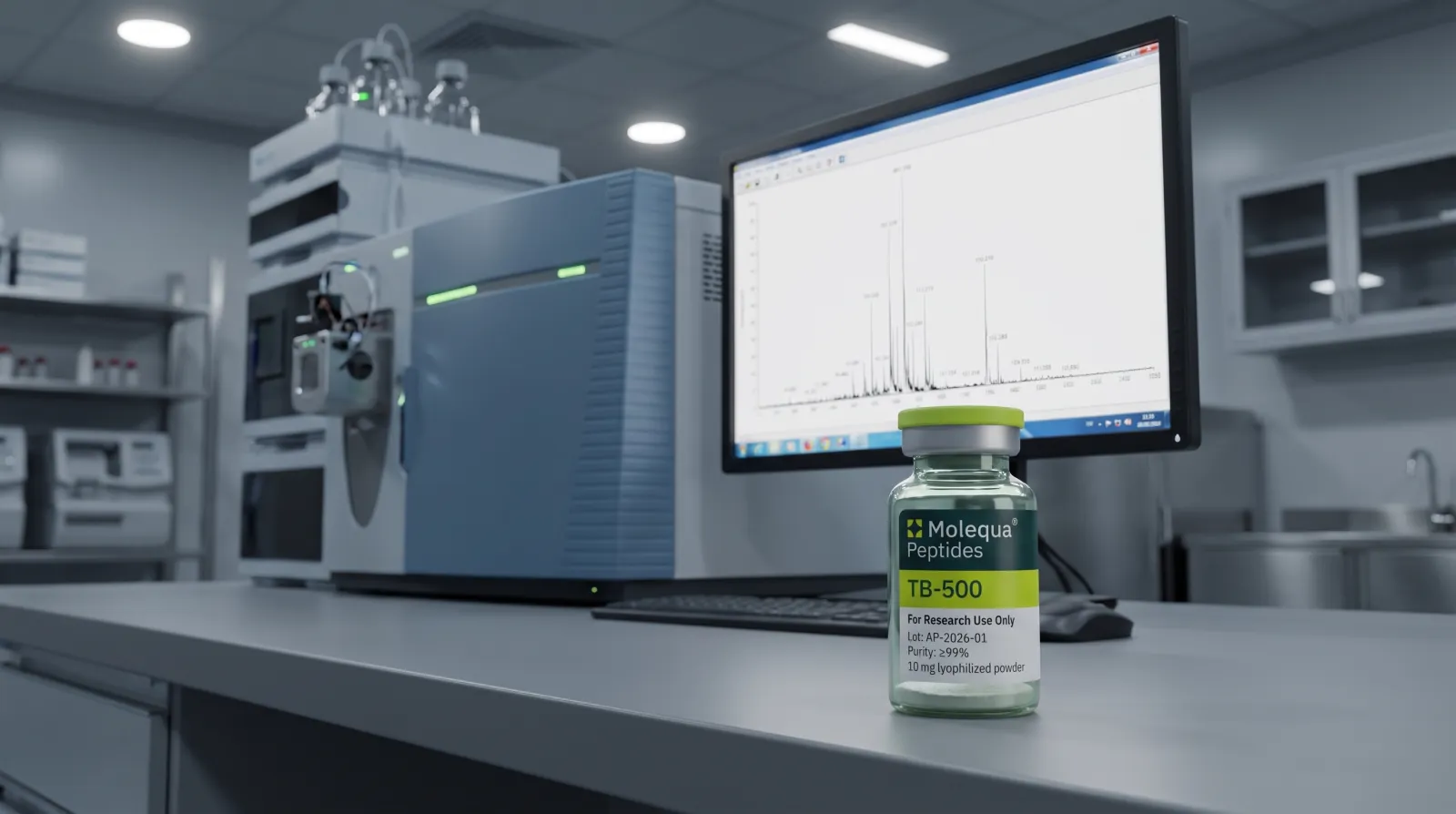
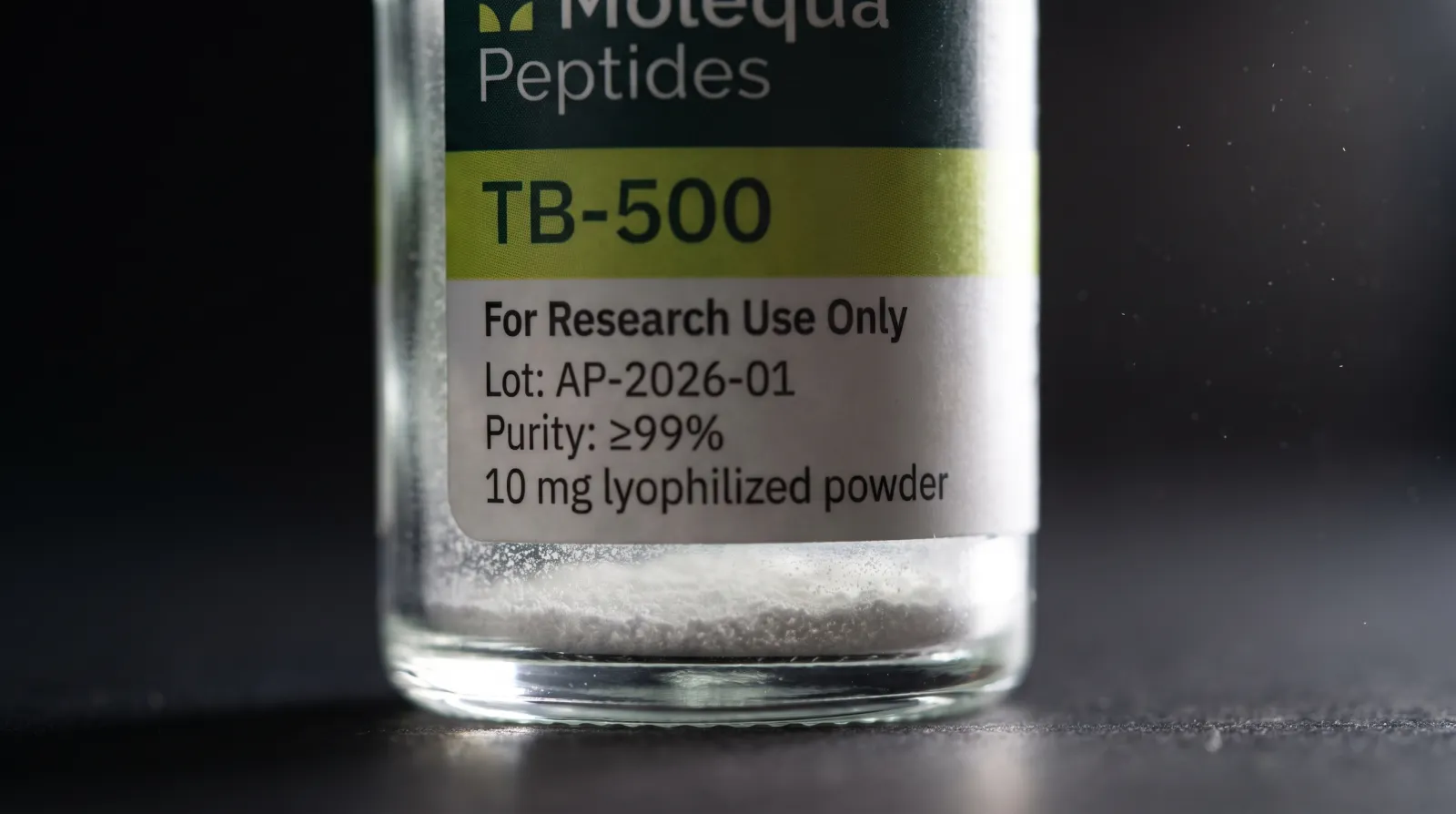
Four documents settle it: a batch-specific certificate of analysis, an HPLC purity figure measured on that batch, mass spectrometry confirming identity, and the name of an independent testing laboratory. A certificate that refers to the product line rather than the batch tells you nothing about the vial in front of you.
Identity confirmation carries particular weight for this compound, precisely because of the naming problem described earlier. Mass spectrometry is what distinguishes the fragment from the full protein. Purity alone cannot: a sample can be 99 percent pure and still be the wrong molecule.
Molequa® has batch testing performed by Janoshik Analytical, an independent laboratory with no commercial relationship to the sale. A purity figure issued by the seller about their own product is a claim. A figure from a third party is a measurement.
Current batch documentation is published on the TB-500 product page, with shipping from an EU warehouse and a traceable invoice.
Frequently asked questions
Answers to the most common questions about TB-500 appear in the FAQ section at the bottom of this page.
Sources
- Smart N. et al. (2007), Nature: Thymosin beta4 induces adult epicardial progenitor mobilization and neovascularization
- Crockford D. et al. (2007), Ann N Y Acad Sci: Development of thymosin beta4 for treatment of patients with ischemic heart disease
- Ying Y. et al. (2023), Curr Protein Pept Sci: Thymosin beta 4 and actin: binding modes, biological functions and clinical applications
- Singh S.K. et al. (2023), Biomedicines: Novel biotherapeutics targeting biomolecular and cellular approaches in diabetic wound healing
- Li W. et al. (2024), Aesthetic Plast Surg: In vitro study of thymosin beta 4 promoting transplanted fat survival
Notice: Molequa® supplies peptides exclusively as reference material for scientific laboratory research (Research Use Only). The products are not medicines, not dietary supplements, and are not intended for human or veterinary use. They are not intended to diagnose, treat, cure or prevent any disease.
