



Overview
What endotoxin is, and why it is not a peptide
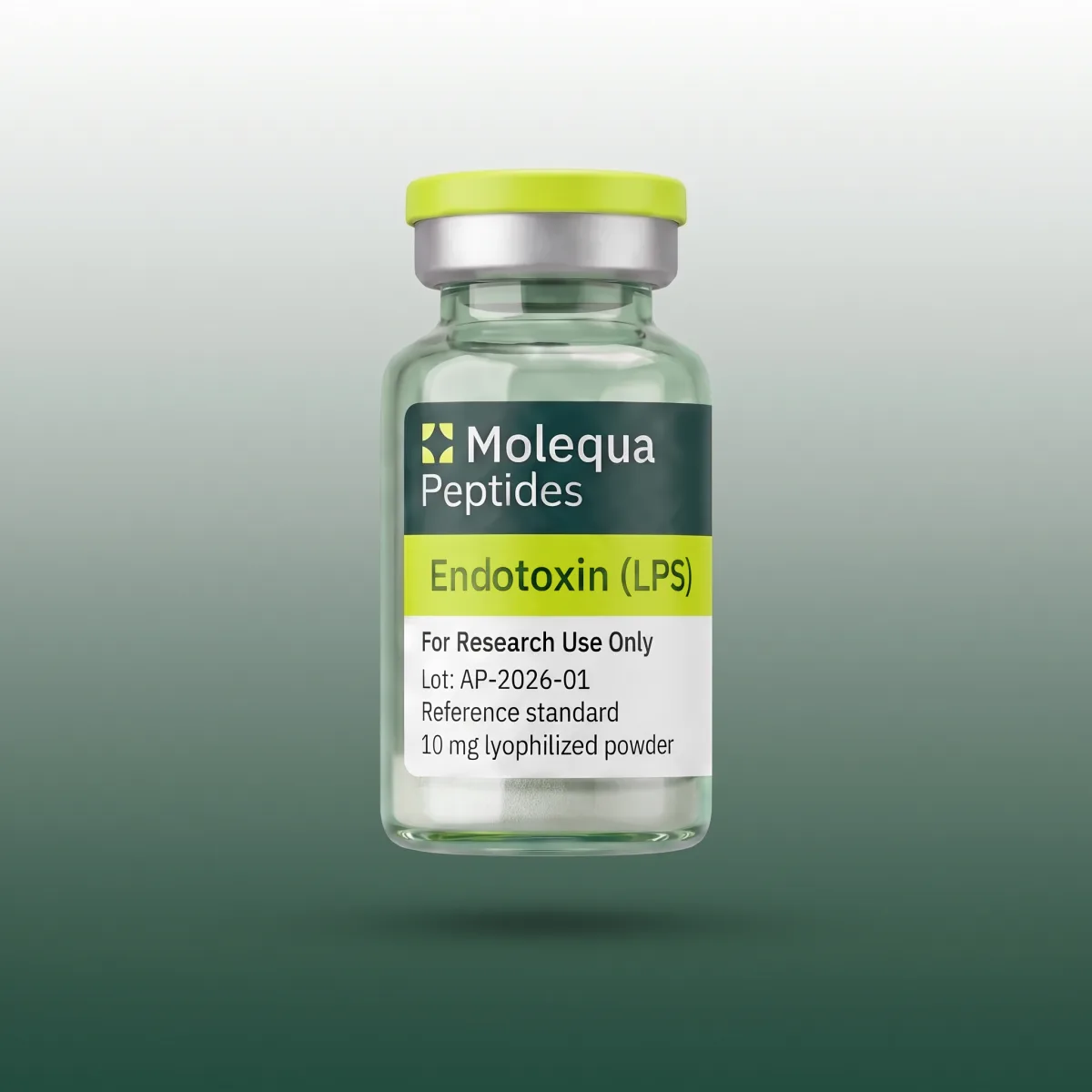
Endotoxin is a lipopolysaccharide, LPS for short. It is neither a peptide nor a protein. It is a large molecule made of a lipid portion (lipid A) and a chain of sugars, and it forms the outer membrane of gram-negative bacteria such as Escherichia coli. It is released when the bacterial cell breaks apart.
Lipid A is the part the immune system recognises. It binds the TLR4 receptor together with the accessory protein MD-2 and sets off a cascade that starts an inflammatory response inside the cell. That property turned LPS into one of the most widely used tools in cell biology.
What endotoxin is used for in research
LPS has two main roles in the laboratory.
The first is as a TLR4 agonist. When you need to trigger a controlled inflammatory response in cell culture and follow what happens next, LPS is the standard trigger. A large part of the innate immunity literature rests on this principle.
The second is as a reference standard in endotoxin testing. The LAL assay, which measures endotoxin content in a material, needs a known positive control so you can confirm it is responding correctly. That control is purified LPS with a known activity expressed in endotoxin units per milligram.
Why a peptide shop supplies this substance
It sounds like a contradiction: for every peptide batch we report endotoxin level as a quality parameter, and the goal is the lowest possible value. Here we supply the very same substance.
There is no contradiction. Endotoxin is both the yardstick and the sample. Without a known standard you cannot measure the endotoxin level in a peptide at all, because the assay has nothing to calibrate against. Laboratories that verify purity themselves need both: material with low endotoxin content, and a reference substance to check the assay with.
Handling and storage
LPS is hygroscopic and sensitive to moisture. Store the lyophilized powder at 2 to 8 °C in its original container, protected from light. Stock solutions are prepared according to each site’s own protocol; LPS binds strongly to plastic and glass, so working with a single set of consumables and mixing the solution thoroughly before use is advisable.
Endotoxin is pyrogenic. It belongs strictly in a laboratory environment and in the hands of trained staff working to their own institution’s rules.
Availability
We do not hold this item in continuous stock; we supply it on request. Tell us the quantity and intended use, and we will confirm price, availability and batch documentation by e-mail.
Frequently asked questions about endotoxin (LPS)
What is endotoxin and why is it not a peptide?
Endotoxin is a lipopolysaccharide (LPS), a large molecule made of a lipid part (lipid A) and a chain of sugars, which forms the outer membrane of Gram-negative bacteria such as Escherichia coli. It is neither a peptide nor a protein. It is released when the bacterial cell breaks apart.
What is endotoxin used for in research?
It has two main roles. As a TLR4 agonist it triggers a controlled inflammatory response in cell culture, which underpins a large part of the innate immunity literature. As a reference standard it is the known positive control in endotoxin testing, that is, in the LAL assay.
Why does a peptide shop offer endotoxin?
For peptides the endotoxin level is reported as a quality parameter and the lower the better. Without a known standard that level cannot be measured, because the assay has nothing to calibrate against. Laboratories that verify purity themselves therefore need both: low-endotoxin material and a reference substance.
How is endotoxin stored?
Lyophilized LPS belongs at 2 to 8 °C in its original container, protected from light and moisture. It is hygroscopic, so the vial is left to reach room temperature before opening. Stock solutions are prepared and kept according to the protocol of the individual laboratory.
How can endotoxin be ordered?
We do not hold this item in continuous stock, we supply it on request. State the quantity and intended use; we confirm price, availability and batch documentation by e-mail. Strictly for laboratory and research use.
Strictly for laboratory and research use only (RUO). It is not a medicine, dietary supplement or cosmetic, and is not intended for human or animal consumption.