




Quick overview
Argireline (acetyl hexapeptide-8) is a topical peptide that mimics part of the SNARE complex in research and dampens the signal to mimic muscles. That is why it is called the peptide alternative to botulinum toxin.
- A "botox-like" mechanism without the toxin
- Cosmetics dilute it to thousandths of a percent, here it is pure
- Topical application, no injections
- A natural pair with GHK-Cu in skin protocols
Read more Close
Overview
Where it comes from and why it was developed
The story of Argireline begins at the end of the 1990s in Barcelona, in the laboratories of the Spanish biotechnology company Lipotec SAU. The cosmetic industry was looking for something that could achieve what until then only botulinum toxin (Botox) could do: dampen mimic muscle movement and thereby reduce dynamic wrinkles. Botulinum toxin is, however, an injectable neurotoxin; it requires a medical procedure, is expensive, and raises concerns in part of the population.
The question was: can this effect be achieved topically, via cream or serum?
The Lipotec team looked at the biochemistry of acetylcholine release at the neuromuscular junction. For a muscle cell to contract, a motor neuron must release acetylcholine. And for acetylcholine to be released, synaptic vesicles must fuse with the membrane. This fusion is mediated by a protein complex called SNARE (Soluble N-ethylmaleimide-sensitive factor Attachment protein REceptor).
The SNARE complex is formed by three proteins: SNAP-25, Syntaxin-1A and VAMP-2 (synaptobrevin). Botulinum toxin type A works by proteolytically cleaving SNAP-25, thereby irreversibly deactivating the SNARE complex. The muscle cannot contract, the wrinkle does not form.
Lipotec scientists asked themselves: what if we did not want to destroy SNAP-25, but only block its ability to form the SNARE complex? They looked at the N-terminal part of SNAP-25, which is essential for assembling the complex, and designed a short synthetic peptide that mimics this sequence.
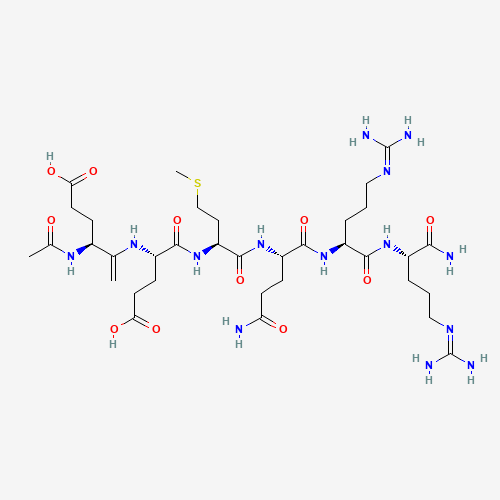
Thus was born Argireline, an acetylated hexapeptide with the sequence Ac-Glu-Glu-Met-Gln-Arg-Arg-NH₂. It was patented in 2001 and 2002, and the first publication in Int J Cosmet Sci appeared in 2002 (Blanes-Mira et al.).
Mechanism of action, what it does at the cellular level
Argireline acts as a competitive inhibitor of SNARE complex formation. It is important to distinguish this from the mechanism of botulinum toxin, which works enzymatically and irreversibly.
Competitive inhibition, not destruction
Imagine the SNARE complex as a triple lock that must be closed in order for a cable to be fired (acetylcholine to be released). SNAP-25 is one of three keys. Botulinum toxin chops this key into two pieces, so the lock never closes again and the nerve terminal is nonfunctional for weeks to months.
Argireline works differently. It is a false key that tries to slide into the lock in place of the real SNAP-25. The sequence Ac-EEMQRR-NH₂ copies the start of SNAP-25 and competes with it for binding to Syntaxin-1A. When enough Argireline molecules are present, formation of the functional SNARE complex is slowed or incomplete. Acetylcholine is released in smaller quantities, the muscle contracts with less intensity, and the mimic wrinkle does not carve as deeply.
This is a mild and reversible effect. Once the molecule diffuses away or is diluted, the SNARE complex forms normally again. No nerve cells have been damaged; only their activity has been temporarily dampened.
Why it works in cosmetics
Here comes the key context. Argireline is not given by injection, but topically, in creams or serums, typically at a concentration of 5 to 10 percent. After application it must pass through the stratum corneum, which is a nontrivial obstacle for a peptide with a molecular weight of 888 Da.
In vitro penetration studies (Kraeling 2015, Lim 2018) showed that without formulation support only a fraction of applied Argireline passes through the stratum corneum (typically 0.5 to 2 percent). With a suitable matrix (liposomes, ethosomes, transdermal systems) penetration can be increased 3- to 5-fold.
When the molecule reaches the epidermis and the area where nerve endings communicate with mimic muscles, it can locally modulate SNARE activity there. Compared with injectable Botox the effect is orders of magnitude weaker, but measurable. Clinical studies (Blanes-Mira 2002, Wang 2013) demonstrated reduction of wrinkle depth by 17 to 30 percent after 28 to 30 days of twice-daily application.
Secondary mechanisms
In addition to the main SNARE effect, secondary pathways are also described:
- Modulation of catecholamine signaling: Argireline can influence noradrenaline release via a similar SNARE-dependent mechanism, which may contribute to a mild local relaxation effect.
- Antioxidant properties: Arginine residues in the sequence can scavenge free radicals, a secondary benefit for aging skin.
- Hydration effect: The hygroscopic properties of small peptides may contribute to improved hydration of the skin surface, a secondary visual benefit often misattributed to the main mechanism.
Investigated applications
The published literature documents effects of Argireline in the following areas:
- Dermatological anti-aging. The primary and best-documented indication. Reduction of the depth of mimic wrinkles on the forehead, glabella (between the eyebrows), and crow’s feet around the eyes.
- Cosmeceutical formulation research. Argireline is a benchmark molecule for testing new penetration systems, liposomes, and transdermal carriers.
- Local anti-spasmodic effects. Limited preclinical research in isolated tissues; clinical data are lacking.
- Drug delivery research. Argireline serves as a model peptide for studying peptide-membrane interactions and optimizing skin penetration.
Honest perspective, what Argireline is not
In marketing materials Argireline is often presented as “Botox in a cream.” That is inaccurate and misleading:
- Botox causes irreversible cleavage of SNAP-25. Argireline only competitively blocks complex formation. The effect is orders of magnitude weaker.
- Botox is applied intramuscularly, so it has no penetration problem. Argireline must pass through the stratum corneum, which reduces the available amount by 95 percent or more.
- Botox achieves a clinical effect of 80 to 95 percent reduction in activity lasting 3 to 6 months. Argireline achieves a clinical effect of 17 to 30 percent reduction in wrinkle depth during sustained twice-daily application.
This does not mean Argireline does not work. It works, but mildly. It is a safe and inexpensive molecule that adds measurable benefit to a cosmetic formulation. It does not replace injectable procedures; it complements everyday topical care.
Buying Argireline: what to look for
When buying Argireline, the decisive criterion is not the price but the verifiability of quality. A research peptide is only ever as good as its certificate of analysis. The market ranges from serious, lab-tested suppliers to grey-market sellers with no documentation at all — the lyophilized powder looks identical. These five criteria separate them.
1. Certificate of analysis will be supplied with the next batch
HPLC purity shows what proportion of the powder is actually Argireline. Serious suppliers document ≥ 99 % with a chromatogram. “99 % purity” without an attached chromatogram is a claim, not proof.
2. Batch-specific certificate of analysis (CoA)
The most important document. A batch-specific CoA belongs to exactly the batch you receive — with batch number, date and purity value, issued by an independent laboratory (Janoshik and similar are the industry standard). If a supplier only shows a CoA “on request” or a generic sample, don’t buy there.
3. LC-MS identity confirmation
Purity tells you how much of a substance is present; LC-MS tells you which substance it is. Via the molecular mass (888.90 Da) it confirms this is the correct identity of Argireline, not a cheaper, mislabeled peptide.
4. Origin and EU shipping with traceability
A supplier with an EU warehouse and full batch traceability has the edge over grey imports from Asia: shorter, cooled transport and no customs risk. Molequa® ships from within the EU, typically within 3 to 5 business days — no post-Brexit customs delays.
5. Correct delivery form: lyophilizate
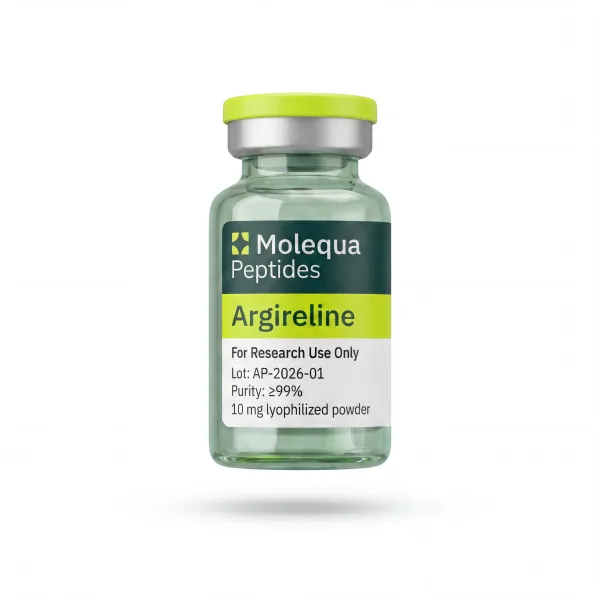
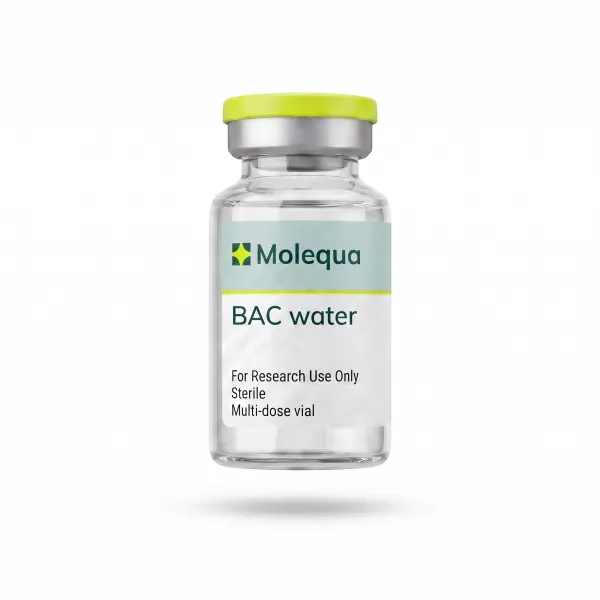
High-quality Argireline is delivered as a lyophilizate (white powder), not as a pre-mixed solution. Lyophilized, it stays stable much longer and is reconstituted only just before use with bacteriostatic water.
Check quality in 30 seconds
- ✅ Batch-specific CoA publicly available (not just “on request”)?
- ✅ Purity proven with a chromatogram?
- ✅ LC-MS identity confirmed (mass 888.90 Da)?
- ✅ EU warehouse and batch traceability?
- ✅ Delivered as a lyophilizate with clear storage instructions?
If all five points are met, you are buying verified material. Every Molequa® batch ships with a batch-specific certificate of analysis, and LC-MS confirmation — you can find the current CoA in the Batch test results section below.
Legal notice: Argireline is a research peptide for cosmetic and laboratory research and not an approved medicine. Not intended for human or animal consumption.
Science & studies
Key publications
Blanes-Mira C., Clemente J., Jodas G., et al. (2002). A synthetic hexapeptide (Argireline) with antiwrinkle activity. Int J Cosmet Sci. 24(5):303-310. Foundational paper.
Wang Y., Wang M., Xiao S., Pan P., Li P., Huo J. (2013). The anti-wrinkle efficacy of argireline, a synthetic hexapeptide, in Chinese subjects: a randomized, placebo-controlled study. Am J Clin Dermatol. 14(2):147-153. Clinical validation in an Asian population.
Lim S.H., Sun Y., Madanagopal T.T., Rosa V., Kang L. (2018). Enhanced Skin Permeation of Anti-wrinkle Peptides via Molecular Modification. Sci Rep. 8(1):1596. Penetration modifications.
Kraeling M.E., Zhou W., Wang P., Ogunsola O.A. (2015). In vitro skin penetration of acetyl hexapeptide-8 from a cosmetic formulation. Cutan Ocul Toxicol. 34(1):46-52. Quantification of penetration.
Ruiz M.A., Clares B., Morales M.E., Cazalla S., Gallardo V. (2007). Preparation and stability of cosmetic formulations with an anti-aging peptide. J Cosmet Sci. 58(2):157-171. Formulation stability.
Pai V.V., Bhandari P., Shukla P. (2017). Topical peptides as cosmeceuticals. Indian J Dermatol Venereol Leprol. 83(1):9-18. Comprehensive review of cosmeceutical peptides.
Detailed study breakdowns
▸ Study 1: Blanes-Mira 2002, foundational paper
Citation: Blanes-Mira C., Clemente J., Jodas G., et al. A synthetic hexapeptide (Argireline) with antiwrinkle activity. Int J Cosmet Sci. 2002;24(5):303-310.
What they did: A two-phase experiment. Phase 1, in vitro: characterization of Argireline’s inhibitory activity on the SNARE complex in isolated synaptosomes from rat. Assessment of catecholamine release as a proxy for SNARE functionality. Phase 2, clinical: 10 healthy female volunteers, aged 30 to 65. Argireline at 10 percent concentration in an emulsion matrix applied twice daily to one side of the face, with control formulation (placebo) on the other side. Duration: 30 days. Assessment: silicone replicas of crow’s-feet wrinkles, quantitative analysis of depth and density.
What they found:
- In vitro Argireline competitively inhibited SNARE complex formation with EC50 ~50 µM
- The maximum inhibition reached 30 percent of catecholamine release in synaptosomes
- Clinically: wrinkle depth reduction by 27 percent on the Argireline-treated side vs. only 0 to 3 percent on the placebo side
- No observed skin irritation, allergic reactions, or sensitization
- Patients reported subjective improvement in skin texture
Why it matters: This was the first publication that demonstrated the concept of a topical SNARE inhibitor. It created a whole new category of cosmeceutical peptides labelled “peptide neurotransmitter inhibitors.” Lipotec commercialized Argireline on its basis and obtained patents. The study also confirmed the safety profile for topical application.
▸ Study 2: Wang 2013, clinical validation in an Asian population
Citation: Wang Y., Wang M., Xiao S., Pan P., Li P., Huo J. The anti-wrinkle efficacy of argireline, a synthetic hexapeptide, in Chinese subjects: a randomized, placebo-controlled study. Am J Clin Dermatol. 2013;14(2):147-153.
What they did: A randomized, double-blind, placebo-controlled study. n = 60 Chinese women, aged 30 to 59, with visible mimic wrinkles. Randomization: 10 percent Argireline cream vs. an identical placebo formulation. Application: twice daily on the crow’s-feet area, duration 28 days. Assessment: 3D skin imaging (PRIMOS system), quantitative wrinkle-depth analysis (Wrinkle Severity Rating Scale), clinical photographs, and subjective patient assessment.
What they found:
- Argireline group: wrinkle depth reduction of 16.26 percent vs. baseline (p<0.01)
- Placebo group: reduction of 4.33 percent vs. baseline (non-significant)
- Difference between groups: 11.93 percentage points, statistically significant
- Subjective assessment: 65 percent of the Argireline group reported “mild improvement” or better
- No adverse events in either group
Why it matters: After Blanes-Mira 2002 (10 patients, open-label study), Wang 2013 was the first robust RCT with an adequate sample size. It validated the effect in an Asian population (relevant because most cosmeceutical research is done on European patients). It also realistically framed expectations: the effect is real but modest, around 12 to 17 percent reduction after 4 weeks.
▸ Study 3: Lim 2018, penetration modifications
Citation: Lim S.H., Sun Y., Madanagopal T.T., Rosa V., Kang L. Enhanced Skin Permeation of Anti-wrinkle Peptides via Molecular Modification. Sci Rep. 2018;8(1):1596.
What they did: Structural modifications of Argireline aimed at increasing penetration through the stratum corneum. They tested conjugation with fatty acid chains of various lengths (C8 to C16) and with cell-penetrating peptides (CPP). Penetration was assessed in Franz diffusion cells with porcine skin (a model of human skin). 24-hour accumulation in the dermis and the receptor compartment was measured by LC-MS/MS.
What they found:
- Native Argireline: penetration ~1.8 percent of applied dose into the dermis in 24 h
- C12-Argireline conjugate: 3.4-fold higher penetration (~6.1 percent)
- C16 was too long, aggregated, and penetration decreased
- CPP-Argireline conjugates: penetration 4 to 5-fold higher, but formulation stability problematic
- SNARE inhibitory activity of the modified variants preserved in vitro
Why it matters: The study addresses the main weakness of Argireline as a topical molecule: poor penetration. It opens the way for a second generation of SNARE inhibitors with higher bioavailability in skin. For the research context it is relevant, because the formulation matrix can be just as important as the molecule itself. At MOLEQUA we recommend that researchers experiment with liposomal or ethosomal matrices for optimal penetration.
▸ Study 4: Kraeling 2015, quantification of penetration
Citation: Kraeling M.E., Zhou W., Wang P., Ogunsola O.A. In vitro skin penetration of acetyl hexapeptide-8 from a cosmetic formulation. Cutan Ocul Toxicol. 2015;34(1):46-52.
What they did: Standardized skin-penetration study according to OECD guideline 428. Franz diffusion cells with human cadaver skin. Argireline at 5 percent and 10 percent concentrations in two types of matrix: aqueous-glycol base and hydrophilic cream. Duration: 24 hours. Quantification in the stratum corneum, epidermis, dermis, and receptor compartment by LC-MS/MS.
What they found:
- The main fraction (>95 percent) of applied Argireline remained in the stratum corneum or was removed by surface wiping
- 0.5 to 2 percent of the applied dose penetrated into the viable epidermis and dermis
- No measurable transport into the receptor (systemic absorption < 0.01 percent)
- The hydrophilic cream provided slightly better penetration than the aqueous-glycol base
- A 10 percent concentration did not lead to proportionally higher penetration (a saturation effect of the stratum corneum)
Why it matters: The study quantified how much Argireline actually reaches the site of action. The figure of 0.5 to 2 percent explains why the clinical effect is modest compared with injectable alternatives. It also confirms that systemic absorption is negligible, supporting the excellent safety profile of the molecule in topical use. For research formulators it is a basic benchmark.
▸ Study 5: Ruiz 2007, formulation stability
Citation: Ruiz M.A., Clares B., Morales M.E., Cazalla S., Gallardo V. Preparation and stability of cosmetic formulations with an anti-aging peptide. J Cosmet Sci. 2007;58(2):157-171.
What they did: A systematic study of Argireline stability in various cosmetic matrices. Tested: O/W emulsions, W/O emulsions, hydrogels (carbomer, xanthan gum), liposomal formulations. Storage conditions: 4 °C, 25 °C, 40 °C. Assessment after 1, 3, 6, and 12 months. HPLC quantification, visual inspection, microbiological control.
What they found:
- O/W emulsion (oil in water): stability >95 percent after 12 months at 4 °C, ~88 percent at 25 °C
- Hydrogels: best stability, >97 percent after 12 months at 25 °C
- W/O emulsion: lower stability due to the presence of free thiols in the emulsifiers
- Liposomal formulation: >92 percent stability, plus increased penetration
- Optimal pH: 5.0 to 6.0 (physiological skin pH)
- Thanks to N-acetylation and C-amidation, high resistance to skin proteases
Why it matters: For research formulations and cosmeceutical development projects, stability is critical. Argireline is one of the most stable cosmeceutical peptides, which makes it an ideal molecule for long-term commercial formulations. The formulation recommendations from this study are still industry standard today.
▸ Study 6: Pai 2017, comprehensive review
Citation: Pai V.V., Bhandari P., Shukla P. Topical peptides as cosmeceuticals. Indian J Dermatol Venereol Leprol. 2017;83(1):9-18.
What they did: A comprehensive review article that classifies cosmeceutical peptides into four categories:
- Signal peptides (Matrixyl, palmitoyl pentapeptide-4): stimulation of collagen
- Carrier peptides (GHK-Cu): delivery of minerals
- Enzyme inhibitor peptides: inhibition of tyrosinase, MMPs
- Neurotransmitter inhibitor peptides (Argireline, SNAP-8, leuphasyl): modulation of muscle activity
For each category they discuss the mechanism, clinical data, and formulation recommendations.
What they found:
- Argireline is the prototype of category 4 (neurotransmitter inhibitor peptides)
- SNAP-8 is a newer variant, an octapeptide with higher affinity for the SNARE complex (the cited efficacy is 2.4× higher in vitro)
- Leuphasyl (pentapeptide-18) acts complementarily via enkephalin receptors
- Optimal combinations in commercial formulations: Argireline + SNAP-8 + Matrixyl + GHK-Cu
- The clinical effect of the whole category is mild but consistent across studies
Why it matters: The review provides a mental framework for the entire category of cosmeceutical peptides. Argireline is the gold standard against which new molecules are compared. For the research context it is also valuable because it identifies productive stack combinations that have become standard in commercial serums.
CoA, Certificate of Analysis
🧪 Quality specification (CoA with the first batch)
The values below are the release specification the first batch is tested against. The signed CoA is added as soon as it is issued.
- Purity: ≥ 99.2 % (HPLC-UV at 220 nm)
- Identity: confirmed by mass spectrometry (MS, ESI+, MW 888.90 Da, [M+H]+ 889.91)
- Endotoxins: < 0.5 EU/mg (LAL test, measurement of bacterial toxin contamination)
- Microbial contamination: meets USP <61>, suitable for cosmetic formulations
- Residual solvents: meets ICH Q3C
- TFA residues: < 1.0 %
- Peptide content: 92 to 95 % (remainder: water, acetate salt)
- Related-impurity profile: des-acetyl variants, des-amido variants < 0.5 % each
- N-acetylation: confirmed by MS fragmentation
- C-amidation: confirmed by MS fragmentation
[Download CoA (PDF)] · [Download SDS (PDF)]
Independent analytical laboratory (3rd-party verification). Original manufacturing CoA available upon request for B2B partners and cosmetic formulation labs.
Note on stability: Thanks to N-terminal acetylation and C-terminal amidation, Argireline is an exceptionally stable molecule. Acetylation protects the N-terminus from aminopeptidases; amidation protects the C-terminus from carboxypeptidases. In practice this means the molecule resists degradation in cosmetic matrices at room temperature for many months. For cosmeceutical research it is an ideal property.
Storage
Lyophilizate (dry powder before reconstitution or incorporation into a formulation)
- 2 years at −20 °C (freezer), optimal for long-term storage
- 24 months at 2 to 8 °C (refrigerator)
- Up to 6 months at room temperature (up to 25 °C), protect from light and moisture
After reconstitution or incorporation into a formulation
- 30 to 60 days at 2 to 8 °C in sterile solution
- 3 to 6 months in a cosmetic matrix (hydrogel, emulsion) at 25 °C, with adequate preservative
- Argireline in solution is exceptionally stable, thanks to N-acetylation and C-amidation
Practical storage rules
- Let the vial warm to room temperature (15 to 20 minutes) before opening. A cold vial + warm air means moisture condensation inside.
- Darkness is important. UV light can initiate oxidation of the methionine residue in the sequence (Met at position 3).
- Do not shake. Mechanical stress is not critical for lyophilized peptides, but for reconstituted solution or formulation, gentle circular mixing is recommended.
- The solution should remain clear. Argireline is highly soluble and after proper reconstitution does not tend to aggregate. Any turbidity indicates contamination or extreme degradation.
- For the cosmetic matrix, maintain pH 5 to 6, which is optimal both for molecule stability and for skin physiology.
Combinations with peptides
In the cosmeceutical context, Argireline is almost always combined with other peptides or active substances. Argireline alone provides a modest anti-wrinkle effect, but in combination the benefit accumulates and is complemented.
SNAP-8, a stronger variant of the same mechanism
The closest relative of Argireline. SNAP-8 (Acetyl Octapeptide-3) is an octapeptide with the sequence Ac-Glu-Glu-Met-Gln-Arg-Arg-Ala-Asp-NH₂, where two amino acid residues are added to the C-terminus. This increases affinity for the SNARE complex 2- to 2.5-fold. In commercial formulations, SNAP-8 is often combined with Argireline in a 1:1 or 2:1 ratio, producing an additive effect on inhibition of mimic muscle activity. For research formulations we recommend testing both molecules in parallel.
GHK-Cu, classical dermatological complement
The most traditional stack in cosmeceutical practice. GHK-Cu (glycyl-histidyl-lysine chelated with copper) works through a completely different mechanism, stimulating synthesis of type I collagen, elastin, and glycosaminoglycans, plus has antioxidant activity. While Argireline addresses dynamic wrinkles (from mimic activity), GHK-Cu addresses static wrinkles (from matrix degradation). Together they cover both main causes of skin aging. Standard 5 % Argireline + 0.05 to 0.1 % GHK-Cu in an anti-aging serum.
Matrixyl (Palmitoyl Pentapeptide-4), collagen stimulator
The second classical stack partner. Matrixyl is a signal peptide derived from procollagen type I that stimulates fibroblasts to produce collagen and fibronectin. The mechanism is complementary to Argireline. Standard concentration in formulation: 3 to 5 percent Matrixyl + 5 percent Argireline.
Note: Matrixyl in the MOLEQUA portfolio is coming soon. Watch our newsletter for the availability announcement.
BPC-157, regenerative complement for the research context
For dermatological research outside cosmetics (skin regeneration after injury, burns, model healing systems), Argireline can be combined with BPC-157. BPC-157 stimulates angiogenesis and fibroblast activity, while Argireline modulates neuromuscular signals in the skin. The combination has a hypothetical benefit in complex healing models; clinical data are lacking.
Niacinamide + Argireline, anti-redness complement
In formulation practice Argireline is often combined with niacinamide (Vitamin B3) at 4 to 5 percent concentration. Niacinamide reduces redness and the inflammatory reaction, while Argireline reduces mimic activity. The stability of both molecules in a single formulation is good at pH 5.5 to 6.0.
Key scientific figures and citations
“Acetyl hexapeptide-3 [Argireline] is a synthetic mimic of the N-terminal end of SNAP-25 that competes with the natural protein for a position in the SNARE complex, thereby reducing catecholamine release and producing a reversible attenuation of muscle contraction.”
Blanes-Mira C. et al. (2002), Int J Cosmet Sci 24(5), PubMed 18494888
Statistics from preclinical literature
- Acetyl Hexapeptide-8 (INCI), sequence Ac-Glu-Glu-Met-Gln-Arg-Arg-NH2, molecular weight 888.99 Da
- Synthesized at Lipotec S.A. (Barcelona, Spain) in 2001, patent EP1180524
- Mechanism: competitive inhibition of the SNARE complex (SNAP-25), reducing acetylcholine exocytosis at the neuromuscular junction
- Standard concentration in cosmetic formulations: 5–10 % topically
- In Wang et al. (2013, n=60): reduction of wrinkle depth by ~17 % over 30 days at 10 % concentration (in vivo, human face)
- Safety profile: tested in Phase IV cosmetic studies, no systemic absorption with topical application (the molecule is too large for transdermal penetration)
- INCI registration: Acetyl Hexapeptide-8 (previously Acetyl Hexapeptide-3)
- EU CosIng: approved as a cosmetic ingredient (skin conditioning category)
Reference sources (PubMed)
- Blanes-Mira C. et al. (2002). “A synthetic hexapeptide (Argireline) with antiwrinkle activity.” Int J Cosmet Sci 24(5):303–310. PubMed 18494888
- Wang Y. et al. (2013). “The anti-wrinkle efficacy of Argireline, a synthetic hexapeptide, in Chinese subjects: a randomized, placebo-controlled study.” Am J Clin Dermatol 14(2):147–153. PubMed 23417317
- Lupo MP., Cole AL. (2007). “Cosmeceutical peptides.” Dermatol Ther 20(5):343–349. PubMed 18045359
Regulatory status: Argireline (Acetyl Hexapeptide-8) is a registered cosmetic ingredient in the EU CosIng database and the US INCI. It is not a medicinal product and is not approved for injectable or systemic administration. For cosmetic topical use it is legally usable in the EU. The product in lyophilized form is sold strictly for laboratory scientific research (RUO).
Frequently asked questions about Argireline
These questions address the most common research-context searches about Argireline. For full technical documentation see the sections above.
What is Argireline and what is it used for in research?
Argireline (Acetyl Hexapeptide-8, sequence Ac-Glu-Glu-Met-Gln-Arg-Arg-NH₂) is a topical cosmetic peptide mimicking the N-terminus of SNAP-25 protein. In research it inhibits the SNARE complex and thereby reduces acetylcholine release at the neuromuscular junction. It is studied as a topical alternative to botulinum toxin for reduction of expression wrinkles.
What dose of Argireline do scientists use in animal models?
In topical formulations Argireline is used at 5 to 10 % in gels/creams (Blanes-Mira 2002). Clinical pilot studies applied 10 % cream twice daily for 30 days with wrinkle depth reduction of 17 to 30 %. Higher concentrations showed no additional benefit.
What is the difference between Argireline and SNAP-8?
Argireline is a hexapeptide (6 amino acids, 889 Da), while SNAP-8 is an octapeptide (8 amino acids, 1075 Da) with the same mechanism but stronger binding to SNAP-25. SNAP-8 shows 2 to 3 times higher inhibition of neurotransmitter release at equivalent concentration in vitro. They are often combined in formulations.
Is Argireline an approved medicine or research substance?
Argireline is not a medicine, it is registered as a cosmetic ingredient (INCI: Acetyl Hexapeptide-8) in the EU and USA. It falls under cosmetic regulation (EU 1223/2009), not EMA. Raw peptide in research grade is sold strictly for laboratory scientific research (RUO), not as a finished cosmetic product.
How is Argireline stored?
Lyophilised Argireline should be stored at −20 °C in the original vial, stability 2 to 3 years; at 2 to 8 °C about 12 months. After reconstitution the solution is stable for 28 days at 2 to 8 °C. For topical formulations it is dissolved in glycerol/water base.
What is the half-life of Argireline and how often is it administered in studies?
Upon topical application Argireline has local penetration limited to the epidermis (Hoppel 2015), systemic absorption is minimal. Plasma half-life for an injectable form is not relevant, the peptide is intended exclusively for topical use. Clinical protocols apply twice daily for a minimum of 28 days.
Where to buy Argireline in the EU for scientific research?
Argireline for cosmetic research in the EU is offered by Molequa® with FedEx delivery in 3 to 5 business days across the EU. The product ships as a lyophilised powder with a Certificate of Analysis (COA). The product is strictly for laboratory scientific research (RUO).