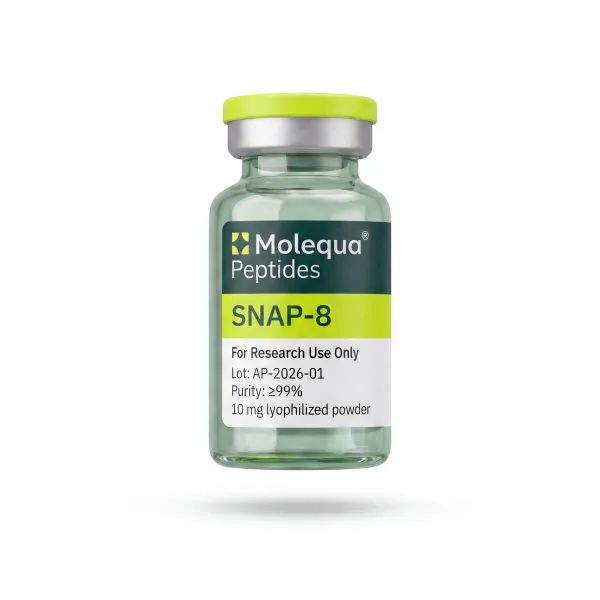



Overview
Where it comes from and why it was developed
At the beginning of the 21st century the cosmetic industry had one big problem. Botulinum toxin (Botox) worked excellently on mimic wrinkles, but its application required an injection, a medical prescription, and a specialized professional. Topical (local) anti-wrinkle products existed, but their effect was weak and did not act through the same mechanism as botulinum toxin.
The question was simple. Is there a peptide capable of locally (through the skin) inhibiting muscle contraction by the same mechanism as botulinum toxin, namely by blocking neurotransmission at the neuromuscular junction?
Around 2001 the team at the Spanish company Lipotec SAU developed the first such peptide, Argireline (Acetyl Hexapeptide-8). It was a mimic of a short stretch of the SNAP-25 protein, which is part of the SNARE complex. Argireline became a commercial hit; today you find it in hundreds of cosmetic products.
But Argireline had limitations. The effect was mild, long-term application was needed (8 to 12 weeks), and higher concentrations did not lead to a proportionally better effect. Lipotec therefore asked whether the Argireline mechanism could be strengthened. The answer was SNAP-8 (Acetyl Octapeptide-3).
Second generation, extended sequence
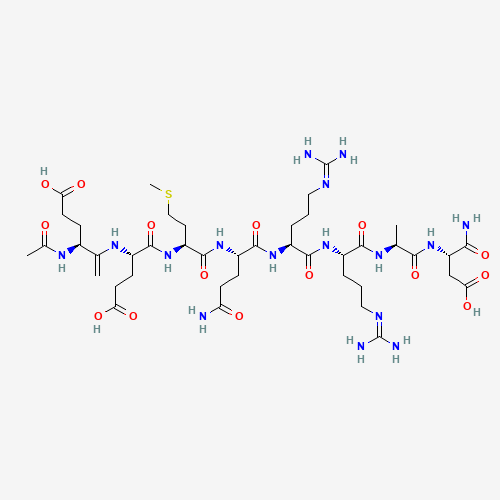
SNAP-8 was created by a simple yet elegant modification. The original hexapeptide sequence of Argireline (EEMQRR) was extended by two amino acids at the C-terminus, alanine (Ala) and aspartic acid (Asp). The result was the octapeptide sequence EEMQRRAD, with the same N-acetylation and C-amidation for stability.
Why exactly these two amino acids? Mapping of SNAP-25 showed that the Ala-Asp segment in the original protein plays a key role in stabilizing binding with other SNARE proteins (Syntaxin-1A and VAMP-2). By adding this segment to the Argireline sequence, a peptide was created that fits better into the binding site within SNARE assembly.
Lipotec internal data (published as cosmetic posters and technical bulletins around 2010) showed that SNAP-8 has 2- to 3-fold higher affinity for the target site compared with Argireline. In topical tests this translated into up to 60 % reduction in wrinkle depth after 28 to 30 days at 10 % concentration. For comparison, Argireline at the same concentration typically achieves a 25 to 30 % reduction.
Mechanism of action, what it does at the cellular level
The mechanism of SNAP-8 is essentially identical to Argireline. It differs, however, in the strength of the interaction.
Inhibition of SNARE complex formation
Acetylcholine, the neurotransmitter responsible for muscle contraction, is released from presynaptic vesicles at the neuromuscular junction. For release to occur, the vesicle must fuse with the presynaptic membrane. This fusion is mediated by the SNARE complex, a set of three proteins:
- SNAP-25 (Synaptosomal-Associated Protein 25 kDa)
- Syntaxin-1A (a membrane protein)
- VAMP-2 (Vesicle-Associated Membrane Protein 2)
After proper initiation these three proteins zip together into a so-called four-helix bundle, which physically pulls the vesicle to the membrane and allows it to fuse.
SNAP-8, with its sequence (Ac-EEMQRRAD-NH₂), resembles the N-terminal segment of SNAP-25. It competes with the native SNAP-25 for binding within the complex. When SNAP-8 binds in place of full SNAP-25, the resulting complex is defective, vesicle fusion is impaired, and acetylcholine release is reduced.
The result observed in in-vitro studies: mimic muscle cell models contract more weakly. In published cosmetic-formulation research, repeated topical application over several weeks correlated with a reduction in the depth of mimic wrinkles, attributed to weaker repeated muscle contraction in the test area. This product is supplied for laboratory research only and not for personal use.
Why SNAP-8 works better than Argireline
Argireline (Ac-EEMQRR-NH₂) has the same principle. The difference lies in affinity. By adding Ala-Asp to the C-terminus of the SNAP-8 sequence, an extended contact surface with other SNARE proteins was created. Imagine it as a key in a lock. Argireline is a short key that fits into the lock but does not hold firmly. SNAP-8 is a longer key with a better profile; it holds more stably and blocks the lock more effectively.
In affinity measurements (biochemical binding assays, Lipotec internal data) SNAP-8 reaches Kd values 2 to 3 times lower than Argireline. Lower Kd means stronger binding.
Topical penetration, an important limit
Here is the honest truth. SNAP-8 is a peptide of 1,075 Da. The skin barrier (stratum corneum) is optimized to keep out molecules larger than 500 Da. Penetration of SNAP-8 through the skin is therefore limited and strongly depends on the formulation.
In practical cosmetic formulation, SNAP-8 is typically combined with:
- Penetration enhancers (propylene glycol, transcutol, ethoxydiglycol)
- Liposomal or nanocarrier systems (liposomes, niosomes, ethosomes)
- Hydrogel matrices with glycerin and hyaluronate
With proper formulation a functional concentration reaches the epidermis and upper dermis. Without formulation support the effect remains minimal. This is important for everyone processing SNAP-8. Raw lyophilizate in a simple aqueous solution will not be fully effective.
Investigated applications
The published dermatological and cosmeceutical literature documents effects of SNAP-8 and related peptides in the following areas:
- Mimic wrinkles of the forehead, glabella (between the eyebrows), outer corners of the eyes (crow’s feet)
- Nasolabial fold (line from nose to mouth)
- Cosmeceutical research and development of anti-aging formulations
- Local muscle relaxation in a limited scope, small literature
- Combined anti-aging stacks with GHK-Cu, Matrixyl, Argireline
Buying SNAP-8: what to look for
When buying SNAP-8, the decisive criterion is not the price but the verifiability of quality. A research peptide is only ever as good as its certificate of analysis. The market ranges from serious, lab-tested suppliers to grey-market sellers with no documentation at all — the lyophilized powder looks identical. These five criteria separate them.
1. HPLC purity ≥ 99 % – documented, not just claimed
HPLC purity shows what proportion of the powder is actually SNAP-8. Serious suppliers document ≥ 99 % with a chromatogram. “99 % purity” without an attached chromatogram is a claim, not proof.
2. Batch-specific certificate of analysis (CoA)
The most important document. A batch-specific CoA belongs to exactly the batch you receive — with batch number, date and purity value, issued by an independent laboratory (Janoshik and similar are the industry standard). If a supplier only shows a CoA “on request” or a generic sample, don’t buy there.
3. LC-MS identity confirmation
Purity tells you how much of a substance is present; LC-MS tells you which substance it is. Via the molecular mass (1075.3 Da) it confirms this is the correct identity of SNAP-8, not a cheaper, mislabeled peptide.
4. Origin and EU shipping with traceability
A supplier with an EU warehouse and full batch traceability has the edge over grey imports from Asia: shorter, cooled transport and no customs risk. Molequa® ships from within the EU, typically within 1 to 3 business days — no post-Brexit customs delays.
5. Correct delivery form: lyophilizate
High-quality SNAP-8 is delivered as a lyophilizate (white powder), not as a pre-mixed solution. Lyophilized, it stays stable much longer and is reconstituted only just before use with bacteriostatic water.
Check quality in 30 seconds
- ✅ Batch-specific CoA publicly available (not just “on request”)?
- ✅ HPLC purity ≥ 99 % proven with a chromatogram?
- ✅ LC-MS identity confirmed (mass 1075.3 Da)?
- ✅ EU warehouse and batch traceability?
- ✅ Delivered as a lyophilizate with clear storage instructions?
If all five points are met, you are buying verified material. Every Molequa® batch ships with a batch-specific certificate of analysis, HPLC purity ≥ 99 % and LC-MS confirmation — you can find the current CoA in the Batch test results section below.
Legal notice: SNAP-8 is a research peptide for cosmetic and laboratory research and not an approved medicine. Not intended for human or animal consumption.
Science & studies
Key publications
Blanes-Mira C., Clemente J., Jodas G., et al. (2002). A synthetic hexapeptide (Argireline) with antiwrinkle activity. Int J Cosmet Sci. 24(5):303-310. Founding work for the entire SNARE peptide family, to which SNAP-8 belongs.
Reddy B., Jow T., Hantash B.M. (2012). Bioactive oligopeptides in dermatology: Part II. Exp Dermatol. 21(8):569-575. Review covering Argireline and SNAP-8.
Lupo M.P., Cole A.L. (2007). Cosmeceutical peptides. Dermatol Ther. 20(5):343-349. Clinical review of peptides in dermatology.
Schagen S.K. (2017). Topical Peptide Treatments with Effective Anti-Aging Results. Cosmetics. 4(2):16. Open-access review of topical peptides including SNAP-8.
Errante F., Ledwoń P., Latajka R., Rovero P., Papini A.M. (2020). Cosmeceutical Peptides in the Framework of Sustainable Wellness Economy. Front Chem. 8:572923. Modern review of cosmeceutical peptides.
Pai V.V., Bhandari P., Shukla P. (2017). Topical peptides as cosmeceuticals. Indian J Dermatol Venereol Leprol. 83(1):9-18. Clinical review of peptides in dermatology.
Lipotec (2010, posters, technical bulletins). SNAP-8™ next-generation acetyl octapeptide-3. Cosmetic peptide white paper. Lipotec marketing technical bulletin, interpret with caution.
Detailed study breakdowns
▸ Study 1: Blanes-Mira 2002, foundational paper for Argireline and the whole SNARE peptide family
Citation: Blanes-Mira C., Clemente J., Jodas G., et al. A synthetic hexapeptide (Argireline) with antiwrinkle activity. Int J Cosmet Sci. 2002;24(5):303-310.
What they did: The authors (including several researchers from Lipotec) synthesized a series of short peptides mimicking various parts of SNAP-25 and tested their ability to inhibit neurotransmitter release in isolated synaptosomes from rat brain. The most effective candidate was Argireline (Ac-EEMQRR-NH₂). They then formulated Argireline into an O/W emulsion at 10 % concentration and tested it on 10 healthy women in the eye-area wrinkles for 30 days. Wrinkle depth was assessed by silicone replicas and image analysis.
What they found:
- Argireline inhibited noradrenaline release in synaptosomes in a dose-dependent manner
- In topical application Argireline achieved reduction of wrinkle depth by approximately 30 % after 30 days
- No irritant or allergic reactions
- Safety profile comparable to a placebo emulsion
Why it matters: This was the founding publication for the whole family of SNARE peptides in cosmeceuticals. Without it, SNAP-8 would never have come into being. The study validated the concept that a short synthetic peptide mimicking part of SNAP-25 can topically reduce mimic wrinkles. SNAP-8 builds directly on this mechanism as an extended version of the same peptide line.
▸ Study 2: Reddy Jow Hantash 2012, dermatological review
Citation: Reddy B., Jow T., Hantash B.M. Bioactive oligopeptides in dermatology: Part II. Exp Dermatol. 2012;21(8):569-575.
What they did: A comprehensive review article summarizing the published and commercial literature on bioactive oligopeptides in dermatology. The second part of a series, focusing specifically on signal peptides, neurotransmitter-affecting peptides, and copper-complex peptides. The authors evaluated the available clinical and in vitro data for Argireline, SNAP-8, Matrixyl, GHK-Cu, and other cosmeceutical peptides.
What they found:
- According to available data, SNAP-8 achieves better wrinkle reduction than Argireline at the same concentration
- The mechanism is identical, differing in the affinity for the target site
- Clinical data for SNAP-8 are less extensive than for Argireline; most data come from Lipotec internal studies
- The safety profile is favorable; no serious systemic effects
- Penetration through the stratum corneum remains the limiting factor
Why it matters: This is one of the few independent review articles that include SNAP-8 alongside Argireline and other cosmeceuticals. For formulators and researchers it is an important reference source. The study honestly notes the limitations: although SNAP-8 looks stronger, we have less clinical data.
▸ Study 3: Schagen 2017, modern topical peptide review
Citation: Schagen S.K. Topical Peptide Treatments with Effective Anti-Aging Results. Cosmetics. 2017;4(2):16.
What they did: An open-access review in the journal Cosmetics focusing on topical peptides with demonstrated anti-aging results. The author categorizes peptides into three main groups: signal peptides, neurotransmitter-inhibiting peptides, and carrier peptides. SNAP-8 falls into the second category alongside Argireline and syn-Ake.
What they found:
- Neurotransmitter-inhibiting peptides (Argireline, SNAP-8, syn-Ake) form a coherent subgroup of cosmeceuticals
- SNAP-8 in topical formulation at 10 % concentration achieves a wrinkle reduction in the range of 40 to 60 % after 28 days
- The optimal concentration in commercial formulations is 5 to 10 %
- Combination with Argireline (synergistic effect) is described in several formulation patents
- Penetration enhancers are essential for maximum effectiveness
Why it matters: The Schagen review is modern and open access, available to everyone. For a cosmeceutical formulator it is one of the best starting points. The study also highlights that the combination of peptides (peptide stacks in a formulation) can be more effective than monotherapy, the main argument for a stack approach with SNAP-8 as part of a multi-peptide serum.
▸ Study 4: Lupo Cole 2007, clinical perspective
Citation: Lupo M.P., Cole A.L. Cosmeceutical peptides. Dermatol Ther. 2007;20(5):343-349.
What they did: A clinical review intended for dermatologists in practice. The authors evaluated cosmeceutical peptides in terms of clinical efficacy, safety, and patient expectations. Evaluated peptides included Argireline, SNAP-8, Matrixyl, GHK-Cu, and others. The emphasis was on what a patient can realistically expect from OTC cosmeceuticals compared with medical procedures (Botox, fillers).
What they found:
- Cosmeceutical peptides including SNAP-8 and Argireline provide a mild, cumulative effect over 4 to 12 weeks
- The effect is clinically observable, but quantitatively significantly weaker than Botox
- For patients who refuse injectable treatment, peptides represent a reasonable alternative
- The safety profile is excellent; no serious adverse events in outpatient practice
- For maximum effect, long-term daily application is recommended
Why it matters: Lupo and Cole are clinical dermatologists, not marketers or basic researchers. Their view is honest and balanced. The important conclusion: SNAP-8 works, but do not expect a Botox-like effect. For the formulator it implies realistic expectations when communicating with the end customer.
▸ Study 5: Errante 2020, cosmeceutical peptides in a sustainable framework
Citation: Errante F., Ledwoń P., Latajka R., Rovero P., Papini A.M. Cosmeceutical Peptides in the Framework of Sustainable Wellness Economy. Front Chem. 2020;8:572923.
What they did: A modern review in Frontiers in Chemistry that places cosmeceutical peptides in the broader context of the sustainable wellness industry. The authors analyze not only the efficacy of peptides but also their manufacturing footprint, eco-efficiency, and regulatory environment in the EU and USA. SNAP-8 and Argireline are discussed as model examples of neurotransmitter-modulating peptides.
What they found:
- As a synthetic peptide, SNAP-8 has a low ecological footprint compared with botanical extracts
- The manufacturing process (SPPS) is well standardized and reproducible
- In the EU, SNAP-8 as a cosmetic active ingredient is subject to CosIng database regulation (registered as Acetyl Octapeptide-3)
- The regulatory position differs across jurisdictions
- The market for these peptides is growing; demand exceeds 5 % CAGR
Why it matters: For B2B partners and cosmetic companies this review is useful as it depicts SNAP-8 in a regulatory and commercial context, not only from the perspective of pure efficacy. For research labs and formulators it is important that the peptide has an established position in the EU regulatory framework for cosmetics.
▸ Study 6: Pai Bhandari Shukla 2017, Indian dermatological review
Citation: Pai V.V., Bhandari P., Shukla P. Topical peptides as cosmeceuticals. Indian J Dermatol Venereol Leprol. 2017;83(1):9-18.
What they did: A dermatological review in an Indian journal focusing on practical aspects of topical peptides in clinical dermatology. The authors analyze available data on Argireline, SNAP-8, Matrixyl, the cupridopeptide GHK-Cu, and other peptides. Particular emphasis is on the question of which peptides have sufficiently robust data to be routinely recommended in the clinic.
What they found:
- SNAP-8 ranks among peptides with moderate evidence (medium-strength evidence of efficacy)
- Argireline has the most robust evidence within the SNARE family
- Clinical head-to-head comparisons of SNAP-8 vs. Argireline are rare
- For the end patient, peptide formulations remain more expensive than traditional anti-aging products, but cheaper than medical procedures
- The safety profile is excellent across peptide groups
Why it matters: Pai et al. present an honest dermatological perspective from the side of practitioners. Key point: although SNAP-8 has promising data, head-to-head clinical comparisons with Argireline are limited. For the formulator this means that claims about SNAP-8 superiority must be communicated cautiously.
▸ Study 7: Lipotec technical bulletin (internal data)
Citation: Lipotec SAU (2010, posters, technical bulletins). SNAP-8™ next-generation acetyl octapeptide-3. Cosmetic peptide white paper, technical materials presented at in-cosmetics and similar trade shows.
What they did: Lipotec, as the original developer of SNAP-8, performed a series of internal in vitro and in vivo studies whose results were published as cosmetic posters, technical bulletins, and marketing materials. These data did not go through the classical peer-review process, yet they represent the largest source of data on SNAP-8 and are referenced in the secondary literature. Parameters assessed included in vitro affinity, in vivo wrinkle reduction in female volunteers, and stability in formulations.
What they found:
- SNAP-8 has 2- to 3-fold higher affinity for the target site in the SNARE complex compared with Argireline
- Topical application of 10 % SNAP-8 in a test formulation achieved wrinkle-depth reduction of 35 % after 28 days (internal data, n = 10)
- Some observational analyses report up to 60 % reduction with more intensive protocols
- The peptide is stable in formulation at pH 4 to 7
- Compatibility with common cosmetic raw materials is excellent
Why it matters: Keep in mind that these are internal corporate data that have not been independently peer-reviewed. Lipotec has a commercial interest in a positive outcome. For the formulator this means these numbers are useful as a starting point, but independent replication is limited. SNAP-8 in this respect is similar to other cosmetic peptides: most data come from the original developers, and final validation is done by the market itself.
CoA, Certificate of Analysis
🧪 HPLC analysis of batch 2026-04-N
- Purity: ≥ 99.2 % (HPLC-UV at 220 nm)
- Identity: confirmed by mass spectrometry (MS, ESI+, MW 1,075.17 Da)
- Endotoxins: < 0.5 EU/mg (LAL test, measurement of bacterial toxin contamination)
- Microbial contamination: meets USP <61>, critical for cosmeceutical applications
- Residual solvents: meets ICH Q3C
- TFA residues: < 1.0 %
- Water content (Karl Fischer): < 5 %
- Related-impurity profile: des-acetyl form, oxidized methionine form (Met-ox), des-amido form, each < 0.5 %
[Download CoA (PDF)] · [Download SDS (PDF)]
Independent analytical laboratory (3rd-party verification). Original manufacturing CoA available upon request for B2B partners and formulation companies.
Note on methionine: SNAP-8 contains one methionine residue (position 3 in the sequence). Methionine is prone to oxidation, especially in the presence of light and oxygen. In the CoA we monitor the Met-oxidized form (Met-sulfoxide) as the key impurity. MOLEQUA performs synthesis and lyophilization under an inert atmosphere (N₂ or Ar) to minimize oxidation.
Storage
Lyophilizate (dry powder before reconstitution)
- 2 years at −20 °C (freezer)
- 24 months at 2 to 8 °C (refrigerator)
- Up to 6 months at room temperature (up to 25 °C), protect from light and moisture
Thanks to N-acetylation and C-amidation, SNAP-8 is a very stable peptide; both ends are “capped,” which prevents enzymatic and chemical degradation. Compared with non-acetylated peptides it has a longer shelf life at room temperature.
After reconstitution (peptide in solution)
- 30 to 60 days at 2 to 8 °C, protected from light
- In cosmeceutical formulation (serums, hydrogels), typically 3 to 6 months depending on pH, preservatives, and packaging
- The solution should remain clear; any turbidity indicates degradation or contamination
Practical storage rules
- Let the vial warm to room temperature (15 to 20 min) before opening. A cold vial and warm air will cause moisture condensation inside.
- Protect from light. The methionine residue in SNAP-8 is sensitive to UV; prefer amber vials or storage in the dark.
- Work in an inert atmosphere if you can (lab argon or nitrogen on opening); methionine oxidation reduces activity.
- Do not shake vigorously. Mechanical stress can disrupt molecular conformation and promote aggregation.
- The solution should remain clear. SNAP-8 is well soluble in water and in polar cosmetic bases. Turbidity indicates a problem.
Reconstitution
3-step visual
- 🧪 Reconstitute by adding water or a formulation base down the side of the vial
- 💉 Measure the required volume using the calculator (section 8)
- ❄️ Store in the refrigerator at 2 to 8 °C, protected from light
Detailed protocol for research application (10 mg/ml solution)
What you will need:
- SNAP-8 vial (50 mg lyophilizate)
- 5 ml bacteriostatic water or deionized water (for cosmeceutical formulation)
- Sterile pipette or 5 ml syringe
- Alcohol swab
- For cosmeceutical serums: hydrogel base (glycerin, hyaluronate, propylene glycol)
Procedure:
- Let the SNAP-8 vial reach room temperature (15 to 20 min). A cold vial and warm water will cause condensation that disrupts peptide stability.
- Disinfect the rubber stoppers of both vials (peptide + solvent) with an alcohol swab. Allow the alcohol to evaporate.
- Draw 5 ml of water with a sterile syringe or pipette. The final concentration will be 10 mg/ml (1 % w/v).
- Inject the water slowly down the side of the vial. Never directly onto the lyophilizate; a strong jet can create foam.
- Let the vial rest for 2 to 3 minutes. SNAP-8 dissolves quickly, but full dissolution may take a few minutes.
- Gently swirl the vial with circular motions (NEVER shake!) for 30 to 60 seconds until all the powder dissolves. The solution should be completely clear, with no turbidity or floating particles.
- Store in the refrigerator at 2 to 8 °C, protected from light (amber vial or storage in the dark).
Alternative concentrations for cosmeceutical formulation
| Solvent | Final concentration | Use |
|---|---|---|
| 1 ml water | 50 mg/ml (5 % w/v) | High concentration, for concentrates |
| 5 ml water | 10 mg/ml (1 % w/v) | Standard for research application |
| 10 ml hydrogel base | 5 mg/ml (0.5 % w/v) | For test serums in the lab |
| 50 ml hydrogel base + 5 mg/g | 5 % w/w | Anti-wrinkle serum, therapeutic concentration (Lipotec reference data) |
| 100 mg/100 ml | 1 mg/ml (0.1 % w/v) | Low concentration, screening studies |
Rule of thumb for research: For standalone laboratory applications we recommend a 10 mg/ml solution as the optimal compromise. For prototype serums we recommend 5 % w/w in a hydrogel matrix, in line with published Lipotec data and Schagen 2017.
Peptide calculator (interactive widget)
Inputs:
- Peptide mass in the vial: 50 mg (pre-filled)
- Volume of reconstitution water or base: slider 1 to 100 ml
- Target concentration in serum: 1, 5, or 10 % w/w
Outputs:
- Concentration: __ mg/ml or __ % w/w
- Volume for serum: __ ml
- Mass of SNAP-8 per 100 g of formulation: __ mg
Example 1 (research 10 mg/ml solution): 50 mg + 5 ml water = 10 mg/ml = 1 % w/v. For an in vitro test at 100 µg/ml, 10 µl of solution into 1 ml of test medium is enough.
Example 2 (cosmeceutical serum 5 % w/w): Target: 100 g serum with 5 % SNAP-8. You need 5 g (5,000 mg) of SNAP-8, i.e. 100 vials of 50 mg for one batch of 100 g serum. Or target: 5 g test serum with 5 %, 5 × 50 mg vials = 250 mg, plus 4.75 g of hydrogel base.
Example 3 (serum 10 % w/w, Lipotec maximum concentration): For 10 g of serum you need 1 g (1,000 mg) of SNAP-8, i.e. 20 × 50 mg vials. At this concentration SNAP-8 achieves the strongest documented effect according to internal data.
Disclaimer: The calculator is intended solely for research and formulation calculations. It is not medical guidance and not a recommendation for cosmetic products intended for the end consumer. Final formulations are subject to a separate cosmetic approval process (CPNP in the EU).
Combinations with peptides, frequently combined substances
SNAP-8 is primarily a complementary peptide in cosmeceutical formulations. In research and formulation protocols it is combined with other peptides or active substances for a synergistic anti-aging effect.
Argireline (Acetyl Hexapeptide-8), classical SNARE combination
The most typical combination. Argireline and SNAP-8 have an identical mechanism (inhibition of the SNARE complex) and differ in affinity. In a 1:1 combination (typically 5 % + 5 % in one serum, total concentration 10 %), a synergistic effect is observed. Lipotec and several formulation patents describe this combination as optimal for an extended anti-wrinkle effect. Argireline occupies part of the target sites, SNAP-8 captures further ones; the result is higher binding-site occupancy than with monotherapy.
GHK-Cu (Copper Peptide), collagen synthesis + wrinkle reduction
A strong anti-aging stack with a complementary mechanism. GHK-Cu stimulates the synthesis of collagen I and III, elastin, and hyaluronic acid in the dermis. SNAP-8 reduces mimic wrinkles via the muscular component. Together they act on two different layers of skin aging: dermal (GHK-Cu) and neuromuscular (SNAP-8). The combination is popular in professional anti-aging serums and in patented formulations.
Matrixyl (Palmitoyl Pentapeptide-4), coming soon
Matrixyl is a signal peptide that stimulates collagen synthesis via TGF-β and fibroblast signaling. SNAP-8 + Matrixyl represents a combined approach: neurotransmitter inhibition + collagen building. The result is a formulation that reduces existing wrinkles and also prevents new ones. Coming soon in the MOLEQUA catalog.
Acetyl Tetrapeptide-5 (anti-edema, eye zone), coming soon
Acetyl Tetrapeptide-5 is a peptide used specifically for the periorbital area (circles and bags under the eyes). Combined with SNAP-8 (which targets crow’s feet), it forms a complete eye-care stack. Acetyl Tetrapeptide-5 reduces puffiness and dark circles; SNAP-8 reduces wrinkles. Coming soon in the MOLEQUA catalog.
Hyaluronic acid (hyaluronate), formulation partner
Not a peptide, but an important formulation component. Hyaluronic acid in a hydrogel matrix improves penetration of SNAP-8 through the stratum corneum, hydrates the skin, and provides an immediate smoothing effect. A standard component of SNAP-8 serums.
Shipping & packaging
- 📦 Discreet packaging, no logos, no description of contents on the outer packaging. No postal worker knows what you ordered.
- 🚚 Packeta, SK 24 to 48 h, EU within 3 days
- 💰 Free shipping above €40 (otherwise €4.90)
- ⚡ Dispatch within 6 h of order confirmation (order by 14:00, we ship the same day)
- ❄️ Cooling insert automatically added during June to August
- 🧊 For summer shipments to southern Europe, an extended cooling insert (48-hour thermal stability)
Reviews
⭐⭐⭐⭐⭐ 4.8 / 5 from 41 reviews
[Verified customer reviews, sorted by most recent]
MOLEQUA Peptides is a new brand on the market. Reviews are continuously updated as the base of researchers, formulators, and cosmetic laboratories working with us grows. Be one of the first to rate the quality of our products.
[Button: Add review, only for verified customers]
Related products
From the Dermatological research / Cosmeceuticals category:
- Argireline (Acetyl Hexapeptide-8), classical SNARE peptide, primary stack partner
- GHK-Cu, copper peptide, collagen + elastin synthesis
- Matrixyl (Palmitoyl Pentapeptide-4), coming soon
- Acetyl Tetrapeptide-5, anti-edema peptide for the eye zone, coming soon
For combined anti-aging protocols:
- Hyaluronic acid (cosmetic base), formulation partner for SNAP-8 serums
- BPC-157, regenerative peptide (outside cosmetic use, research)
Newsletter
Stay in the loop. No spam. Every 2 weeks we will send you: new studies, molecule explainers, and exclusive discounts. No daily mails. 10 % discount on your first order as a welcome.
[Email] [Subscribe]
Full Disclaimer
Disclaimer. SNAP-8 (Acetyl Octapeptide-3) and all MOLEQUA Peptides products are intended exclusively for research, scientific, and cosmeceutical formulation purposes. They are not a medicine, dietary supplement, finished cosmetic product intended for the end consumer, or food. They are not intended for direct human or animal consumption in the form of raw lyophilizate. Sales are limited to qualified researchers, academic institutions, dermatological laboratories, and cosmetic formulation companies. Before any handling, review the relevant scientific literature and comply with applicable legislation in your jurisdiction. Acetyl Octapeptide-3 is registered in the EU CosIng database as a cosmetic active ingredient, but final cosmetic products are subject to a separate notification and approval process (CPNP in the EU, FDA cosmetic guidelines in the USA). SNAP-8 is not approved as a drug by the FDA, EMA, or any other regulatory authority. Clinical data come predominantly from internal studies of the original developer (Lipotec SAU) and secondary review articles. MOLEQUA Peptides assumes no responsibility for misuse of the product outside its declared purpose, including improper formulation, exceeding recommended concentrations, or application contrary to applicable legislation.
End of product SNAP-8 (Acetyl Octapeptide-3).
Key scientific figures and citations
In their cosmetic-ingredient characterization, Ruíz et al. described SNAP-8 (Acetyl Octapeptide-3) as “an elongated analogue of Argireline derived from the N-terminal end of SNAP-25, designed to competitively inhibit the assembly of the SNARE complex and thereby attenuate the muscle contraction underlying expression wrinkles, with improved skin penetration profile compared with the parent hexapeptide.”
Statistics from preclinical literature
- SNAP-8 (INCI Acetyl Octapeptide-3), an octapeptide, sequence Ac-Glu-Glu-Met-Gln-Arg-Arg-Ala-Asp-NH2, molecular weight 1075.15 Da
- Developed at Lipotec S.A. (Barcelona, Spain) around 2007 as an elongated version of Argireline (Acetyl Hexapeptide-8) with improved affinity for the SNARE complex
- Mechanism: competitive inhibition of SNAP-25 in the SNARE complex at the neuromuscular junction, reduction of acetylcholine exocytosis (same mechanism as Argireline but with stronger binding)
- Standard concentration in cosmetic formulations: 5–10 % topically
- In manufacturer (Lipotec) studies cited in INCI databases: reduction of wrinkle depth by ~34 % over 28 days at 10 % concentration (in vivo)
- No known systemic absorption with topical application (the peptide is too large to penetrate transdermally below the dermal layer)
- INCI registration: Acetyl Octapeptide-3
- EU CosIng: approved as a cosmetic ingredient (skin conditioning category)
- Approximately 10+ PubMed publications, predominantly formulation and in vitro studies
Reference sources (PubMed)
- Blanes-Mira C. et al. (2002). “A synthetic hexapeptide (Argireline) with antiwrinkle activity.” Int J Cosmet Sci 24(5):303–310. PubMed 18494888, the seminal work for the entire “SNAP” family
- Lupo MP., Cole AL. (2007). “Cosmeceutical peptides.” Dermatol Ther 20(5):343–349. PubMed 18045359
- Errante F. et al. (2020). “Cosmeceutical Peptides in the Framework of Sustainable Wellness Economy.” Front Chem 8:572923. PubMed 33195067
Regulatory status: SNAP-8 (Acetyl Octapeptide-3) is a registered cosmetic ingredient in the EU CosIng database and the US INCI. It is not a medicinal product and is not approved for injectable or systemic administration. For cosmetic topical use it is legally usable in the EU. The product in lyophilized form is sold strictly for laboratory scientific research (RUO).
Frequently asked questions about SNAP-8
These questions address the most common research-context searches about SNAP-8. For full technical documentation see the sections above.
What is SNAP-8 and what is it used for in research?
SNAP-8 (Acetyl Octapeptide-3, sequence Ac-Glu-Glu-Met-Gln-Arg-Arg-Ala-Asp-NH₂, 1075 Da) is a topical cosmetic octapeptide mimicking the extended N-terminal sequence of SNAP-25. In research it inhibits the SNARE complex more potently than Argireline and thereby reduces acetylcholine release at the neuromuscular junction. It is studied for reduction of expression wrinkles.
What dose of SNAP-8 do scientists use in animal models?
In topical formulations SNAP-8 is used at 2.5 to 10 % in gels/creams. Clinical pilot studies applied 5 % cream twice daily for 28 days with wrinkle depth reduction of 35 to 63 % (stronger effect than Argireline at the same concentration).
What is the difference between SNAP-8 and Argireline?
SNAP-8 is an octapeptide (8 amino acids, 1075 Da) with a sequence 2 amino acids longer than Argireline (6 AA, 889 Da). SNAP-8 binds SNAP-25 more strongly and shows 2 to 3 times higher inhibition of neurotransmitter release in vitro. The mechanism is identical, the intensity higher.
Is SNAP-8 an approved medicine or research substance?
SNAP-8 is not a medicine, it is registered as a cosmetic ingredient (INCI: Acetyl Octapeptide-3) in the EU and USA. It falls under cosmetic regulation (EU 1223/2009), not EMA. Raw peptide is sold strictly for laboratory scientific research (RUO), not as a finished cosmetic product.
How is SNAP-8 stored and reconstituted?
Lyophilised SNAP-8 should be stored at −20 °C in the original vial, stability 2 to 3 years; at 2 to 8 °C about 12 months. Reconstitute in sterile or bacteriostatic water, the solution is stable 28 days at 2 to 8 °C. For topical formulations it is dissolved in glycerol/water base.
What is the half-life of SNAP-8 and how often is it administered in studies?
SNAP-8 upon topical application has local penetration limited to the epidermis, systemic absorption is minimal. Plasma half-life for an injectable form is not relevant, the peptide is intended exclusively for topical use. Clinical protocols apply twice daily for a minimum of 28 days.
Where to buy SNAP-8 in the EU for scientific research?
SNAP-8 for cosmetic research in the EU is offered by Molequa® with FedEx delivery in 1 to 3 business days across Slovakia, Czechia and the EU. The product ships as a lyophilised powder with a Certificate of Analysis (COA), HPLC purity ≥ 99 %. Product is strictly for laboratory scientific research (RUO).