




Quick overview
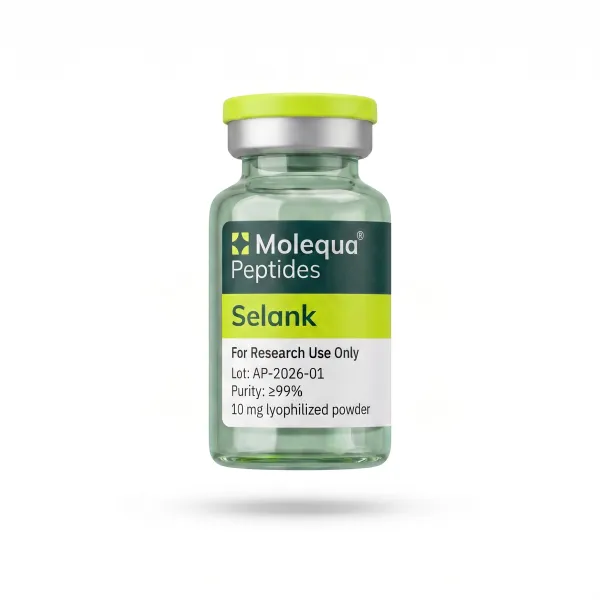
Selank is a synthetic analogue of the natural immunopeptide tuftsin, developed by the Russian Academy of Sciences. Research focuses on anxiety and stress, without sedation and without signs of dependence.
- Registered as an anxiolytic in Russia
- No benzodiazepine-like sedative profile in studies
- The tuftsin backbone links the neural and immune research branches
- The calm half of the duo with Semax
Read more Close
Overview
Where it comes from and why it was created
The story of Selank begins in Moscow in the 1980s and 1990s, at the Institute of Molecular Genetics of the Russian Academy of Sciences under the leadership of Vladimir Myasoedov and Lyudmila Andreeva. The institute was engaged in peptide bioregulation, the idea that short amino acid sequences can be targeted therapeutic molecules.
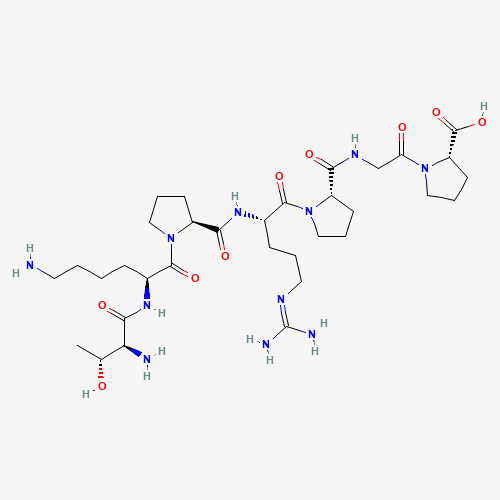
The starting point for Selank was tuftsin, an endogenous tetrapeptide (Thr-Lys-Pro-Arg) isolated in the 1970s from immunoglobulin G. Tuftsin was originally discovered as an immunomodulator, a peptide that enhances phagocytosis (engulfment of pathogens by white blood cells) and activates immune cells. But in the 1980s, it turned out that tuftsin also had central neurological effects, when injected into the brain of animal models, it caused an anxiolytic (anti-anxiety) effect without sedation.
This was interesting. Classic anxiolytics (benzodiazepines such as diazepam, alprazolam) work via direct binding to the GABA-A receptor. They are effective, but have serious side effects: sedation, cognitive impairment, tolerance, physical dependence, withdrawal syndrome. Tuftsin acted completely differently, modulatorily, without sedation. This could be revolutionary for the treatment of anxiety.
The problem: tuftsin had a very short half-life (minutes) and did not cross the blood-brain barrier sufficiently for practical therapeutic use. The Myasoedov team therefore began to chemically optimize tuftsin. By adding a tripeptide C-terminal extension Pro-Gly-Pro, Selank was created, a heptapeptide with dramatically better stability and CNS penetration and preserved anxiolytic activity.
Clinical program and Russian approval
In the 1990s and 2000s, the Institute of Molecular Genetics conducted extensive preclinical and clinical trials of Selank. Phase 2 and 3 clinical trials in Russian patients with generalized anxiety disorder (GAD) showed that Selank:
- Is clinically effective, comparable to benzodiazepines (Filatova 2009)
- Does not cause sedation, patients remain alert
- Does not cause cognitive impairment
- Does not cause tolerance or dependence
- Has a long-lasting effect despite the short half-life
In 2009, the Russian regulator approved Selank as a medicinal product in the form of nasal drops (0.15 %, manufactured by Peptogen). Approved indications include:
- Generalized anxiety disorder
- Neurasthenia
- Adjuvant treatment of alcohol withdrawal syndrome
- Asthenodepressive states
Selank has been used since 2009 in Russian psychiatric and neurological practice. In the US and EU it is not approved, independent Western clinical trials are limited and from this perspective Selank is a research peptide.
Mechanism of action, indirect and multimodal
Selank is interesting in this: it does not have an identified specific receptor. The mechanism is multimodal, modulating multiple neurotransmitter systems indirectly, without direct binding to a receptor.
Modulation of the GABAergic system (indirect)
The most accepted hypothesis. Selank does NOT act directly on the GABA-A receptor (like benzodiazepines). Instead, it acts upstream, it modifies the expression of genes for GABA-A receptor subunits and modulates endogenous production of GABA.
Practical consequences:
- Anxiolytic effect similar to benzodiazepines, but without direct receptor agonist activity
- No sedation, because there is no acute allosteric modulation of GABA-A
- No tolerance, because the receptor is not directly stimulated
- No withdrawal syndrome after discontinuation
- No physical dependence
This is the key clinical advantage of Selank over benzodiazepines, the same therapeutic effect without their main problems.
Modulation of the serotonergic system
Selank increases the activity of 5-HIAA (5-hydroxyindoleacetic acid, a metabolite of serotonin) in brain structures, particularly in the hippocampus and amygdala (the center of fear and anxiety). Higher 5-HIAA suggests increased serotonin turnover, more synthesized and released serotonin.
This effect explains the antidepressant component of Selank, particularly in adjuvant treatment of mild depressive states.
Increase in BDNF (Brain-Derived Neurotrophic Factor)
Selank increases the expression of BDNF in the hippocampus and frontal cortex. BDNF is a key neurotrophic factor for neuroplasticity, synaptic connections and cognitive function. Higher BDNF contributes to:
- Nootropic effects of Selank (improved memory and learning)
- Antidepressant mechanisms (BDNF deficit is the main hypothesis of depression)
- Long-term clinical improvement (neuroplasticity requires time)
Immunomodulatory effects (preserved from tuftsin)
Because Selank is a derivative of tuftsin (which is an immunomodulator), it retained immunomodulatory properties:
- Activation of macrophages and NK cells
- Modulation of cytokine balance (increase in IFN-γ, IL-2; decrease in IL-6 in chronic inflammatory states)
- Possible anti-infective effect (Kost et al.)
This aspect makes Selank interesting also for psychoneuroimmunology, a field that links mental and immune health.
Modulation of the reward system (anti-addiction component)
Selank modulates the dopaminergic system in mesolimbic pathways (the reward area). This is used in its approved indication for adjuvant treatment of alcohol withdrawal syndrome, it helps reduce craving (longing for alcohol) and stabilize mood during detoxification.
Investigated applications
In the published preclinical and clinical literature (with a predominance of Russian research), effects of Selank are documented in the following areas:
- Generalized anxiety disorder (GAD), approved Russian indication (Filatova 2009)
- Neurasthenia and chronic fatigue, approved Russian indication
- Alcohol withdrawal syndrome, approved Russian indication (Selank as adjuvant)
- Mild depressive states, adjuvant use
- ADHD-like states in adults, exploratory data
- Post-traumatic stress disorder (PTSD), developing clinical experience
- Social anxiety, preclinical and observational data
- Cognitive deficits, nootropic effect via BDNF
- Chronic stress and age-related anxieties, geriatric application
- Anti-phobic effect, animal models
Buying Selank: what to look for
When buying Selank, the decisive criterion is not the price but the verifiability of quality. A research peptide is only ever as good as its certificate of analysis. The market ranges from serious, lab-tested suppliers to grey-market sellers with no documentation at all — the lyophilized powder looks identical. These five criteria separate them.
1. HPLC purity ≥ 99 % – documented, not just claimed
HPLC purity shows what proportion of the powder is actually Selank. Serious suppliers document ≥ 99 % with a chromatogram. “99 % purity” without an attached chromatogram is a claim, not proof.
2. Batch-specific certificate of analysis (CoA)
The most important document. A batch-specific CoA belongs to exactly the batch you receive — with batch number, date and purity value, issued by an independent laboratory (Janoshik and similar are the industry standard). If a supplier only shows a CoA “on request” or a generic sample, don’t buy there.
3. LC-MS identity confirmation
Purity tells you how much of a substance is present; LC-MS tells you which substance it is. Via the molecular mass (751.9 Da) it confirms this is the correct identity of Selank, not a cheaper, mislabeled peptide.
4. Origin and EU shipping with traceability
A supplier with an EU warehouse and full batch traceability has the edge over grey imports from Asia: shorter, cooled transport and no customs risk. Molequa® ships from within the EU, typically within 3 to 5 business days — no post-Brexit customs delays.
5. Correct delivery form: lyophilizate
High-quality Selank is delivered as a lyophilizate (white powder), not as a pre-mixed solution. Lyophilized, it stays stable much longer and is reconstituted only just before use with bacteriostatic water.
Check quality in 30 seconds
- ✅ Batch-specific CoA publicly available (not just “on request”)?
- ✅ HPLC purity ≥ 99 % proven with a chromatogram?
- ✅ LC-MS identity confirmed (mass 751.9 Da)?
- ✅ EU warehouse and batch traceability?
- ✅ Delivered as a lyophilizate with clear storage instructions?
If all five points are met, you are buying verified material. Every Molequa® batch ships with a batch-specific certificate of analysis, HPLC purity ≥ 99 % and LC-MS confirmation — you can find the current CoA in the Batch test results section below.
Legal notice: Selank is a research peptide and not an approved medicine. It is sold exclusively for scientific laboratory research and is not intended for human or animal consumption.
Science & Studies
4.1 Key publications
Kozlovskii I.I., Danchev N.D. (2003). The optimizing action of the synthetic peptide selank on a conditioned active avoidance reflex in rats. Neurosci Behav Physiol. 33(7):639 to 643., Foundational animal data.
Filatova E.V., Volkova A.V., Kozlovskaia M.M., Kozlovskii I.I. (2009). The use of the new peptide drug Selank in the treatment of generalized anxiety disorder. Zh Nevrol Psikhiatr Im S S Korsakova. 109(5):54 to 58., Key clinical GAD trial.
Volkova A., Shadrina M., Kolomin T., et al. (2016). Selank Administration Affects the Expression of Some Genes Involved in GABAergic Neurotransmission. Front Pharmacol. 7:31., Mechanistic genetic study.
Semenova T.P., Kozlovskii I.I., Zakharova N.M., Kozlovskaia M.M. (2010). Experimental investigations of the peptide preparation Selank. Eksp Klin Farmakol. 73(8):3 to 7., Foundational mechanistic review article.
Inozemtsev A.N., Kapitsa I.G., Garibova T.L., et al. (2008). Effect of selank on equilibrium of nervous processes. Bull Exp Biol Med. 146(2):182 to 185., Animal anxiolytic data.
Kost N.V., Sokolov O.Y., Gabaeva M.V., et al. (2001). Selank, a synthetic analogue of tuftsin, has anxiolytic and antidepressant-like effect. Doklady Biochem. 376:236 to 239., Original pharmacological characterization.
4.2 Detailed expandable studies
▸ Study 1: Kozlovskii 2003, foundational animal data
Citation: Kozlovskii I.I., Danchev N.D. The optimizing action of selank on conditioned active avoidance reflex in rats. Neurosci Behav Physiol. 2003;33(7):639 to 643.
What they did: Animal behavioral study. Rats trained in the conditioned active avoidance paradigm (learning to avoid a painful stimulus after a warning signal). Randomization: Selank (1 to 300 µg/kg intraperitoneally) vs placebo. Assessment: learning speed, retention of learned behavior, motor activity, anxiolytic markers.
What they found:
- Selank improved learning speed by 30 to 50 % at medium doses (10 to 100 µg/kg)
- Better retention of the learned task after 24 and 72 hours
- Bell-shaped dose-response relationship, at higher doses (300 µg/kg) the effect decreased (typical for neuropeptide molecules)
- No sedation or motor deficits, controlled in parallel by rotarod test
- Anxiolytic markers (elevated plus maze) improved
Why it matters: The study was key for validating the dual profile of Selank: anxiolytic (anti-anxiety) and nootropic (improving cognition). This is a rare combination, most anxiolytics (benzodiazepines) worsen cognition. The bell-shaped dose-response curve is also important: there is an optimal dose, higher does not always mean better.
▸ Study 2: Filatova 2009, key clinical GAD trial
Citation: Filatova E.V., Volkova A.V., Kozlovskaia M.M., Kozlovskii I.I. The use of the new peptide drug Selank in the treatment of generalized anxiety disorder. Zh Nevrol Psikhiatr Im S S Korsakova. 2009;109(5):54 to 58.
What they did: n = 62 patients with diagnosed generalized anxiety disorder (GAD according to ICD-10 criteria). Randomization: Selank (intranasal drops 2,250 µg daily) vs Medazepam (a classic benzodiazepine) vs placebo. Duration: 14 days. Assessment: Hamilton Anxiety Rating Scale (HAM-A), cognitive tests, side effects.
What they found:
- HAM-A decrease: Selank −13 points, Medazepam −14, placebo −5, Selank clinically equivalent to the benzodiazepine
- Cognitive tests: Selank improved (+15 %), Medazepam worsened (−20 %), a key difference
- Selank: no sedation during treatment or after it
- Medazepam: marked sedation in ~60 % of patients
- Selank: no withdrawal syndrome after discontinuation; Medazepam: mild rebound anxiety
Why it matters: This is the most significant published clinical study of Selank and the key evidence for Russian regulatory approval in 2009. It demonstrated that Selank is clinically effective as a benzodiazepine, but without its main drawbacks, sedation and cognitive impairment. Limitations: short duration (14 days), single-site, Russian population, independent Western replications limited.
▸ Study 3: Volkova 2016, mechanistic genetic study
Citation: Volkova A., Shadrina M., Kolomin T., et al. Selank Administration Affects the Expression of Some Genes Involved in GABAergic Neurotransmission. Front Pharmacol. 2016;7:31.
What they did: Genomic study. Rats received Selank (300 µg/kg intraperitoneally) or placebo. At various time points (1, 3, 6 hours), hippocampus and frontal cortex samples were taken. RNA-Seq and qPCR analysis of expression of 84 genes of the GABAergic system (receptor subunits, transporters, synthetic and degradation enzymes).
What they found:
- Selank modulated expression of 31 of 84 GABA-related genes
- Expression of α1 and α2 subunits of the GABA-A receptor increased, the anxiolytic subunits
- Mild changes in the GAT1 transporter, which modulates synaptic GABA clearance
- Hippocampus: stronger changes than frontal cortex, explaining specificity to anxiety
- Time profile: changes start within 1 hour, peak at 3 to 6 hours, persist 24+ hours
Why it matters: The study provides a molecular mechanism for the long-lasting effect of Selank despite its short half-life. Selank affects the expression of genes for GABA machinery, which means that after its metabolism, the modified GABA system continues to act for weeks. This is different from benzodiazepines, which act acutely and disappear after metabolism.
▸ Study 4: Semenova 2010, foundational mechanistic review article
Citation: Semenova T.P., Kozlovskii I.I., Zakharova N.M., Kozlovskaia M.M. Experimental investigations of the peptide preparation Selank. Eksp Klin Farmakol. 2010;73(8):3 to 7.
What they did: Review article summarizing 15 years of Selank research at the Institute of Molecular Genetics. Covers: chemical development, animal models, mechanistic studies, pharmacokinetics, clinical experience.
What they found (summary):
- Selank has two parallel mechanisms, anxiolytic (via GABAergic modulation) and nootropic (via BDNF and glutamate)
- 5-HIAA levels rise in the hippocampus and amygdala, higher serotonin turnover
- Cortisol decreases in stress models, HPA modulation
- Immunomodulatory effects preserved from tuftsin, activation of macrophages, NK cells
- Half-life in plasma: 5 minutes (blood), but long-lasting central effect (24+ hours)
Why it matters: The study is the reference article of the Russian Selank tradition, providing the conceptual framework in which Selank exists as a multimodal neuroactive molecule. For the research context, it is key for understanding why Selank acts differently from classic anxiolytics.
▸ Study 5: Inozemtsev 2008, animal anxiolytic data
Citation: Inozemtsev A.N., Kapitsa I.G., Garibova T.L., et al. Effect of selank on equilibrium of nervous processes. Bull Exp Biol Med. 2008;146(2):182 to 185.
What they did: Animal study in models of anxiety and stress. Rats exposed to chronic stress (electric shocks, immobilization, food restriction) and randomized to Selank vs placebo. Assessment: behavioral markers of anxiety (elevated plus maze, open field, dark/light box), neurochemical markers (cortisol, monoamines, BDNF).
What they found:
- Selank prevented the development of anxiety-like behavior in all tests
- Decrease in cortisol under stress conditions
- Motor activity preserved, no sedation
- Increase in BDNF in the hippocampus
- Anti-phobic effect observed even 48 hours after the last dose, long-lasting
Why it matters: The study provides robust preclinical data for the anxiolytic effect of Selank in standard behavioral models. The long-lasting effect (48+ hours after the last dose) is clinically relevant, it explains why Selank does not require frequent dosing despite the short plasma half-life.
▸ Study 6: Kost 2001, original pharmacological characterization
Citation: Kost N.V., Sokolov O.Y., Gabaeva M.V., et al. Selank, a synthetic analogue of tuftsin, has anxiolytic and antidepressant-like effect. Doklady Biochem. 2001;376:236 to 239.
What they did: Original pharmacological characterization of Selank. Comparison with parent tuftsin in animal models of anxiety and depression (Porsolt swim test, elevated plus maze). Assessment of affinity for various neurotransmitter receptors.
What they found:
- Selank has a 10 to 100× stronger anxiolytic effect than tuftsin
- Half-life extended from minutes (tuftsin) to tens of minutes (Selank)
- Antidepressant effect in the Porsolt swim test (comparable to amitriptyline)
- No affinity for GABA-A, serotonin, dopamine, opioid receptors, acts via indirect mechanisms
- Immunomodulatory effects preserved
Why it matters: This was the first publication about Selank in a Western-indexed journal. It demonstrated that the Pro-Gly-Pro extension dramatically increases the therapeutic potential of tuftsin. For the research context, it is key for understanding what exactly Selank does differently from its natural predecessor.
▸ Study 7: Sokolov 2009, alcohol withdrawal syndrome
Citation: Sokolov O.Y., Andreeva L.A., Inozemtseva L.S., et al. (2009). Effect of selank on alcohol consumption and alcohol withdrawal syndrome in rats. Klin Eksp Farmakol.
What they did: Rats exposed to chronic alcohol intoxication (4 weeks, alcohol solution as the only source of fluid). After abrupt discontinuation, randomization: Selank (intranasal equivalent 100 µg/kg/day) vs placebo. Assessment: behavioral signs of withdrawal state, voluntary alcohol consumption in a re-exposure test, autonomic markers.
What they found:
- Selank reduced behavioral signs of withdrawal state, tremor, hyperactivity, stiffness
- Normalization of sleep architecture during the detoxification phase
- Decrease in voluntary alcohol consumption in the re-exposure test (effect on craving)
- No serious side effects
- Anxiolytic effect preserved during the detoxification phase
Why it matters: The study validates the approved Russian indication for adjuvant treatment of alcohol withdrawal syndrome. Selank acts complementarily with benzodiazepines (which are the primary treatment of alcohol withdrawal), addressing chronic anxiety and craving during recovery. In Russian narcology practice, it is an established molecule.
Storage
Lyophilizate (dry powder before reconstitution)
- 2 years at −20 °C (freezer)
- 18 months at 2 to 8 °C (refrigerator)
- Up to 30 days at room temperature (up to 25 °C), protect from light and moisture
After reconstitution (peptide in solution with bacteriostatic water)
- Up to 21 days at 2 to 8 °C, protected from light
- Selank is relatively stable in solution, no methionine or disulfide-sensitive sites
Practical storage rules
- Allow the vial to warm to room temperature (15 to 20 min) before opening.
- Darkness is your friend, although Selank does not contain tryptophan, controlled light exposure protects stability.
- Do not shake! Mechanical stress can disrupt the conformation.
- The solution should remain clear and colorless. Any cloudiness indicates contamination.
Combination tips, Frequently combined peptides
Selank is often combined in the research literature with other neuroactive peptides for a more complex effect.
Semax, nootropic complement
The most significant combination partner for Selank. Semax is a heptapeptide fragment of ACTH, developed at the same Institute of Molecular Genetics in Moscow. The mechanisms are complementary:
- Selank: anxiolytic + nootropic via GABA and BDNF
- Semax: nootropic + neuroprotection via BDNF and NGF
- Together: cover both the anxiety and cognitive component
In Russian psychiatric practice, the combination is described as the “classic neurometabolic combination” for stress-induced cognitive deficits, neurasthenia and age-related anxieties.
DSIP, sleep axis
DSIP modulates sleep and the HPA axis. Selank acts on anxiety and cognition. Together they cover a complex neuroregulatory profile, anxiety, sleep, cognition. A popular combination in Russian geriatric protocols (in parallel with Epitalon).
Epitalon, longevity axis
For research in the context of age-related anxieties and cognitive decline. Epitalon acts on the cellular level of aging, Selank on the neurochemical level of anxiety and stress. Complementary.
Cerebrolysin, neuroprotective synergy
Cerebrolysin is a complex of peptide fragments for cerebrovascular events and neurodegenerative diseases. Selank adds the anxiolytic and nootropic component. For research in recovery after stroke or Alzheimer’s disease, this combination may be relevant.
BPC-157, for the gut-brain axis
Selank modulates anxiety via central mechanisms. BPC-157 acts on the gastrointestinal mucosa and the gut-brain axis (microbiome can influence mood). For research in GI symptoms related to anxiety (comorbidity IBS-anxiety), hypothetical synergy.
Ipamorelin + CJC-1295, HPA and sleep
For research in chronic stress, where GH secretion is disrupted (via excessive HPA activation), combination with a GH combination can restore anabolic and regenerative signaling. Selank stabilizes the stress response, GH peptides restore regeneration.
Key scientific figures and citations
“Selank, a synthetic heptapeptide based on the immunomodulator tuftsin, possesses anxiolytic activity comparable with that of benzodiazepine drugs without the sedative and amnestic side effects characteristic of the latter.”
Kozlovskaya MM. et al. (2003), Eksp Klin Farmakol 66(5), PubMed 14650113
Statistics from preclinical literature
- Selank (TP-7, Селанк), a synthetic heptapeptide, sequence Thr-Lys-Pro-Arg-Pro-Gly-Pro, molecular weight 751.87 Da
- An analogue of endogenous tuftsin (Thr-Lys-Pro-Arg) with an added C-terminal Pro-Gly-Pro stabilizing sequence
- Synthesized at the Russian Institute of Molecular Genetics RAS (the V.N. Nezavibatchenko, N.F. Myasoedov group) in the 1990s
- Standard experimental dose in animal models: 100–300 μg/kg intranasally (Semenova 2007); clinical dose in Russia 300 μg per nostril, 2–3× daily
- Mechanism: modulation of GABAergic and serotonergic pathways, induction of expression of BDNF and NGF, modulation of the enkephalin system
- In Zozulia 2008 (n=62 patients with GAD): reduction of HAM-A score by ~50 % over 14 days vs medazepam (comparable effect)
- Status: approved in the Russian Federation (Rosregistration 2009) as Selank nasal drops 0.15 % for anxiety disorders
- Approximately 80+ publications in PubMed, predominantly by Russian authors
Reference sources (PubMed)
- Kozlovskaya MM. et al. (2003). “Selank and short peptides of the tuftsin family in the regulation of adaptive behavior in stress.” Eksp Klin Farmakol 66(5):28–34. PubMed 14650113
- Semenova TP. et al. (2007). “Effect of Selank on cognitive processes after impairment caused by cholinergic system blockade in rats.” Eksp Klin Farmakol 70(4):3–6. PubMed 17912823
- Medvedev VE. et al. (2014). “The use of selank in the treatment of generalized anxiety disorder and neurasthenia.” Zh Nevrol Psikhiatr Im S S Korsakova 114(7):17–22. PubMed 25176253
Regulatory status: Selank is a registered medicinal product in the Russian Federation (Rosregistration 2009, Selank 0.15 % nasal drops, manufacturer Peptogen). In the EU (EMA), the USA (FDA) or in Slovakia (ŠÚKL) it is not approved. Selank is legally available only in the RF (and some post-Soviet countries) on prescription. Existing data come predominantly from Russian clinical and preclinical literature. The product is sold strictly for laboratory scientific research (RUO).
Frequently asked questions about Selank
These questions address the most common research-context searches about Selank. For full technical documentation see the sections above.
What is Selank and what is it used for in research?
Selank (sequence Thr-Lys-Pro-Arg-Pro-Gly-Pro, 751 Da) is a synthetic 7-amino-acid analogue of the endogenous immunomodulator tuftsin, developed at the Institute of Molecular Genetics RAS in Moscow. In research it shows anxiolytic, nootropic and immunomodulatory effects via GABA pathway modulation and BDNF expression. Registered in Russia as a prescription anxiolytic.
What dose of Selank do scientists use in animal models?
In Russian clinical studies (Kozlovskaya, Seredenin) Selank is administered 300 to 900 µg/day intranasally (divided into 2 to 3 doses). Experimental preclinical rat doses: 100 to 500 µg/kg intraperitoneally.
What is the difference between Selank and Semax?
Selank and Semax are both Russian glyproline peptides, but Selank targets anxiolytic and immunomodulatory effects (tuftsin analogue, GABA modulation), whereas Semax targets nootropic and neuroprotective effects (ACTH 4-10 analogue, BDNF and serotonin modulation). Selank for anxiety, Semax for cognition.
Is Selank an approved medicine or research substance?
Selank is registered in the Russian Federation as an Rx anxiolytic (Selank 0.15 %, nasal drop). Not approved in the EU, USA or Slovakia; EMA/FDA do not list Selank. The product is sold strictly for laboratory scientific research (RUO).
How is Selank stored?
Lyophilised Selank should be stored at −20 °C protected from light, stability 2 to 3 years; at 2 to 8 °C 12 months. After reconstitution the solution is stable for 28 days at 2 to 8 °C. For intranasal research applications it is dissolved in 0.9 % NaCl.
What is the half-life of Selank and how often is it administered in studies?
Selank has a short plasma half-life (~7 minutes), but the effect via neurotransmitter modulation persists for hours. Thanks to its glyproline structure it is resistant to peptidases. In clinical protocols it is administered 2 to 3 times daily intranasally.
Where to buy Selank in the EU for scientific research?
Selank for scientific research in the EU is offered by Molequa® with FedEx delivery in 3 to 5 business days across the EU. The product ships lyophilised with a Certificate of Analysis (COA), HPLC purity ≥ 99 %. The product is strictly for laboratory scientific research (RUO).