
In short
BPC-157 is a synthetic pentadecapeptide, a chain of 15 amino acids derived from a fragment of a human gastric protein. For UK researchers it is a laboratory reagent: not a licensed medicine, supported by an overwhelmingly preclinical literature, and prohibited at all times by WADA under class S0.
- Evidence base: a 2025 systematic review included 36 studies, 35 of them preclinical
- Human data: three small uncontrolled studies, 30 participants in total, rated very low certainty in 2026
- UK legal frame: sold for research it is a reagent; sold for human consumption it becomes an unlicensed medicine
- Supplier test: a batch certificate from an independent laboratory, with purity and net peptide content as separate figures
What is BPC-157?
BPC-157 (Body Protection Compound 157) is a pentadecapeptide with the sequence Gly-Glu-Pro-Pro-Pro-Gly-Lys-Pro-Ala-Asp-Asp-Ala-Gly-Leu-Val and a molecular weight of about 1,419 Da. It was characterised by Predrag Sikiric’s group in Zagreb, and in the early 2000s it was in clinical trials for inflammatory bowel disease under the codes PL 14736 and PLD-116, as noted by Staresinic 2003, J Orthop Res. No approved medicine came out of that programme.
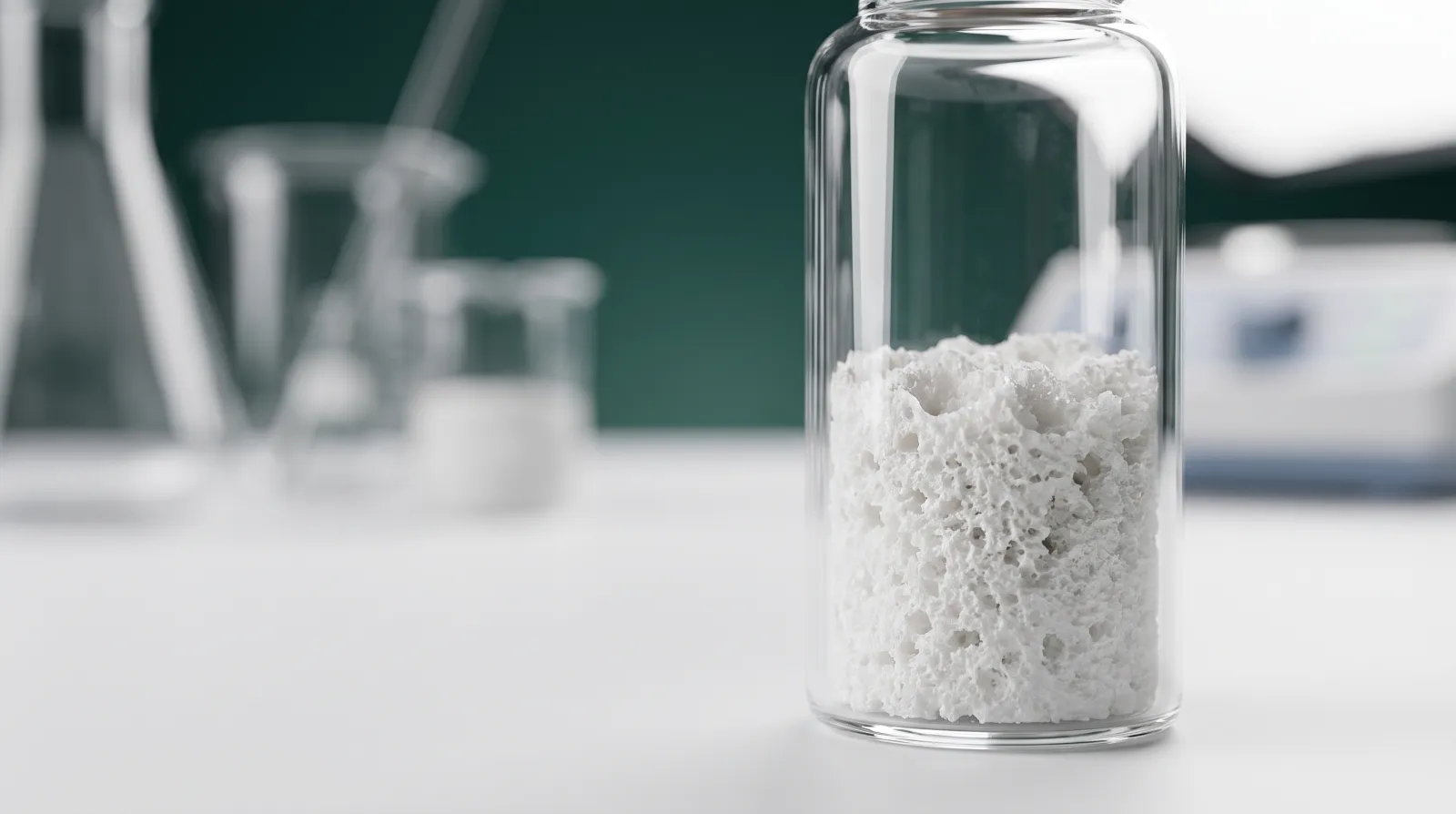
In research catalogues BPC-157 appears as a lyophilised powder in salt form. Its comparison with the other frequently studied repair peptide is covered in BPC-157 vs TB-500.
What the published BPC-157 research shows
The published BPC-157 literature is a large body of cell and animal work with a very thin human layer. Vasireddi 2025, HSS Journal screened 544 records from 1993 to 2024 and included 36 studies: 35 preclinical and 1 clinical. The authors found no clinical safety data and reported a half-life under 30 minutes.
Mechanistic work centres on tendon and vascular models. In rat tendon fibroblasts, BPC-157 increased outgrowth, survival under oxidative stress and migration via the FAK and paxillin pathway (Chang 2011, J Appl Physiol) and raised growth hormone receptor expression (Chang 2014, Molecules). Hsieh 2017, J Mol Med linked its pro-angiogenic activity to VEGFR2 and Akt and eNOS signalling.
| Study | Model | Main reported finding |
|---|---|---|
| Staresinic 2003 | Rat, transected Achilles tendon | Better biomechanical and functional scores than saline controls |
| Hsieh 2017 | Chick membrane, rat ischaemia, human endothelial cells | VEGFR2 upregulation, Akt and eNOS activation |
| Xu 2020 | Mice, rats, rabbits, dogs | No serious toxicity in standard preclinical tests |
| He 2022 | Rats and beagle dogs | Half-life under 30 minutes, renal and biliary excretion |
| Poolton 2026 | Humans, 3 studies, n = 30 | Very low certainty, poor methodological quality |
The toxicology package by Xu 2020, Regul Toxicol Pharmacol found no genetic or embryo-fetal toxicity. On the human side, Poolton 2026, Acta Orthop Belg identified a retrospective knee study (Lee 2021), a 12-woman interstitial cystitis pilot (Lee 2024) and a two-participant intravenous pilot (Lee 2025). None had a control group, and the reviewers concluded that BPC-157 should not be used clinically outside regulated trials. McGuire 2025 and Yuan 2026, Int J Mol Sci likewise call for well-designed controlled trials before clinical use.
Is BPC-157 legal in the UK?
For laboratory research, buying and holding BPC-157 is generally not an offence in the UK, because research peptides are as a rule not controlled substances there, but it is not a licensed medicine either. The line runs through presentation and use. Sold with research use only labelling, without health claims or human use instructions, it is a laboratory chemical. Sold or promoted for human consumption, the same molecule can be treated as a medicinal product that needs a marketing authorisation.

Since Brexit, a parcel from an EU supplier to Great Britain is an import that clears customs and normally attracts UK import VAT. The details, including Northern Ireland, are in the guide to research peptides in the UK. This is general information, not legal advice.
BPC-157 and the WADA 2026 Prohibited List
BPC-157 is named explicitly in class S0, non-approved substances, of the WADA 2026 Prohibited List, so it is prohibited in and out of competition. S0 covers pharmacological substances with no current approval by any governmental health authority for human therapeutic use. The listing concerns sport and says nothing about efficacy.
Benefits for men, capsules and injections: what the literature does not show
There is no published human evidence for BPC-157 benefits in men or any other specific group, and no study compares capsules with injections in people. Where “male” appears in this literature, it usually describes the animals, as in the 2014 growth hormone receptor study on fibroblasts from male Sprague-Dawley rats.
Route data exist only in animals. He 2022, Front Pharmacol measured intramuscular bioavailability of 14 to 19 percent in rats and 45 to 51 percent in beagle dogs, and Seiwerth 2018, Curr Pharm Des reviews rodent gastrointestinal models with intraperitoneal, oral and local application. None of this is a human comparison. Capsules sold for swallowing are presented for human consumption, which places them under medicines regulation. Molequa® supplies BPC-157 only as a lyophilised powder for laboratory research, not as capsules or a supplement.
Where to buy BPC-157 peptide: judging a supplier
For BPC-157, the supplier’s evidence matters more than its location: look for a batch specific certificate from an independent laboratory, purity and net peptide content as separate numbers, and a real legal entity behind the shop. The full checklist is in how to verify a peptide supplier.
- Batch certificate. The report number and batch code should match the vial label; a certificate without a batch code proves nothing about your vial.
- Purity versus peptide content. HPLC purity is the area share of the main chromatogram peak. Net peptide content is the share of the powder mass that is peptide, the rest being counter ion and water.
- Price per mg. Divide the price by the labelled milligrams and read it next to the net peptide content.
Molequa® documents the current batch of BPC-157 for research with certificate AN-2026-00020 from the independent laboratory Analyton Labs, batch MQ-BPC-157-202609, issued on 28 October 2026. It reports RP-HPLC purity (C18, 214 nm) of 99.60 percent and net peptide content of 86.74 percent w/w; the full batch certificate is public before purchase. It does not include an identity determination by mass spectrometry. The price is 44.90 € per 10 mg vial as of 25 October 2026. Molequa® ships from the EU, so UK researchers should check the shipping page or contact support for current options before ordering.
Frequently asked questions
Is BPC-157 legal in the UK? For laboratory research it is generally not an offence to buy or hold it, because research peptides are as a rule not controlled substances in the UK. It is not a licensed medicine, and selling it for human consumption falls under medicines regulation.
Is there human evidence for BPC-157? Very little. A 2026 systematic review found three small uncontrolled studies with 30 participants in total and rated the certainty of evidence as very low.
Are BPC-157 capsules better than injections? No published study compares the two in people. Route data come only from rats and dogs, and Molequa® supplies BPC-157 solely as a lyophilised powder for laboratory research.
Is BPC-157 banned in sport? Yes. WADA names BPC-157 in class S0 of its 2026 Prohibited List, so it is prohibited at all times.
What should a BPC-157 certificate of analysis show? A report number and batch code matching the vial, HPLC purity, net peptide content as a separate figure and the name of the independent laboratory.
Legal notice
All Molequa® products are intended exclusively for laboratory research (Research Use Only). They are not medicines, dietary supplements, cosmetics or food, and are not intended for human or animal consumption. Cited data describe published research and are not a claim about the products sold, nor a recommendation for use.