
In short
A certificate of analysis is the only document that links the vial you received to an actual measurement. Everything else on a product page is marketing.
- A CoA without a batch number proves nothing about your vial
- HPLC purity and peptide content answer two different questions
- A purity figure without a chromatogram is a claim, not evidence
- Who signed the analysis matters as much as the number itself
- Mass spectrometry confirms identity, purity alone does not
- Everything below concerns laboratory research material, not human use
Why the certificate is the whole argument
Research peptides are sold outside the medicines regulatory framework, which means no authority has verified what is in the vial. The certificate of analysis is therefore not a bonus document but the entire evidentiary basis of the purchase. Without it you are buying a label.
This is worth stating plainly because the market runs on trust signals that look convincing and prove nothing. A clean website, a chemical structure diagram and the phrase “99 percent purity” cost a vendor nothing. A batch-specific analysis from an independent laboratory costs money on every single production run, which is precisely why it carries weight.
What a usable CoA must contain
A usable certificate identifies the specific batch you received. It carries a batch number, the date of analysis, the method used, the purity result and identity confirmation by mass spectrometry. A generic document with no batch number, or the same PDF reused for months, tells you nothing about the material in front of you.
| Element | What it establishes | Warning sign |
|---|---|---|
| Batch number | Links the document to your vial | Absent, or unchanged for months |
| Date of analysis | When the measurement happened | Missing, or predating synthesis |
| HPLC purity plus chromatogram | Proportion of the declared substance | A number with no graph attached |
| LC-MS identity | Confirms it is the right molecule | Omitted entirely |
| Signing laboratory | Who stands behind the result | In-house analysis by the seller |
| Endotoxin test (LAL) | Bacterial contamination | Rarely present, but adds weight |
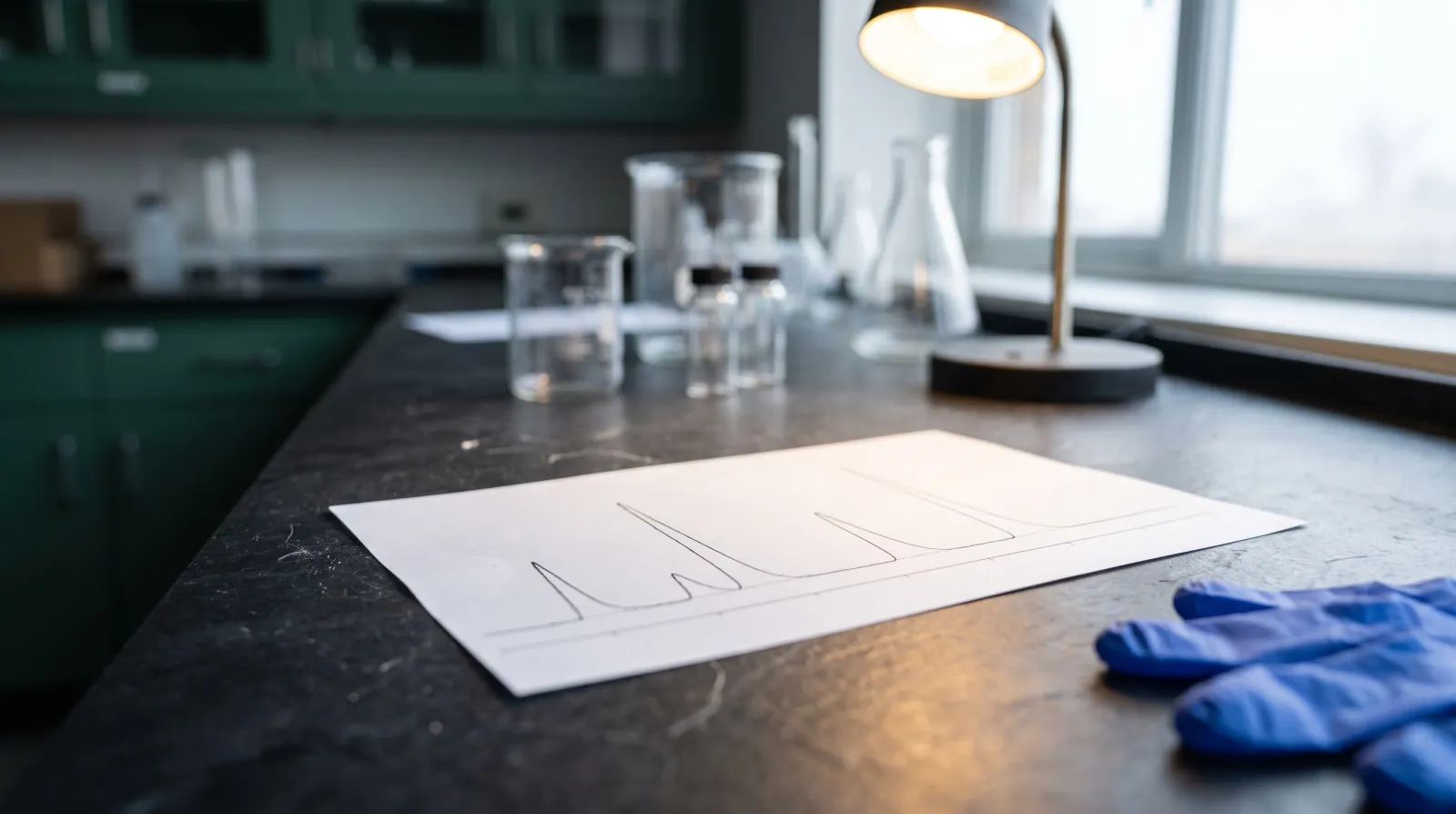
The chromatogram is the element most often left out, and it is the one that matters most. A real chromatogram shows the main peak, the smaller impurity peaks and the baseline noise. Without it there is no way to know whether the stated purity was calculated across the full spectrum or across a conveniently selected window.
HPLC purity is not peptide content
HPLC purity states what proportion of the material passing through the chromatographic column is the declared substance. It does not state how much peptide is present by weight. A vial can be 99 percent pure and still contain noticeably less peptide than the label implies, because the remaining mass consists of residual salts, water and counterions left over from synthesis.
That second figure is called peptide content and is measured separately, usually by nitrogen analysis or amino acid quantification. Very few suppliers in this market declare it. Knowing that the two numbers answer different questions is one of the more useful things a buyer can carry into a comparison.
Solid phase synthesis also leaves characteristic residues. Trifluoroacetic acid is used in the final cleavage of the peptide from the resin and remains in the product as a counterion. Serious certificates quantify it, and a residue below roughly 1 to 1.5 percent is typical for research grade material.
Why the signing laboratory matters
An analysis carried out by the seller and an analysis carried out by an independent laboratory are not the same evidence, regardless of how similar the documents look. The independent laboratory has no commercial interest in the result and puts its own name on the outcome.
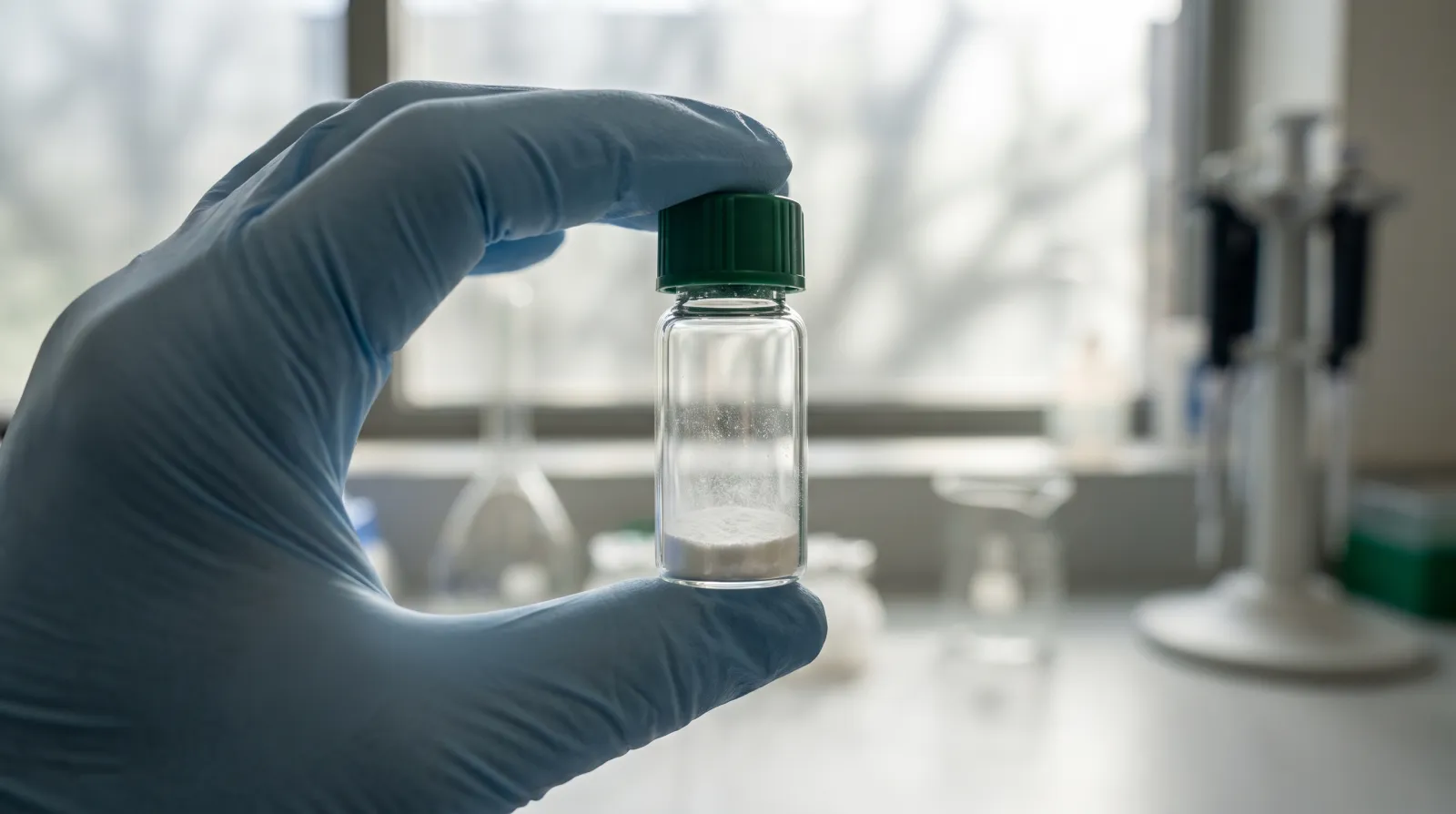
There is a practical test here. Ask which laboratory performed the analysis, then check whether that laboratory exists, specialises in peptide analysis and is identifiable. If the answer is vague, or the certificate carries no laboratory identification at all, the document is decorative.
Molequa® batches are analysed by Janoshik Analytical, an independent Czech laboratory specialising in peptide analysis, and the certificate is available on the product page before purchase rather than after.
What mass spectrometry actually confirms
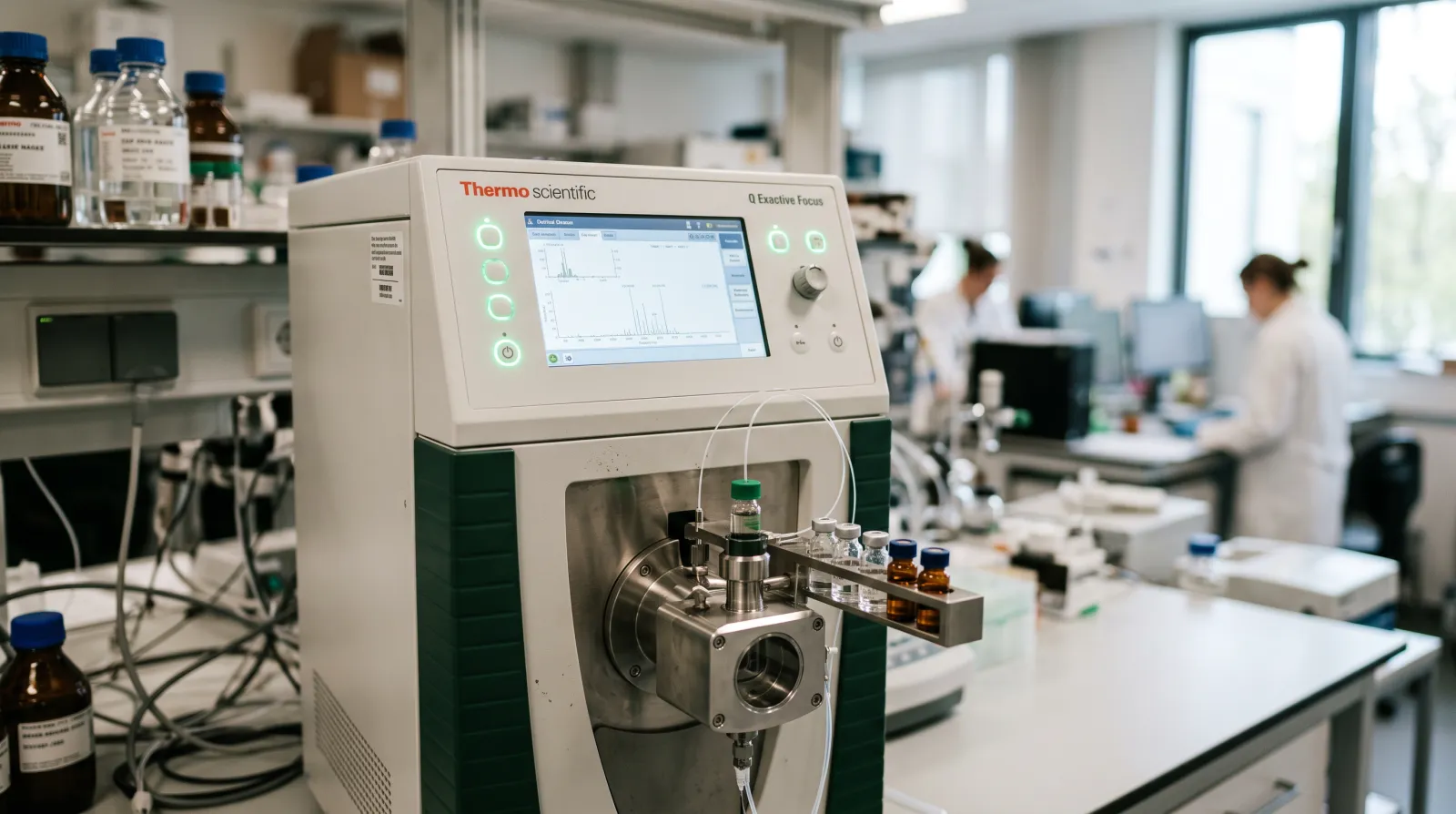
Purity tells you how much of something is present. Mass spectrometry tells you what that something is. The instrument measures molecular mass, and a peptide with the wrong sequence, a deletion or an incomplete chain will register a different mass than expected.
This distinction matters because purity alone cannot detect substitution. A batch could be 99 percent pure and consist almost entirely of a cheaper molecule than the one on the label. Only identity confirmation closes that gap, which is why a certificate with purity but no LC-MS is only half a document.
Typical reference masses, useful for cross-checking a certificate:
| Molecule | Expected mass |
|---|---|
| BPC-157 | 1419.53 Da |
| TB-500 | 4,963.44 Da |
| Semax | 813.9 Da |
| Selank | 751.9 Da |
| Argireline | 888.90 Da |
Seven warning signs in an offer
No single item below is conclusive on its own. Several appearing together move the risk from theoretical to real.
- No batch-specific CoA, only a generic document or none at all
- Purity stated without a chromatogram
- The analysis is signed by the seller, not an independent laboratory
- Human dosing guidance is offered, or effects in the human body are described
- Price far below the market band with no explanation
- Cryptocurrency-only payment and no company registration details
- A prefilled pen is sold instead of lyophilised powder in a vial, which places the product outside the research material framework
Point four deserves emphasis. A supplier that publishes a human dosing protocol has stepped outside the framework in which these substances are legally sold. That is not helpfulness, it is a signal about how the rest of the operation is run.
Where the price band sits
Comparing price per vial is unreliable because vials differ in content. Price per milligram is the only honest comparison. For documented material with a batch CoA shipped from within the EU, the 2026 market band runs roughly from 3 to 25 euros per milligram depending on the molecule.
The spread has a chemical explanation. A 15 amino acid peptide such as BPC-157 requires far fewer synthesis cycles than a 39 amino acid triple agonist such as retatrutide, and every cycle adds cost and reduces yield. Modern incretin molecules therefore sit at the top of the band, while short regenerative peptides sit near the bottom.
You can compare the per milligram breakdown for every molecule directly in the research peptides catalogue, where the unit price is shown next to the vial price.
How the evidence base varies between molecules
Documentation quality is one axis; literature quality is another. Some molecules have phase 2 and phase 3 trials published in major journals. Others rest almost entirely on animal models from a single research group. That difference should weigh more heavily than any marketing argument.
Examples with journal, year and sample size:
- Tirzepatide, SURMOUNT-1. Jastreboff and colleagues, 2022, New England Journal of Medicine, 2,539 participants (PubMed 35658024)
- Retatrutide, phase 2. Jastreboff and colleagues, 2023, New England Journal of Medicine, 338 participants (PubMed 37366315)
- Retatrutide in type 2 diabetes. Rosenstock and colleagues, 2023, The Lancet (PubMed 37385280)
- Tirzepatide, SURPASS-2. Frías and colleagues, 2021, New England Journal of Medicine (PubMed 34170647)
- Retatrutide preclinical characterisation. Coskun and colleagues, 2022, Cell Metabolism, covering the LY3437943 molecule from discovery through to clinical trials (PubMed 35985340)
At the other end of the range sit molecules whose evidence is still entirely preclinical. BPC-157 and TB-500 appear mainly in animal work, such as a 2026 rat study on Achilles tendon healing (PubMed 42542926), with no comparable clinical programme behind them.
These references describe substances in clinical development or already registered as medicines in some jurisdictions. They are scientific context, not a statement about the research material sold here.
Frequently asked questions
What is the single most important thing on a CoA? The batch number, because it is what connects the document to your specific vial. A certificate without one describes some batch, somewhere, at some point.
Does 99 percent HPLC purity mean the vial contains 99 percent peptide? No. Purity describes the proportion of the declared substance among what passes through the column. Peptide content by weight is a separate measurement, usually lower, and rarely declared.
Why does the chromatogram matter if the purity number is already stated? Because the number is a summary and the chromatogram is the underlying data. It shows the impurity peaks and the baseline, which is the only way to judge whether the stated figure is plausible.
Can I verify a molecule myself? Partially. You can cross-check the mass on the certificate against the published molecular mass of the peptide, and you can check that the batch number matches your vial. Full verification requires a laboratory.
Why do you not publish human dosing? Because these substances are not intended for human use. Publishing a human dosing schedule would contradict the framework under which they are legally sold.
Who analyses Molequa® batches? The independent laboratory Janoshik Analytical. Every shipment includes a certificate for the specific batch, with HPLC purity and identity confirmation by mass spectrometry.
Legal notice
All products under the Molequa® brand are intended exclusively for scientific laboratory research (Research Use Only). They are not medicines, dietary supplements, cosmetic products or food, and they are not intended for human or animal consumption or for application to human or animal skin. Scientific data cited in this article come from published literature and describe research conducted with the relevant substances. They are not a claim about the products sold, nor a recommendation for use.
