
In short
A peptide is a chain of amino acids joined by amide bonds, and a steroid is a lipid built on a four ring carbon skeleton derived from cholesterol, so peptides are not steroids. The two classes differ in structure, origin, receptor type and anti-doping section.
- Steroids are made enzymatically from cholesterol; peptides are assembled residue by residue
- Anabolic androgenic steroids act inside the cell through the androgen receptor; most peptide hormones act at the cell surface
- BPC-157 is not a steroid but a 15 amino acid peptide, GEPPPGKPADDAGLV
- The WADA Prohibited List 2026 puts steroids in S1, many peptides in S2 and BPC-157 in S0
- Everything below concerns laboratory research material and published literature, not human use
Are peptides steroids? The chemical answer
No, peptides are not steroids: the two classes share no structural feature. A peptide is a linear chain in which the carboxyl group of one amino acid bonds to the amino group of the next. A steroid is a compact frame of three six membered rings and one five membered ring, the gonane skeleton.

Their origins differ too. Steroid hormones are produced from cholesterol, and the first, rate limiting step is its conversion to pregnenolone by the enzyme P450scc (CYP11A1) (Miller 2011, Endocrine Reviews, PubMed 21051590). Peptides are translated from genes in cells and built one residue at a time in the laboratory, where Fmoc solid phase synthesis is the method of choice (Behrendt 2016, Journal of Peptide Science, PubMed 26785684). The basics are in what peptides are.
The “peptides steroids” confusion is cultural, not chemical: both classes include hormones and both appear in sport. More than 80 peptide drugs have reached the market since insulin (Muttenthaler 2021, Nature Reviews Drug Discovery, PubMed 33536635), and none of them is a steroid.
| Property | Peptide (BPC-157) | Steroid (testosterone) |
|---|---|---|
| Building blocks | amino acids joined by amide bonds | fused four ring carbon skeleton |
| Origin in the body | translated from a gene | made enzymatically from cholesterol |
| Molecular weight | about 1,419 g/mol | about 288 g/mol |
| Polarity | polar backbone | largely hydrophobic, poorly water soluble |
| Main receptor type | mostly cell surface receptors | intracellular nuclear receptor |
| WADA 2026 section | S0 (BPC-157), S2 (many peptides) | S1.1 |
Receptors: inside the cell versus at its surface
Anabolic androgenic steroids work inside the cell, while most peptide hormones work at its surface. Testosterone and dihydrotestosterone act through the androgen receptor, a ligand dependent nuclear transcription factor of the steroid hormone nuclear receptor family (Davey 2016, Clinical Biochemist Reviews, PubMed 27057074).
Small and lipophilic, steroids cross the membrane and the receptor complex regulates gene transcription. Peptides are larger and polar, so most peptide hormones bind membrane receptors. The growth hormone secretagogue receptor, cloned in 1996 from swine and human pituitary and hypothalamus, is a G protein-coupled receptor (Howard 1996, Science, PubMed 8688086). Ipamorelin, a pentapeptide, released growth hormone from primary rat pituitary cells through a GHRP like receptor (Raun 1998, European Journal of Endocrinology, PubMed 9849822). Peptides vs steroids is a contrast of signalling routes, not of strengths.
Is BPC-157 a steroid?
No, BPC-157 is not a steroid but a synthetic pentadecapeptide with the sequence GEPPPGKPADDAGLV, reported by a US anti-doping laboratory that identified it in confiscated vials (Cox 2017, Drug Testing and Analysis, PubMed 28035768). It has no ring skeleton and no cholesterol origin.
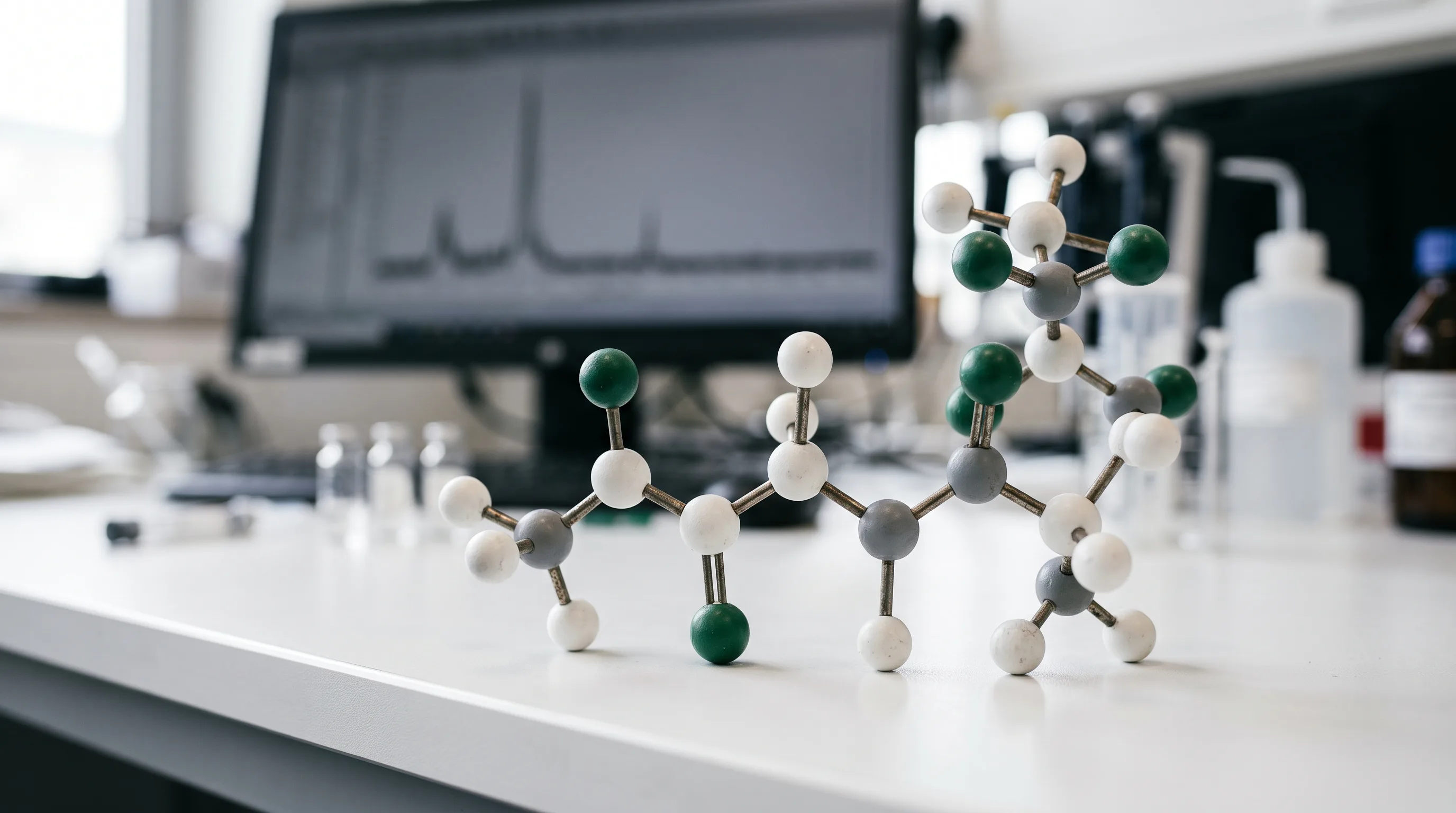
Its calculated molecular weight of about 1,419 g/mol is roughly five times that of testosterone. Doping laboratories treat it as a peptide: the Shanghai Anti-Doping Laboratory found eight in vitro metabolites formed by amide bond cleavage and validated a urine method with detection limits of 0.01 to 0.11 ng/mL (Tian 2023, Molecules, PubMed 37959764). A 2026 review counts no approved formulation and no completed phase II trial (Mateescu 2026, Pharmaceutics, PubMed 42198317). Its comparison with thymosin beta 4 fragments is in BPC-157 vs TB-500.
Where peptides and steroids sit on the WADA Prohibited List 2026
The WADA Prohibited List 2026, in effect from 1 January 2026, places anabolic androgenic steroids in S1 Anabolic agents, many peptides in S2 Peptide hormones, growth factors, related substances, and mimetics, and names BPC-157 in S0 Non-approved substances. All three sections are prohibited at all times.
| Section | What it covers | Examples named in 2026 |
|---|---|---|
| S0 | substances without approval for human therapeutic use | BPC-157 |
| S1.1 | anabolic androgenic steroids | boldenone, clostebol |
| S2.2.3 | growth hormone fragments | AOD-9604 |
| S2.2.4 | growth hormone releasing factors | CJC-1295, ipamorelin |
| S2.3 | growth factors | TB-500 |
So are peptides banned in sports? The list bans named substances and those with similar structure or effect, not peptides as a chemical class; it even places selective androgen receptor modulators, neither peptides nor steroids, in S1.2. Anabolic agents and peptide hormones were core areas of anti-doping research between October 2023 and September 2024 (Thevis 2025, Drug Testing and Analysis, PubMed 39731401).
Peptides versus steroids on safety: why the class comparison fails
“Are peptides safer than steroids” has no class level answer, because the evidence bases differ in kind. Anabolic androgenic steroids have a published literature on adverse findings in human users; most research peptides have no controlled human dataset.
An Endocrine Society statement linked performance enhancing drugs, including these steroids, to increased risk of death and cardiovascular, psychiatric and endocrine disorders (Pope 2014, Endocrine Reviews, PubMed 24423981). Among 140 male weightlifters, 86 long term users had a mean left ventricular ejection fraction of 52 % against 63 % in nonusers (Baggish 2017, Circulation, PubMed 28533317). A meta-analysis of 187 studies put global lifetime prevalence of use at 3.3 % (Sagoe 2014, Annals of Epidemiology, PubMed 24582699).
For BPC-157, a 2026 systematic review found three human studies with 30 participants and rated the certainty of evidence very low (Poolton 2026, Acta Orthopaedica Belgica, PubMed 42885452). An unmeasured profile is not a favourable one; see are peptides safe. What human studies and doping tests show for the compounds used in gyms is covered in peptides for bodybuilding.
Where to buy research peptides with batch documentation
Molequa® supplies peptides exclusively as laboratory research material; for BPC-157, the certificate of analysis from the independent laboratory Analyton Labs (analyton.com) is published before purchase.
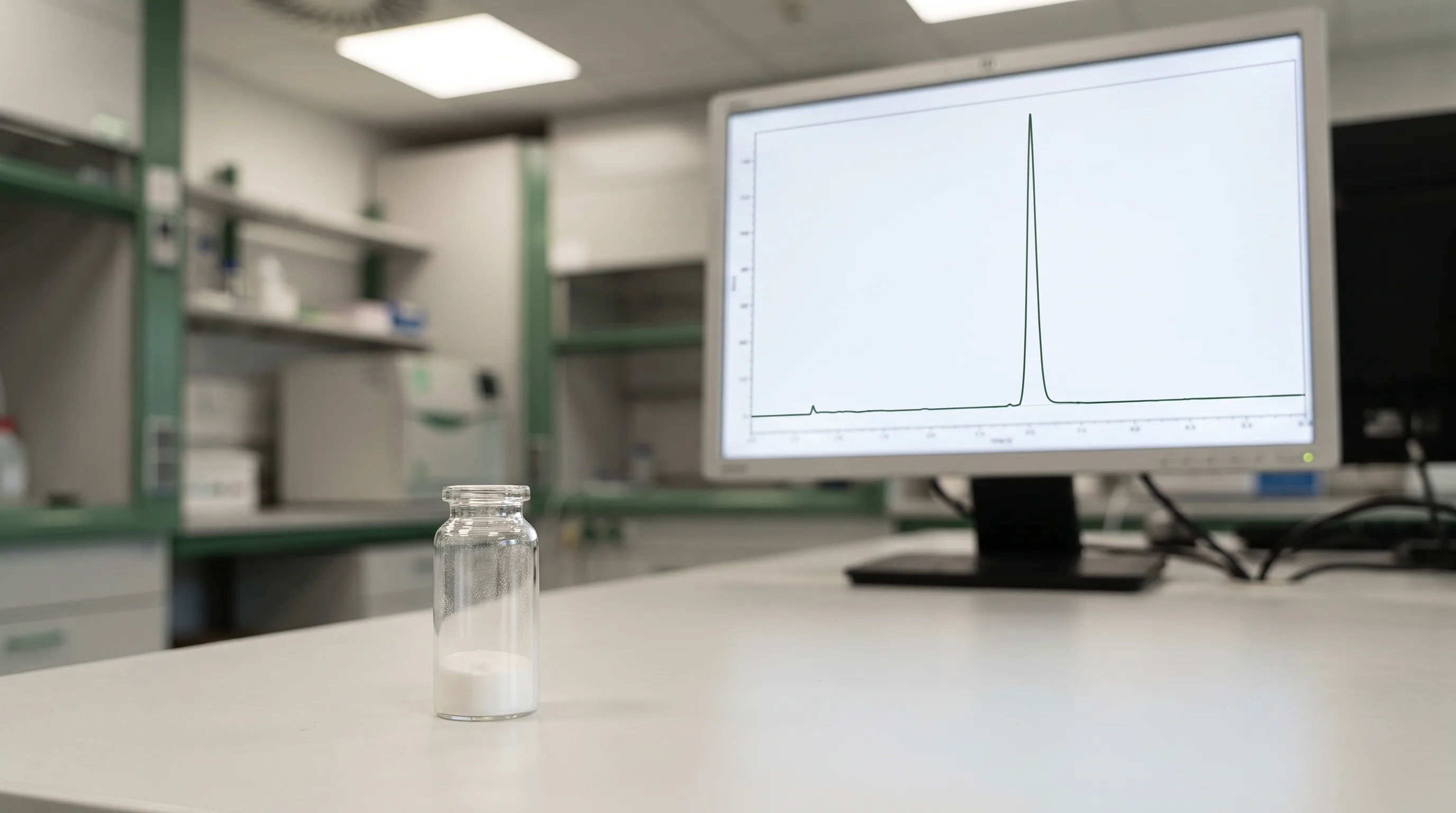
For BPC-157 for research, report AN-2026-00020 for batch MQ-BPC-157-202609, issued on 28 October 2026, records RP-HPLC purity of 99.60 % (C18, 214 nm), peptide content of 86.74 % w/w, L-arginine as counterion and endotoxins below 0.05 EU/mg. HPLC purity is the share of the main peak, not the peptide content of the powder, and this certificate includes no identity testing by mass spectrometry. See the certificate for batch MQ-BPC-157-202609 and the research peptides catalogue.
Frequently asked questions
Are peptides steroids? No. Peptides are chains of amino acids joined by amide bonds, while steroids are lipids with a four ring skeleton derived from cholesterol.
Is BPC-157 a steroid? No. BPC-157 is a synthetic peptide of 15 amino acids, GEPPPGKPADDAGLV, with no steroid ring system.
How do peptides and steroids differ at the receptor level? Anabolic androgenic steroids bind the androgen receptor inside the cell. Most peptide hormones bind receptors on the cell surface, such as G protein-coupled receptors.
Are peptides banned in sports? Many are. The WADA Prohibited List 2026 names CJC-1295, ipamorelin and TB-500 in section S2 and BPC-157 in section S0, all prohibited at all times.
Are peptides safer than steroids? There is no class level answer. Steroids have a published literature on adverse findings, while most research peptides have no controlled human data.
What does the BPC-157 certificate show? The Analyton Labs report for batch MQ-BPC-157-202609 records RP-HPLC purity of 99.60 %, peptide content of 86.74 % w/w and endotoxins below 0.05 EU/mg. It includes no identity testing by mass spectrometry.
Legal notice
All products under the Molequa® brand are intended exclusively for scientific laboratory research (Research Use Only). They are not medicines, dietary supplements, cosmetic products or food, and they are not intended for human or animal consumption or for application to human or animal skin. Scientific data cited in this article come from published literature and describe research conducted with the relevant substances. They are not a claim about the products sold, nor a recommendation for use.