
In short
Peptides for bodybuilding usually means BPC-157, TB-500, ipamorelin and CJC-1295, sometimes alongside MK-677, which is not a peptide at all. For none of them is there a controlled human trial showing more muscle or strength in healthy athletes. Most data come from rats, and all of these compounds are prohibited in tested sport under the WADA Prohibited List 2026.
- Evidence base: in a 2026 scoping review, 67 % of publications on six popular compounds used animal models (Tewari 2026, Am J Sports Med)
- BPC-157 in humans: three small studies with 30 participants in total, certainty of evidence very low (Poolton 2026)
- Growth hormone itself: 2.1 kg more lean mass, but no measurable gain in strength or exercise capacity in young fit adults (Liu 2008, Ann Intern Med)
- Doping control: BPC-157 is detectable in urine down to 0.1 ng/mL (Cox 2017, Drug Test Anal)
Molequa® supplies peptides exclusively for laboratory research (RUO), not for use in humans or in sport.
Which peptides circulate in bodybuilding?
The compounds named most often fall into two groups: repair peptides such as BPC-157 and TB-500, and growth hormone secretagogues such as ipamorelin and CJC-1295. A third name, MK-677, is a small molecule taken by mouth, not a peptide. They differ in structure and mechanism, but share one feature: no approval for use in healthy people.

| Compound | What it is | Human data available | WADA 2026 section |
|---|---|---|---|
| BPC-157 | synthetic peptide of 15 amino acids | 3 small uncontrolled studies, 30 participants | S0, non-approved substances |
| TB-500 | 7 amino acid fragment of thymosin beta-4 | no controlled musculoskeletal study | S2.3, growth factors |
| Ipamorelin | pentapeptide growth hormone secretagogue | animal pharmacology (Raun 1998) | S2.2.4, releasing factors |
| CJC-1295 | analogue of growth hormone releasing hormone | dose finding in 2 trials with healthy adults | S2.2.4, releasing factors |
| MK-677 | oral small molecule, not a peptide | risks including heart failure reported | S2, peptide hormone mimetics |
TB-500 is often confused with full length thymosin beta-4, although no biological or clinical equivalence between the fragment and the parent protein has been established (Tham 2026, J Am Acad Orthop Surg). The chemistry behind the steroid comparison is explained in are peptides steroids?, and the mechanisms studied for each molecule in peptides for muscle growth.
What do human studies actually show?
Human data are thin. The best documented signal is that growth hormone secretagogues raise growth hormone and IGF-I in blood, which is not the same as building muscle or strength. For repair peptides, the human literature consists of case series without control groups. The animal results are often promising, but they have not been confirmed in people.
The clearest human pharmacology comes from CJC-1295. In two randomised, placebo controlled trials in healthy adults aged 21 to 61, a single injection of the long acting form with drug affinity complex (DAC) raised mean growth hormone 2 to 10 fold for 6 days or more and IGF-I 1.5 to 3 fold for 9 to 11 days (Teichman 2006, J Clin Endocrinol Metab). The trial measured hormones, not muscle, strength or body composition. CJC-1295 without DAC is a different molecule with a much shorter half life.
Whether more growth hormone translates into performance was tested in a systematic review of 27 study samples in which 303 young, lean and fit participants received growth hormone itself. Lean body mass rose by 2.1 kg on average, but strength and exercise capacity did not improve, and oedema and fatigue were more frequent (Liu 2008).
For BPC-157, the 2026 systematic review found a retrospective series of 16 knee pain patients, a pilot of 12 patients with interstitial cystitis and an intravenous safety pilot with 2 participants. All three were judged to be of poor methodological quality (Poolton 2026). The scoping review on six compounds concluded that claimed benefits for recovery and performance remain unsubstantiated in humans, and it listed documented risks such as insulin resistance and, for MK-677, congestive heart failure (Tewari 2026).
Why before and after photos prove little
Before and after pictures mix training, diet, water balance, lighting, posture and other substances. Without a control group and a measured outcome such as lean mass by DXA or a strength test, a photo cannot separate the effect of a peptide from everything else that changed.
How anti-doping laboratories detect peptides
Anti-doping laboratories have dedicated mass spectrometry methods for peptides. BPC-157 has a validated urine assay with a detection limit of 0.1 ng/mL, and growth hormone releasing hormone analogues including CJC-1295 are covered by a method for peptides between 2 and 10 kDa. For an athlete in tested sport, a positive sample is an anti-doping rule violation regardless of intent.
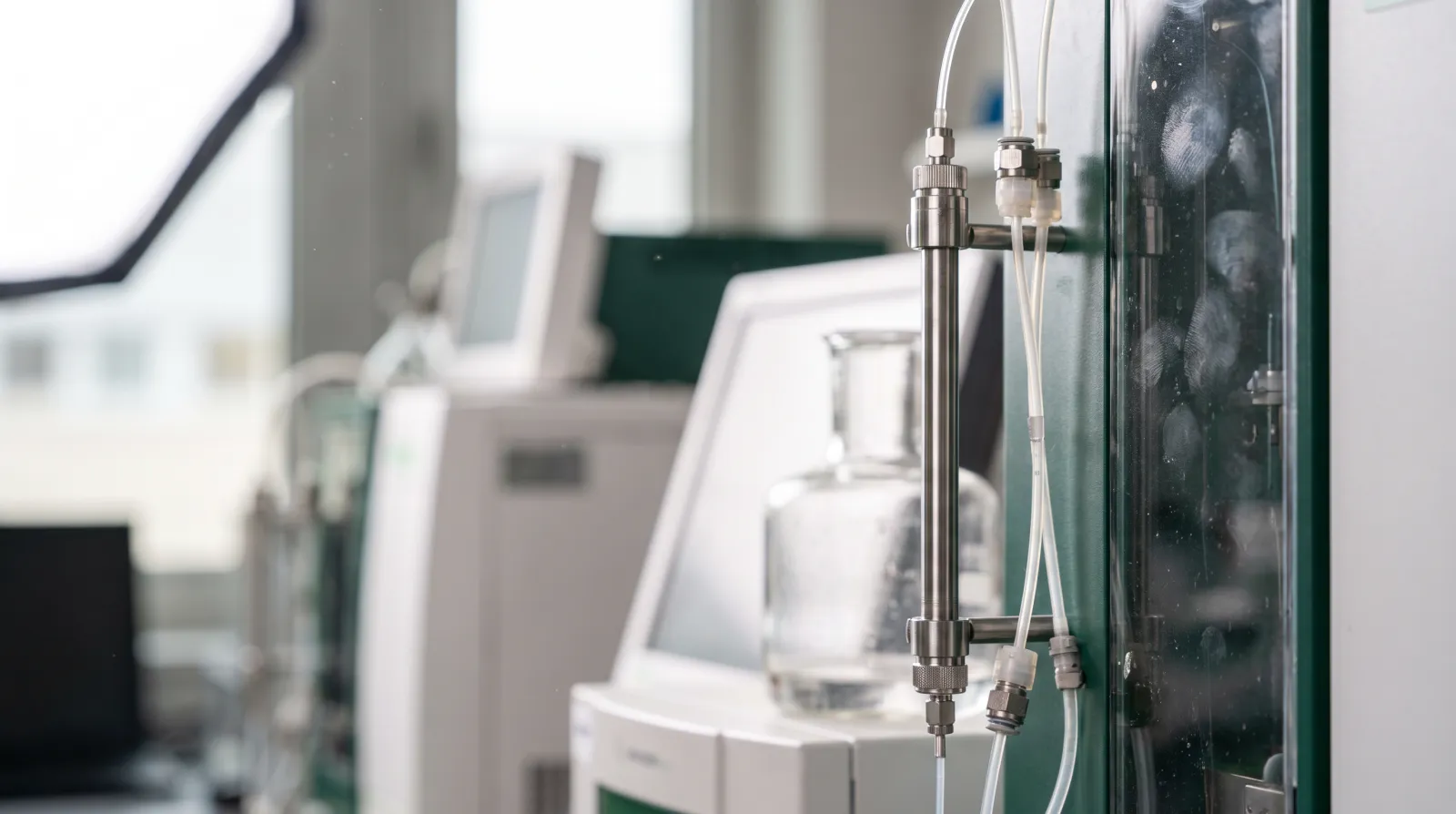
BPC-157 was first identified in confiscated vials. The same work showed that it forms a stable metabolite and remains stable in urine for at least 4 days (Cox 2017). A 2024 method extracts insulins, growth hormone releasing hormones such as CJC-1295, IGF-I analogues and mechano growth factors from urine in one validated procedure (Thomas 2024, J Mass Spectrom).
The black market keeps adding targets: of 337 products analysed in Cologne between 2010 and 2013, 12.8 % contained peptide hormones and growth factors, thymosin beta-4 among them (Krug 2014, Eur J Clin Pharmacol).
Product quality: the risk nobody photographs
What is in the vial matters as much as what the label promises. Reviews of commercial peptide products raise concerns about identity, purity, concentration, sterility and batch consistency. Only a certificate tied to the batch number, issued by a named independent laboratory, answers those questions for a specific vial.
Falsified peptide drugs bought from illegal online pharmacies in Belgium varied widely in content per unit, peptides containing cysteine had purities between 5 and 75 %, and some samples carried arsenic and lead above parenteral limits (Janvier 2018, Talanta). Even in academic research, only 44.0 % of purchased peptides met the purity stated by the supplier (Verbeke 2015).
Molequa® batches are analysed by the independent laboratory Analyton Labs. The certificate for batch MQ-TB-500-202609, for example, reports an HPLC purity of 99.78 %, a net peptide content of 87.60 % and endotoxin and sterility results; batch MQ-BPC-157-202609 reports 99.60 % purity. All certificates are listed in the certificate register, and how to read each line is explained in how to verify a peptide supplier.
Where research peptides fit
Research peptides are reference material for laboratory work: cell culture, receptor assays and analytical method development. They are not supplements, not medicines and not intended for use in humans or animals. Molequa® therefore publishes no dosing protocols and does not sell for sport.
The research peptide catalogue lists each compound with its batch and certificate status. Molecule specific background is available in the TB-500 guide and the CJC-1295 and ipamorelin guide.
Frequently asked questions
Do peptides build muscle in bodybuilders?
There is no controlled human trial showing that BPC-157, TB-500, ipamorelin or CJC-1295 increase muscle mass or strength in healthy athletes. Most data come from animal studies.
Are peptides banned in sport?
Yes for the compounds discussed here: the WADA Prohibited List 2026 names BPC-157 in S0 and CJC-1295, ipamorelin and TB-500 in S2, all prohibited at all times.
Can doping tests detect BPC-157?
Yes. A validated urine method detects BPC-157 down to 0.1 ng/mL, and the peptide stays stable in urine for at least 4 days.
Is MK-677 a peptide?
No. MK-677 (ibutamoren) is an orally active small molecule that mimics the action of growth hormone secretagogues.
Does more growth hormone mean more strength?
Not in the available trials: in young fit adults it added 2.1 kg of lean mass on average without improving strength or exercise capacity.
How can I check the quality of a peptide batch?
Compare the batch number on the vial with the certificate, check that a named independent laboratory issued it and look for HPLC purity, mass spectrometry identity and net peptide content.
Are Molequa® peptides intended for bodybuilding?
No. They are reference material exclusively for laboratory research (RUO), and Molequa® publishes no dosing information.