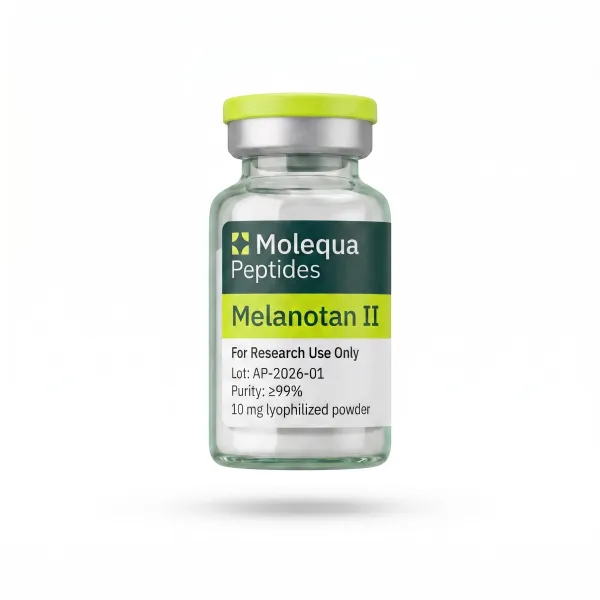





Quick overview
Melanotan 2 is a synthetic analogue of the hormone alpha-MSH that stimulates melanin production via the MC1R receptor in research. It is the best-known molecule of pigmentation research and the predecessor of PT-141.
- Agonist of all four functional melanocortin receptors
- Developed at the University of Arizona in the 1980s
- Not approved by any regulator, research material only
- Batch purity verified by an independent laboratory
Read more Close
Overview
Where it comes from and why it was created
The story of Melanotan 2 begins in Tucson, Arizona, in the 1980s. Two scientists at the University of Arizona, dermatologist Mac Hadley and chemist Victor Hruby, were working on a problem that sounded simple: skin cancer. Arizona is one of the places with the highest incidence of melanoma in the world due to intense solar radiation. Hadley asked a direct question: “What if we could give people tanned skin without having to expose them to UV radiation?”
Tanning is the body’s defense mechanism. When the skin captures UV radiation, keratinocytes produce α-MSH (alpha-melanocyte stimulating hormone), a peptide hormone that binds to melanocytes and stimulates them to produce melanin, a pigment that absorbs UV and protects DNA from damage. The problem: to build up a tan, you first have to expose yourself to damaging UV, that is the paradox of skin protection.
Hadley’s hypothesis: provide the body with synthetic α-MSH and the skin will tan without UV. This would reduce melanoma incidence across the population, particularly in people with fair skin (phototype I and II).
Hadley and Hruby developed several synthetic α-MSH analogs. Melanotan I (Afamelanotide) was a linear analog with a slightly extended half-life. Melanotan 2 was a cyclic form with dramatically higher potency and non-selective activity at all melanocortin receptors.
Phase 2 results and complications
Phase 1 trials with Melanotan 2 showed that tanning works, patients achieved visible skin pigmentation after several subcutaneous injections without UV exposure. But unexpected side effects also appeared:
- Sexual stimulation, men and women reported spontaneous sexual arousal, men experienced spontaneous erections. The originally assumed cosmetic effect also had a sexual component.
- Loss of appetite, the peptide suppressed appetite and led to mild weight loss.
- Changes in pigment lesions, moles (nevi) enlarged and darkened, some patients developed new ones. This was a major safety concern, especially for a molecule developed for melanoma prevention.
These observations led to an interesting development bifurcation:
- Melanotan I (Afamelanotide) continued as a skin peptide and in 2014 received approval as Scenesse for erythropoietic protoporphyria (a rare genetic disease with severe photosensitivity)
- Melanotan 2 was abandoned as a cutaneous drug
- PT-141 / Bremelanotide, a fragment of Melanotan 2 targeted at MC4R, was developed as a sexual stimulant and in 2019 approved as Vyleesi for hypoactive sexual desire disorder in women (HSDD)
Second life in research and the cosmetic underground
Melanotan 2 never reached commercial approval as a drug, but in the research community and cosmetic underground it became well known. In a research context, it is useful as:
- A non-selective reference molecule in melanocortin pharmacology, for characterizing receptor selectivity of new analogs
- A tool compound for studying melanogenesis in vitro and in vivo
- A model molecule for studying MC4R-mediated effects on appetite and libido
- A comparator molecule in the development of newer selective agonists
In the cosmetic underground, Melanotan 2 is used off-label as an “injectable tanning peptide”. This use is not recommended and carries several safety risks, particularly changes in pigment lesions that may mask melanoma.
Mechanism of action, non-selective activation of the melanocortin system
Melanotan 2 activates all four functional melanocortin receptors (MC1R, MC3R, MC4R, MC5R) with high affinity. This is an important distinction from selective derivatives such as Bremelanotide (MC4R-selective). Activation of each receptor has a distinct physiological effect.
MC1R, melanogenesis and pigmentation
MC1R is dominantly expressed in melanocytes in the skin, in hair follicles and in the iris of the eye. Activation of MC1R via Gαs → cAMP → MITF (the master transcription factor of melanogenesis) leads to:
- Activation of tyrosinase, the key enzyme of melanin synthesis
- Conversion of pheomelanin (red/yellow pigment) to eumelanin (black/brown); eumelanin offers better UV protection
- Proliferation of melanocytes in long-term exposure
- Skin darkening (= “tanning” without UV)
This mechanism is why Melanotan 2 causes visible skin pigmentation already after a few doses. The effect is dose-dependent and reversible (after discontinuation, pigmentation subsides over weeks to months).
MC4R, appetite and sexual function
MC4R is the main regulator of energy balance in the hypothalamus (particularly in the PVN, paraventricular nucleus). Simultaneously, it plays a role in sexual function via pathways in the hypothalamus and midbrain. Activation of MC4R via Gαs → cAMP leads to:
- Suppression of appetite, this explains why Melanotan 2 causes mild weight reduction
- Stimulation of sexual arousal in both sexes; in men spontaneous erections, in women increased sexual desire
- Modulation of the reward system in the brain
PT-141 (Bremelanotide) is an MC4R-selective derivative optimized precisely for this sexual effect (with minimal cutaneous and metabolic side effects).
MC3R, energy and inflammation
MC3R is expressed mainly in the central nervous system and on immune cells. It regulates:
- Energy homeostasis, complementarily to MC4R but via different pathways
- Anti-inflammatory effects in macrophages
- Sebaceous glands (partially)
Activation of MC3R contributes to the metabolic and anti-inflammatory effects of Melanotan 2, but is less characterized than MC4R.
MC5R, exocrine glands
MC5R is dominant in sebaceous glands, lacrimal glands, salivary glands and other exocrine organs. Activation leads to:
- Increased sebum production, may contribute to acne in some research subjects
- Changes in sebum composition
- Pheromone secretion (in animal models)
This is a less important mechanism with Melanotan 2, but contributes to its non-selective profile.
Investigated applications
In the published research literature, effects of Melanotan 2 are documented in the following areas:
- Photoprotection and melanogenesis, robustly demonstrated, the original indication
- Hypoactive sexual desire disorder, via the derivative Bremelanotide, FDA-approved 2019
- Erectile dysfunction, exploratory in animal and human models
- Obesity and appetite, preclinical models (MC4R mechanism)
- Erythropoietic protoporphyria, via the derivative Afamelanotide, approved 2014
- Acne vulgaris, paradoxically, MC5R activation may worsen it
- Vitiligo, exploratory in dermatological research
- Ischemic neuroprotection, developing preclinical research
- Pro-inflammatory pathways, via MC3R activation
Buying Melanotan 2: what to look for
When buying Melanotan 2, the decisive criterion is not the price but the verifiability of quality. A research peptide is only ever as good as its certificate of analysis. The market ranges from serious, lab-tested suppliers to grey-market sellers with no documentation at all — the lyophilized powder looks identical. These five criteria separate them.
1. HPLC purity ≥ 99 % – documented, not just claimed
HPLC purity shows what proportion of the powder is actually Melanotan 2. Serious suppliers document ≥ 99 % with a chromatogram. “99 % purity” without an attached chromatogram is a claim, not proof.
2. Batch-specific certificate of analysis (CoA)
The most important document. A batch-specific CoA belongs to exactly the batch you receive — with batch number, date and purity value, issued by an independent laboratory (Janoshik and similar are the industry standard). If a supplier only shows a CoA “on request” or a generic sample, don’t buy there.
3. LC-MS identity confirmation
Purity tells you how much of a substance is present; LC-MS tells you which substance it is. Via the molecular mass (1024.2 Da) it confirms this is the correct identity of Melanotan 2, not a cheaper, mislabeled peptide.
4. Origin and EU shipping with traceability
A supplier with an EU warehouse and full batch traceability has the edge over grey imports from Asia: shorter, cooled transport and no customs risk. Molequa® ships from within the EU, typically within 3 to 5 business days — no post-Brexit customs delays.
5. Correct delivery form: lyophilizate
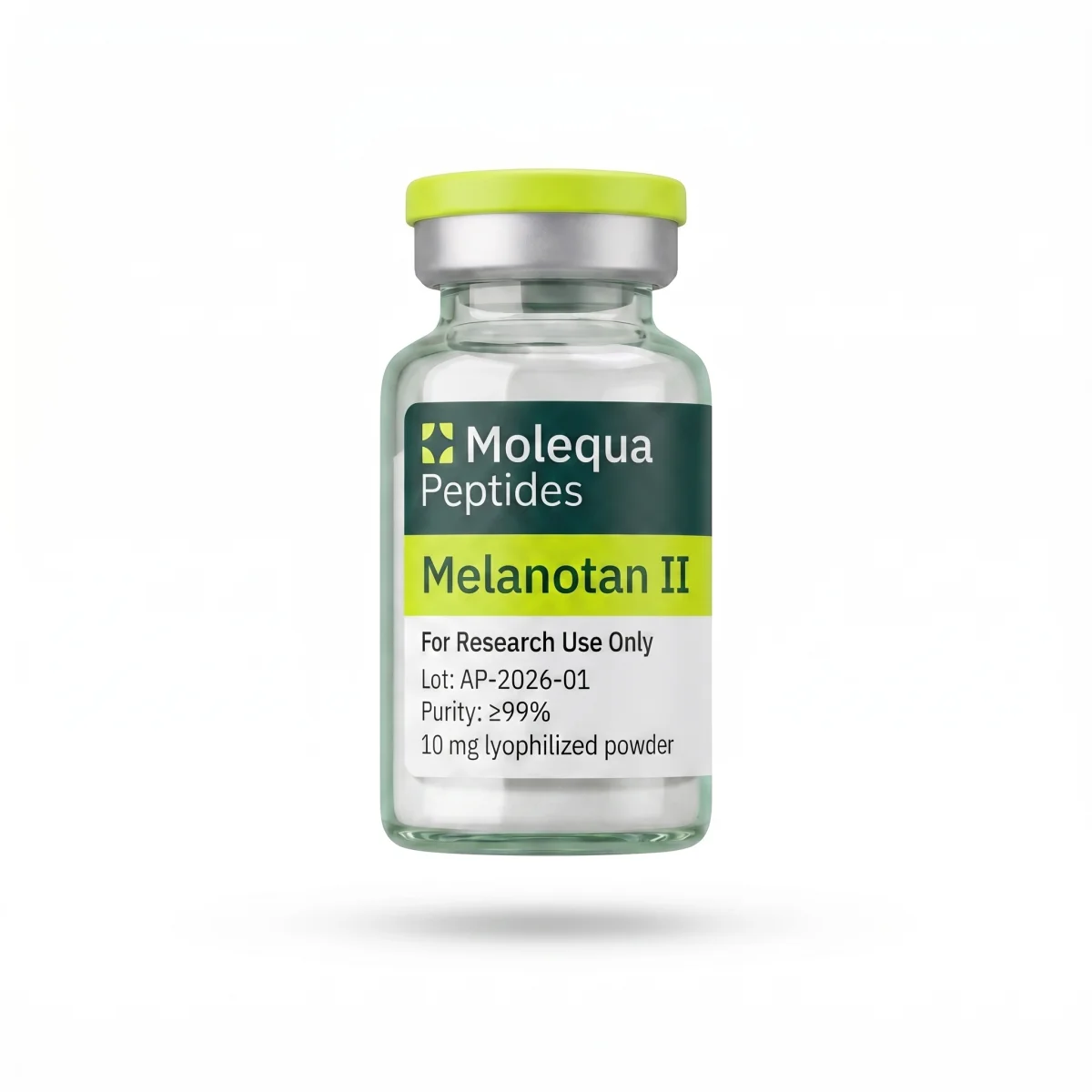
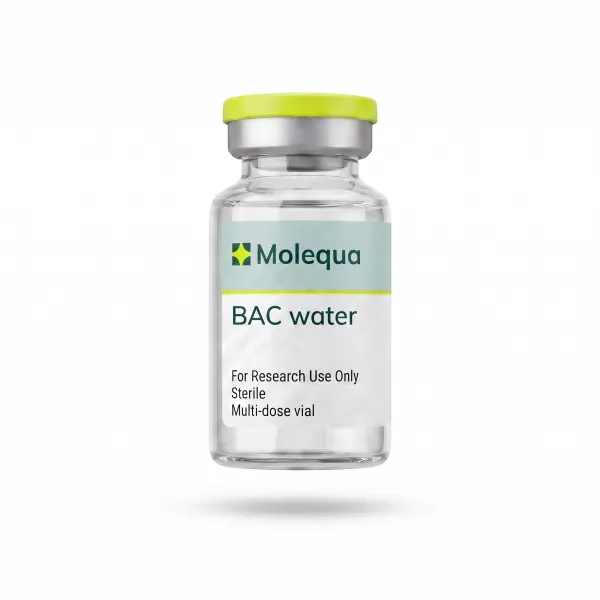
High-quality Melanotan 2 is delivered as a lyophilizate (white powder), not as a pre-mixed solution. Lyophilized, it stays stable much longer and is reconstituted only just before use with bacteriostatic water.
Check quality in 30 seconds
- ✅ Batch-specific CoA publicly available (not just “on request”)?
- ✅ HPLC purity ≥ 99 % proven with a chromatogram?
- ✅ LC-MS identity confirmed (mass 1024.2 Da)?
- ✅ EU warehouse and batch traceability?
- ✅ Delivered as a lyophilizate with clear storage instructions?
If all five points are met, you are buying verified material. Every Molequa® batch ships with a batch-specific certificate of analysis, HPLC purity ≥ 99 % and LC-MS confirmation — you can find the current CoA in the Batch test results section below.
Legal notice: Melanotan 2 is a research peptide and not an approved medicine. It is sold exclusively for scientific laboratory research and is not intended for human or animal consumption.
Science & Studies
4.1 Key publications
Hadley M.E., Hruby V.J., Blanchard E.B., et al. (1991). Discovery and development of novel melanogenic drugs. Melanotan-I and II. Pharm Biotechnol. 11:575 to 595., Original characterization.
Dorr R.T., Lines R., Levine N., et al. (1996). Evaluation of melanotan-II, a superpotent cyclic melanotropic peptide in a pilot phase-I clinical study. Life Sci. 58(20):1777 to 1784., Pilot clinical study of the tanning effect.
Wessells H., Fuciarelli K., Hansen J., et al. (1998). Synthetic melanotropic peptide initiates erections in men with psychogenic erectile dysfunction: double-blind, placebo controlled crossover study. J Urol. 160(2):389 to 393., Original discovery of the erectogenic effect.
Hadley M.E., Dorr R.T. (2006). Melanocortin peptide therapeutics: historical milestones, clinical studies and commercialization. Peptides. 27(4):921 to 930., Review article by the founder of the field.
Cone R.D. (2006). Studies on the physiological functions of the melanocortin system. Endocr Rev. 27(7):736 to 749., Foundational receptor biology.
Diamond L.E., Earle D.C., Heiman J.R., et al. (2006). An effect on the subjective sexual response in premenopausal women with sexual arousal disorder by bremelanotide (PT-141), a melanocortin receptor agonist. J Sex Med. 3(4):628 to 638., PT-141 derivative data.
4.2 Detailed expandable studies
▸ Study 1: Hadley & Hruby 1991, original development
Citation: Hadley M.E., Hruby V.J., Blanchard E.B., et al. Discovery and development of novel melanogenic drugs. Melanotan-I and II. Pharm Biotechnol. 1991;11:575 to 595.
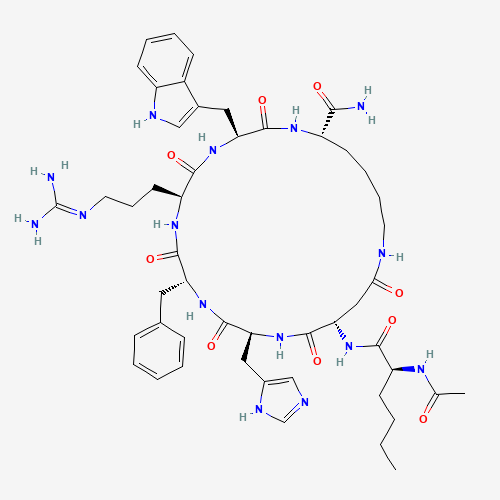
What they did: Systematic characterization of a family of synthetic melanocortin peptides. For Melanotan 2: structurally designed cyclic heptapeptide with a lactam bridge between Asp and Lys, substitution of Nle for Met (oxidative stability) and D-Phe (resistance to peptidases). Assessment: melanocyte activity in vitro, in vivo melanogenesis in several model organisms (Xenopus frog, lizard, mouse).
What they found:
- Melanotan 2 is 100 to 1000× more potent than native α-MSH in melanocyte assays
- Cyclization preserves the active conformation longer than linear α-MSH
- Activates all four functional melanocortin receptors (MC1R, MC3R, MC4R, MC5R)
- In vivo: visible pigmentation of lizard skin within hours, not days as with α-MSH
Why it matters: This is the foundational publication of Melanotan 2. It established the chemical design and pharmacological profile of the molecule, which are used to this day as a reference in the melanocortin research literature. Hruby received a number of academic awards for work in this area.
▸ Study 2: Dorr 1996, pilot clinical tanning study
Citation: Dorr R.T., Lines R., Levine N., et al. Evaluation of melanotan-II in a pilot phase-I clinical study. Life Sci. 1996;58(20):1777 to 1784.
What they did: n = 10 healthy volunteers (phototype II–III). Subcutaneous administration of Melanotan 2 in escalating doses (0.01 → 0.03 mg/kg) daily for 10 days. Assessment: measurement of skin pigmentation by spectrophotometry, side effects, blood pressure, heart rate.
What they found:
- Visible skin pigmentation in all subjects after 5 to 7 injections
- Pigmentation was strongest in exposed areas (face, neck, hands), suggesting synergy with low UV exposure
- Nausea in 90 % of subjects in initial doses, gradually subsiding
- Spontaneous erections in all male subjects, an unexpected finding
- Loss of appetite with average weight loss of 1.2 kg over 10 days
- Mild increase in blood pressure in the first hour after injection
Why it matters: This was the first published clinical study of Melanotan 2 in humans. It confirmed the tanning effect, but also multiple unexpected side effects that led to the development bifurcation (PT-141 for sexual function, Afamelanotide for cutaneous indications). From a research perspective, it is a reference study for understanding human pharmacology of melanocortin agonists.
▸ Study 3: Wessells 1998, erectogenic effect
Citation: Wessells H., Fuciarelli K., Hansen J., et al. Synthetic melanotropic peptide initiates erections in men with psychogenic erectile dysfunction. J Urol. 1998;160(2):389 to 393.
What they did: n = 10 men with psychogenic erectile dysfunction. Double-blind placebo-controlled crossover study. Melanotan 2 0.025 mg/kg SC vs placebo. Assessment: penile tumescence (RigiScan), duration of erection, subjective satisfaction, side effects.
What they found:
- Erectile response in 80 % of subjects in the Melanotan 2 group vs 20 % placebo
- Mean time to erection: 45 minutes
- Mean duration of erection: 90 minutes
- Subjectively satisfactory penetrative capability in 70 %
- Nausea in 50 % of subjects
Why it matters: This was the first clinical demonstration of the melanocortin mechanism for erectile function. It opened the development of PT-141 (Bremelanotide), the MC4R-selective derivative, which in 2019 became the first FDA-approved melanocortin agonist for sexual dysfunction (Vyleesi). Melanotan 2 thus indirectly led to an approved drug, although it itself remained a research peptide.
▸ Study 4: Cone 2006, receptor biology
Citation: Cone R.D. Studies on the physiological functions of the melanocortin system. Endocr Rev. 2006;27(7):736 to 749.
What they did: Review article summarizing two decades of melanocortin system research. Covers: receptor biology (MC1R to MC5R), endogenous ligands (α-MSH, β-MSH, γ-MSH, ACTH), antagonists (agouti, AGRP), physiological functions, clinical relevance.
What they found (summary):
- MC1R: melanogenesis, pigmentation, anti-inflammation
- MC2R: ACTH receptor in the adrenals (Melanotan 2 does not act)
- MC3R: energy, cardiovascular function, anti-inflammation
- MC4R: appetite (central control), sexual function, autonomic regulation
- MC5R: exocrine glands (sebaceous, lacrimal, salivary)
- Mutations in MC4R are the most common monogenic cause of obesity in humans
Why it matters: Cone’s review article is the reference article for all of melanocortin pharmacology. It defines receptor functions and the context in which Melanotan 2 as a non-selective agonist acts. For research in this area, it is the conceptual map of the melanocortin system.
▸ Study 5: Diamond 2006, PT-141 and sexual dysfunction
Citation: Diamond L.E., Earle D.C., Heiman J.R., et al. An effect on the subjective sexual response in premenopausal women with sexual arousal disorder by bremelanotide (PT-141), a melanocortin receptor agonist. J Sex Med. 2006;3(4):628 to 638.
What they did: n = 18 premenopausal women with sexual arousal disorder. Double-blind placebo-controlled study with PT-141 (MC4R-selective derivative of Melanotan 2) 20 mg intranasally. Assessment: subjective sexual responses (Female Sexual Function Index), physiological markers, side effects.
What they found:
- Significant improvement in sexual desire vs placebo
- Improvement in arousal and genital congestion
- No serious side effects
- Mild nausea in some subjects
Why it matters: PT-141 (Bremelanotide) is an MC4R-selective fragment of Melanotan 2 optimized for sexual function. The study was one of the foundations for FDA approval as Vyleesi in 2019 for HSDD in women. From the Melanotan 2 perspective, it is proof that MC4R-mediated sexual stimulation is a clinically real mechanism.
▸ Study 6: Adler 2017, unregulated use
Citation: Adler N.R., Dowling J.P., Pan Y. (2017). The unregulated use of melanotan-II is of public health interest to Australian dermatologists. Australas J Dermatol. 58(4):327 to 329. PubMed 28905366
What they did: A short report from the Victorian Melanoma Service at Alfred Hospital and Monash University in Melbourne, addressed to dermatologists.
What they found: The authors treat the unregulated use of Melanotan 2 as a matter of public health and call for clinical attention to it. We do not reproduce case-level figures here, because the report is a brief communication rather than a controlled study.
Why it matters: It is a documented signal from a specialist melanoma centre, not marketing material. An MC1R agonist stimulates melanocytes, so any change in pigmented lesions belongs to a dermatologist, not to self-assessment. Causality between Melanotan 2 and melanoma has not been established in the literature.
▸ Study 7: Hadley & Dorr 2006, historical review
Citation: Hadley M.E., Dorr R.T. Melanocortin peptide therapeutics: historical milestones, clinical studies and commercialization. Peptides. 2006;27(4):921 to 930.
What they did: Review article by two founders of melanocortin therapeutics. Covers: chemical development of Melanotan I and II, clinical trials, regulatory complications, the bifurcation into PT-141 and Afamelanotide, underground use.
What they found (summary):
- Development of Melanotan 2 as a cutaneous drug failed due to the combination of side effects
- Bifurcation into more selective derivatives was both scientifically and commercially successful
- PT-141 → Bremelanotide (Vyleesi, 2019)
- Melanotan I → Afamelanotide (Scenesse, 2014)
- Underground use of Melanotan 2 is safety-problematic
Why it matters: This is the definitive historical review by the founders of the field. For the research context, it provides a rational understanding of why Melanotan 2 remains a research peptide while its derivatives received approval. Honest framing of the molecule’s own status.
Storage
Lyophilizate (dry powder before reconstitution)
- 2 years at −20 °C (freezer)
- 18 months at 2 to 8 °C (refrigerator)
- Up to 30 days at room temperature (up to 25 °C), protect from light and moisture
After reconstitution (peptide in solution with bacteriostatic water)
- Up to 30 days at 2 to 8 °C, protected from light
- The cyclic structure makes Melanotan 2 relatively stable in solution, more stable than most linear peptides
Practical storage rules
- Allow the vial to warm to room temperature (15 to 20 min) before opening.
- Avoid light completely, Melanotan 2 contains tryptophan and histidine, which are sensitive to UV degradation. Use a dark box in the refrigerator.
- Avoid contact with strong oxidizing agents.
- Do not shake! Although the cyclic form is more robust, mechanical stress can disrupt the conformation.
- The solution should remain clear to slightly yellowish. Darker coloring indicates oxidation, do not use.
Combination tips, Frequently combined peptides
Melanotan 2 is typically used alone in the research literature (particularly for studying the melanocortin system), but some combinations appear in exploratory protocols.
PT-141 (Bremelanotide), selective alternative
This is an alternative, not a combination. PT-141 is the MC4R-selective derivative of Melanotan 2, has a stronger effect on sexual function, but has no effect on pigmentation. For research focused only on the sexual pathway, PT-141 is the cleaner molecule without cutaneous side effects.
Melanotan I (Afamelanotide), cutaneous indications
Linear α-MSH analog with a primary effect on MC1R and pigmentation, without strong MC4R effects. For cosmetic tanning protocols, Afamelanotide is potentially safer (no sexual side effects, less nausea), but it is more expensive. Melanotan I is available as the approved drug Scenesse for erythropoietic protoporphyria; research peptide versions are an alternative.
GHK-Cu, complement for cutaneous protocols
For research in skin regeneration, Melanotan 2 is combined with GHK-Cu. Melanotan 2 affects pigmentation, GHK-Cu acts on collagen and epidermal regeneration. Complementary mechanisms. In the cosmetic research context, this combination is described for dermatological regeneration after UV damage.
BPC-157, anti-inflammatory component
Melanotan 2 may paradoxically increase sebum production via MC5R and in some subjects worsen acne. BPC-157 has an anti-inflammatory profile and in combination may mitigate dermatological side effects. Speculative, but appears in anecdotal research protocols.
Semaglutide or Tirzepatide, metabolic complement
Melanotan 2 suppresses appetite via MC4R. GLP-1 agonists suppress appetite via GLP-1R. Two independent mechanisms of appetite suppression, in a hypothetical research context, the combination could be supra-additive. Clinical data for this combination do not exist and the combination could lead to severe anorexia, requires caution.
Key scientific figures and citations
“Melanotan-II is a cyclic heptapeptide analog of α-MSH that is a potent agonist at melanocortin receptors and produces tanning, appetite suppression, and erectile responses in animal and human studies.”
Dorr RT. et al. (1996), Life Sci 58(20), PubMed 8637720
Statistics from preclinical literature
- Melanotan 2 (MT-II), a cyclic heptapeptide, sequence Ac-Nle-Asp-His-D-Phe-Arg-Trp-Lys-NH2 with an Asp-Lys lactam bridge, molecular weight 1024.18 Da
- Developed in the group of Victor J. Hruby and Mac Hadley (University of Arizona, USA) in 1987–1989
- Original development program Competitive Technologies → Palatin Technologies, later spun off into PT-141 (bremelanotide)
- Target: non-selective agonist of MC1R, MC3R, MC4R, MC5R (more potent than α-MSH, longer half-life)
- Standard experimental dose in human tanning studies: 0.025 mg/kg subcutaneously (Dorr 1996)
- In Dorr 1996 (n=10): increase in skin melanin density measured by colorimetry by ~25 % after a 10-day course
- Main adverse effects in the preclinical literature: nausea, flushing, hyperpigmentation (including atypical nevi), priapism
- Approximately 100+ publications in PubMed; development halted at Phase 2 in the late 1990s due to safety profile
Reference sources (PubMed)
- Dorr RT. et al. (1996). “Evaluation of melanotan-II, a superpotent cyclic melanotropic peptide in a pilot phase-I clinical study.” Life Sci 58(20):1777–1784. PubMed 8637720
- Hadley ME., Dorr RT. (2006). “Melanocortin peptide therapeutics: historical milestones, clinical studies and commercialization.” Peptides 27(4):921–930. PubMed 16412534
- Wessells H. et al. (2000). “Effect of an alpha-melanocyte stimulating hormone analog on penile erection and sexual desire in men with organic erectile dysfunction.” Urology 56(4):641–646. PubMed 11018622
Regulatory status: Melanotan 2 is not an approved human medicinal product in any regulatory zone (FDA, EMA, or any national medicines agency). The original developer’s program was discontinued; its derivative PT-141 (Bremelanotide) was FDA approved in 2019 as Vyleesi (HSDD in women). MT-II has been the subject of repeated public regulator warnings (TGA, MHRA, FDA, EMA) over illegal sales and risks. The product is sold strictly for laboratory scientific research (RUO).
Frequently asked questions about Melanotan 2
These questions address the most common research-context searches about Melanotan 2. For full technical documentation see the sections above.
What is Melanotan 2 and what is it used for in research?
Melanotan 2 (sequence Ac-Nle-cyclo[Asp-His-D-Phe-Arg-Trp-Lys]-NH₂) is a synthetic cyclic analogue of α-MSH (α-melanocyte-stimulating hormone) developed at the University of Arizona in the 1980s. In research it activates melanocortin receptors MC1R (pigmentation), MC3R/MC4R (appetite, libido). It is studied in animal models of UV-damage protection and sexual dysfunction.
What dose of Melanotan 2 do scientists use in animal models?
Experimental doses in animal studies: 0.025 to 0.1 mg/kg subcutaneously, often with a loading phase (daily for 1 week) and maintenance phase (twice weekly). Higher doses correlate with increased GI side effects (nausea, flushing).
What is the difference between Melanotan 2 and PT-141?
Melanotan 2 is a non-selective pan-melanocortin agonist (MC1R+MC3R+MC4R+MC5R), whereas PT-141 (Bremelanotide) is more selective for MC3R/MC4R with minimal MC1R activity. Melanotan 2 induces skin pigmentation, PT-141 does not. PT-141 is FDA-approved (Vyleesi 2019) for hypoactive sexual desire disorder in women.
Is Melanotan 2 an approved medicine or research substance?
Melanotan 2 is not an approved human medicine in any regulatory zone (FDA, EMA, or any national medicines agency). EMA and FDA have repeatedly warned about unregulated sales. The product is sold strictly for laboratory scientific research (RUO), not for skin pigmentation or other human use.
How is Melanotan 2 stored?
Lyophilised Melanotan 2 should be stored at −20 °C protected from light, stability 2 to 3 years; at 2 to 8 °C 12 months. After reconstitution the solution is stable for 28 days at 2 to 8 °C.
What is the half-life of Melanotan 2 and how often is it administered in studies?
Melanotan 2 has a longer half-life than native α-MSH (~30 minutes in plasma), but the biological pigmentation effect persists for days due to activation of melanogenesis in melanocytes. In experimental protocols it is administered daily during the loading phase, then twice weekly maintenance.
Where to buy Melanotan 2 in the EU for scientific research?
Melanotan 2 for scientific research in the EU is offered by Molequa® with FedEx delivery in 3 to 5 business days across the EU. The product ships lyophilised with a Certificate of Analysis (COA), HPLC purity ≥ 99 %. The product is strictly for laboratory scientific research (RUO).