





Quick overview
Pinealon is a synthetic tripeptide Glu-Asp-Arg (EDR) from Vladimir Khavinson's St. Petersburg school of short peptide bioregulators. In research it is studied on neurons in cell cultures and in animal models of oxidative stress, hypoxia and ageing; there is no randomised controlled trial in PubMed.
- Three amino acids Glu-Asp-Arg, order confirmed by LC-HRMS and MS/MS on batch ATPIN-20-2609-01
- HPLC purity 99.62 %, 19.80 mg of peptide in the vial labelled 20 mg
- Almost all publications come from Russian institutions, independent foreign replications are lacking
- Not registered as a medicine in the EU or the USA, research use only
Read more Close
Overview
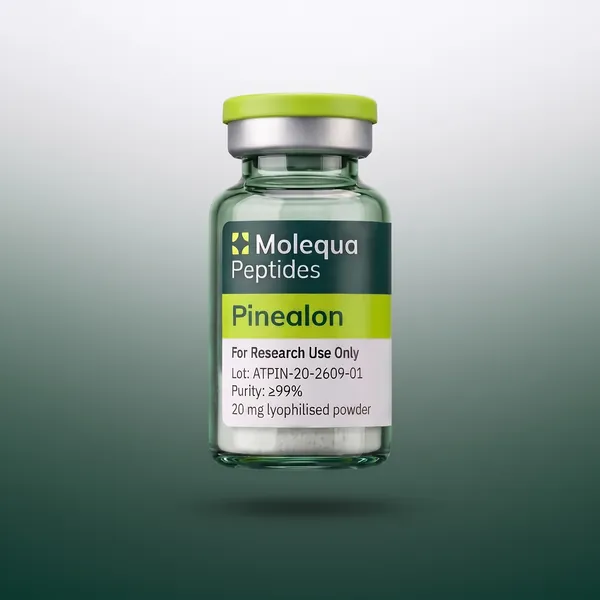
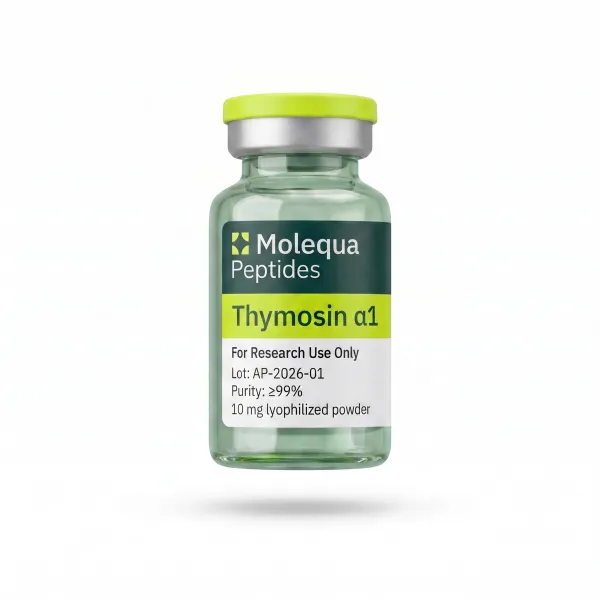
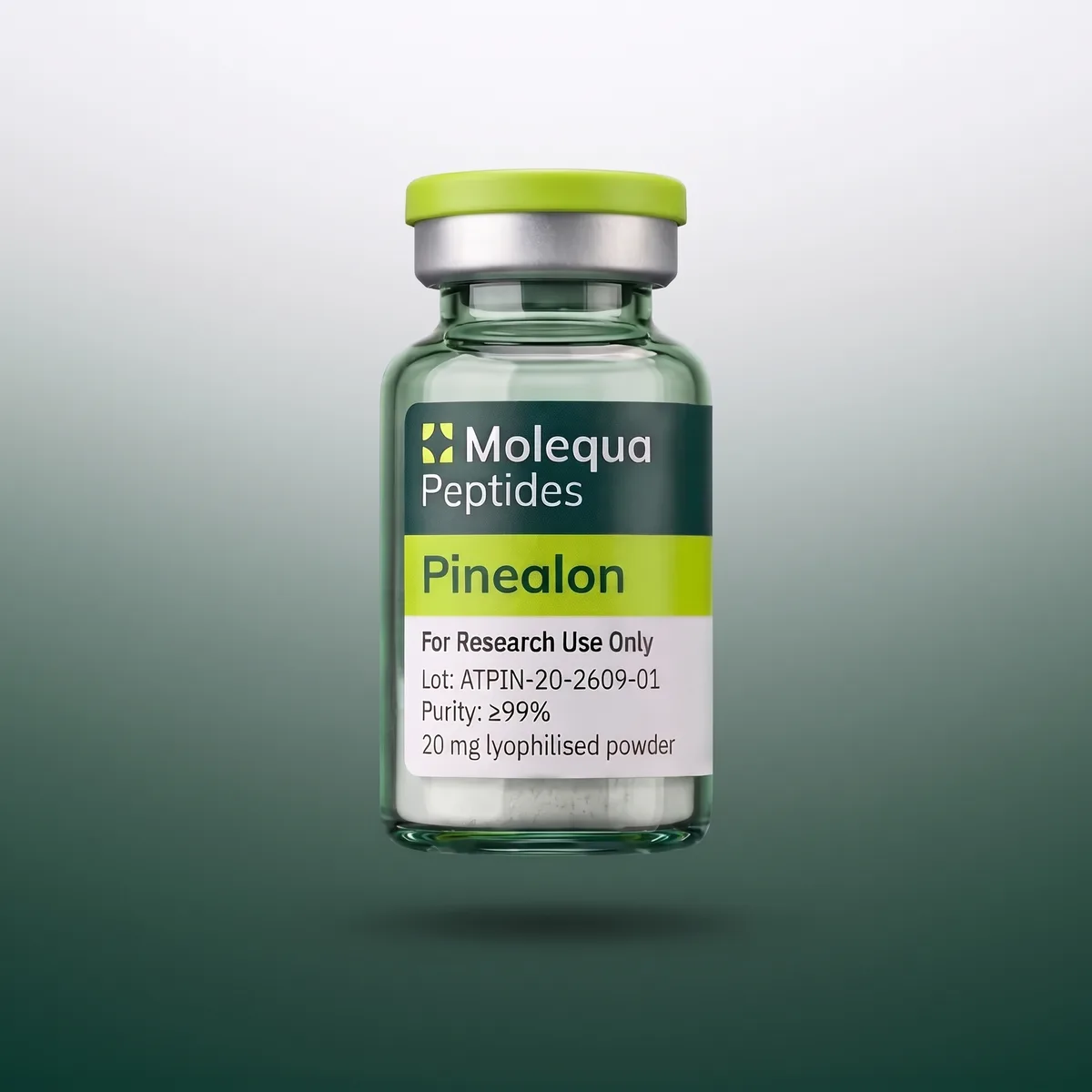
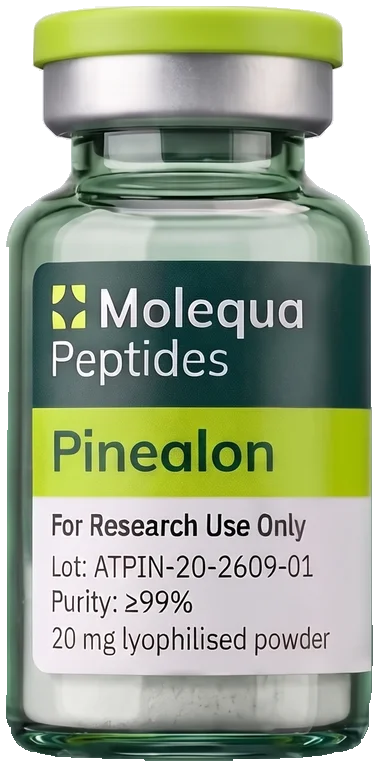
Pinealon is a synthetic tripeptide Glu-Asp-Arg (abbreviated EDR), a short peptide bioregulator from the St. Petersburg school of Vladimir Khavinson. In research it is studied on neurons in cell cultures and in animal models of oxidative stress, hypoxia and ageing. As of November 2026 there is no randomised controlled trial with Pinealon in PubMed. Molequa® supplies it as a 20 mg lyophilizate with Analyton Labs certificate AN-2026-00016 for batch ATPIN-20-2609-01, exclusively for laboratory research.
What Pinealon is and where it comes from
Pinealon belongs to the family of so-called short regulatory peptides studied by the group of Professor Vladimir Khavinson in St. Petersburg. It is the same school that gave rise to Epithalon (Ala-Glu-Asp-Gly). Most publications on Pinealon were produced at the St. Petersburg Institute of Bioregulation and Gerontology or with co-authors from there.
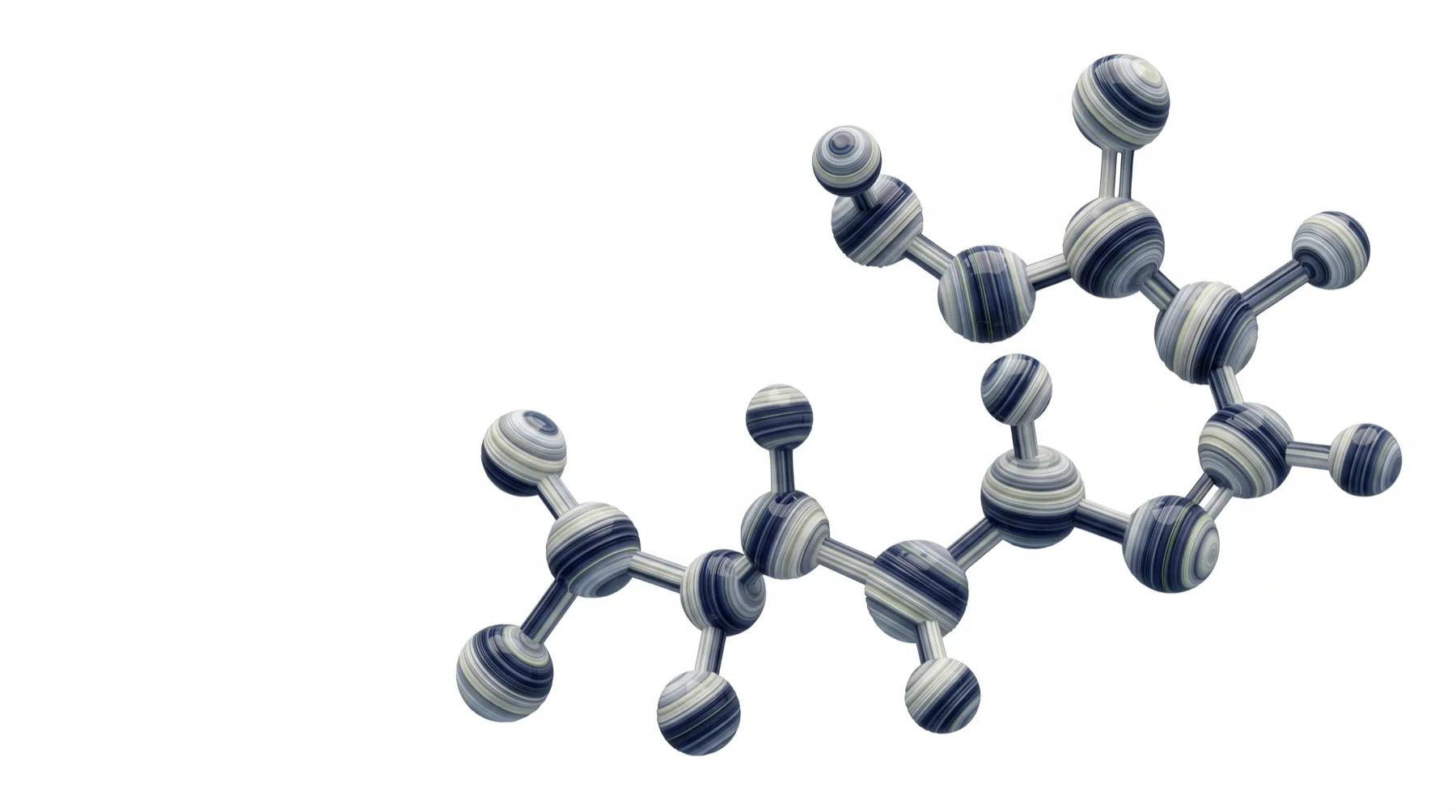
The molecule is remarkably small: just three amino acids, glutamic acid, aspartic acid and arginine. Picture a string with three beads. Two are “acidic” (Glu, Asp), one is “basic” (Arg). The whole peptide has the molecular formula C15H26N6O8 and a theoretical monoisotopic mass of 418.1812 Da. For comparison: Epithalon has four amino acids, Semax seven.
The name recalls the pineal gland (Latin glandula pinealis), but beware of hasty conclusions. In an organotypic culture of rat pineal gland the proliferation marker Ki-67 was raised by the peptides Ala-Glu-Asp-Gly and Lys-Glu-Asp; Glu-Asp-Arg is not listed among them (Khavinson 2011, PubMed 22803060). Most Pinealon research therefore concerns not the pineal gland but neurons and their resistance to stress.
Why order matters with three amino acids
With a peptide this short, identity is trickier than it seems. Glu-Asp-Arg and Asp-Glu-Arg have exactly the same mass, just like two lock combinations made of the same digits. An ordinary mass spectrum cannot tell them apart. Only the fragments from tandem mass spectrometry (MS/MS) can, by showing which bead sits at which end.
The second trap is mirror forms. Each of the three amino acids can exist in the L form and in the D form. It is like a left and a right glove: same material, same weight, but only one fits the hand. According to the certificate, the mirror form has the same mass and the same retention time on a standard column. That is why the batch certificate includes a separate determination of chiral purity.
Mechanism: what cell and animal models show
Everything below comes from cell cultures, from binding experiments with DNA and from animal models. None of these findings says anything about an effect in humans.
Oxidative stress and cell survival
Reactive oxygen species (ROS) are like sparks flying from a fire: in small amounts they are part of a cell’s normal running, in large amounts they damage whatever they hit. In the work of Khavinson and colleagues, Pinealon restricted ROS accumulation in a concentration-dependent manner in three cell types: cerebellar granule cells, neutrophils and PC12 cells. At the same time it reduced necrotic cell death and was accompanied by delayed activation of ERK 1/2 and a change in the cell cycle (Khavinson 2011, PubMed 21978084). The authors noticed that the effect on ROS and survival saturated at lower concentrations, while the influence on the cell cycle continued at higher ones. From this they derived the hypothesis that Pinealon, beyond its antioxidant activity, interacts directly with the cell’s genome.
Entry into the nucleus and binding to DNA
Other papers examined this hypothesis too. Fluorescently labelled Pinealon appeared in HeLa cells in the cytoplasm, in the nucleus and in the nucleolus. In experiments with short DNA segments Pinealon bound preferentially to sequences with CNG and CAG motifs, and the peptides also distinguished the methylation state of cytosine (Fedoreyeva 2011, PubMed 22117547). A physical study from St. Petersburg State University then showed by spectral methods, NMR and molecular dynamics that EDR partially penetrates the major groove of DNA and affects the N7 and O6 atoms of guanine; Mg²⁺ ions support this interaction (Silanteva 2019, PubMed 30762356). In a further paper the same peptide also bound to wheat histones, the proteins around which DNA is wound (Fedoreyeva 2013, PubMed 23581987).
Gene and protein expression in neurons
In ageing cultures of cerebral cortex cells, Glu-Asp-Arg and Lys-Glu-Asp increased serotonin expression. Molecular modelling found in the tryptophan hydroxylase gene a CCTGCC segment complementary to these peptides (Khavinson 2014, PubMed 24909721). A 2020 review summarised the pathways that, according to the authors, EDR may influence: MAPK/ERK signalling, caspase-3, p53, the antioxidant enzymes SOD2 and GPX1, the transcription factors PPARA and PPARG, serotonin and calmodulin (Khavinson 2020, PubMed 33396470).
Dendritic spines and models of ageing neurons
Dendritic spines are tiny protrusions of neurons on which synapses form. Think of them as sockets on an extension lead: the more sockets, the more connections can be plugged in. In the 5xFAD mouse model of amyloid pathology, used in Alzheimer’s disease research, the peptides EDR and KED prevented the loss of dendritic spines. Docking into DNA found binding sites for EDR in the promoters of the genes CASP3, NES, GAP43, APOE, SOD2, PPARA, PPARG and GDX1 (Khavinson 2021, PubMed 34071923).
The most recent of these papers used neurons created by direct conversion of skin fibroblasts from older donors. All three peptides tested (EDR, KED, AEDG) increased dendritic branching, that is the number of primary processes and their total length. They had no effect on mitochondrial and lysosomal activity or on p16 levels. EDR additionally reduced oxidative DNA damage in these neurons (Kraskovskaya 2024, PubMed 39518916).
Hypoxia in animal models
In Russian-language papers Pinealon was studied in models of oxygen deficiency. In a model of hypobaric hypoxia it had the most pronounced antihypoxic effect of four short peptides (Vilon, Epitalon, Vesugen, Pinealon). The author attributes the ability to increase neuronal resistance to hypoxic stress to stimulation of the internal antioxidant enzyme system rather than to damping the rise in ROS (Kozina 2008, PubMed 18546825). In 18-month-old rats in models of acute hypobaric hypoxia and mild hypothermia, the comparator preparation Cortexin had a more pronounced influence on free radicals and caspase-3 than Pinealon (Mendzheritsky 2015, PubMed 28509493).
Research areas
With Pinealon these are research questions, not documented effects:
- Oxidative stress in neuronal cultures: restriction of ROS and necrosis in cerebellar and PC12 cells.
- Interaction of short peptides with DNA and histones: binding studies, molecular dynamics, docking.
- Models of ageing neurons: dendritic branching and oxidative DNA damage in induced neurons.
- Models of amyloid pathology: dendritic spines in 5xFAD mice.
- Hypoxia and prenatal stress in rats: antihypoxic and antioxidant parameters.
- Comparison with related bioregulators: Epithalon (AEDG), KED, Vilon and other peptides of the Khavinson school.
Buying Pinealon: what to look for
With a tripeptide, verifiable quality matters more than with long peptides. Three amino acids can be assembled in six orders with the same mass, and white powder always looks the same. These five criteria separate a serious supplier from the grey zone.
1. HPLC purity backed by a chromatogram
Purity states what share of the area of the detected peaks on the chromatogram belongs to the main component. According to the certificate, batch ATPIN-20-2609-01 has 99.62 % ± 0.15 % (RP-HPLC, 214 nm). A figure without a chromatogram is a claim, not proof.
2. Certificate of analysis for the specific batch
A document with the batch number, date and measured values, issued by an independent laboratory. For Pinealon it is Analyton Labs report AN-2026-00016 of 15 October 2026, which you can verify directly in the laboratory’s register. If a supplier shows only a generic template or a certificate “on request”, do not buy.
3. LC-MS identity and the amino acid order
Mass alone is not enough, because the order of the amino acids does not change the mass. The batch certificate states the measured ion [M+H]⁺ 419.1886 with a deviation of 0.2 ppm and the MS/MS fragments y1 (Arg), b2 (Glu-Asp) and y2 (Asp-Arg), by which the laboratory confirmed the order Glu-Asp-Arg.
4. Chiral purity and screening for foreign substances
Mirror D forms have the same mass and the same retention time on a standard column, so they must be measured separately. On this batch: D-Asp 0.10 %, D-Glu 0.09 %, D-Arg 0.04 %, 0.23 % in total against a limit of 0.5 %. Screening for fentanyl and its analogues, Epithalon, Vilon, Thymogen, Semax and Selank found nothing above 0.05 % of area.
5. Actual peptide content in the vial and the right form
Purity of 99.62 % does not mean the vial holds 20 mg of pure peptide. The powder is a salt: just as table salt is not sodium on its own, Pinealon in the powder is paired with the acetate counter-ion and binds some water. That is why the certificate also states a mass balance. Quality Pinealon is supplied as a lyophilizate, not as a ready-made solution.
| Determination (batch ATPIN-20-2609-01) | Result according to the certificate |
|---|---|
| Fill weight | 24.3 mg (second vial 24.6 mg) |
| Peptide content (AAA) | 81.50 % by weight |
| Peptide in the vial labelled 20 mg | 19.80 mg, i.e. 99.0 % of the declaration |
| Acetate / trifluoroacetate | 12.30 % / below 20 ppm |
| Water (Karl Fischer) | 5.60 % |
| Mass balance | 81.50 + 12.30 + 5.60 = 99.40 % |
| Bacterial endotoxins | below 0.05 EU/mg |
| Sterility | no growth after 14 days, 2 vials |
Verify quality in 30 seconds
- ✅ CoA for the batch publicly available and verifiable in the laboratory’s register?
- ✅ HPLC purity backed by a chromatogram?
- ✅ LC-MS identity and amino acid order confirmed by MS/MS fragments?
- ✅ Chiral purity and peptide content in the vial in milligrams?
- ✅ EU stock, batch traceability and supply as lyophilizate?
The Pinealon batch at Molequa® meets all five points. You will find the full certificate with 20 determinations in the Batch test results section below.
Legal notice: Pinealon is a research peptide and is not approved or registered as a medicine in the EU or the USA. It is sold exclusively for scientific laboratory research and is not intended for human or animal consumption.
Science & Studies
4.1 Key publications
All sources are verified in PubMed. Almost all come from Russian institutions, most with co-authors from the St. Petersburg Institute of Bioregulation and Gerontology. Independent foreign replications are still lacking.
Khavinson V., Ribakova Y., Kulebiakin K., et al. (2011). Pinealon increases cell viability by suppression of free radical levels and activating proliferative processes. Rejuvenation Res. 14(5):535 to 541. PubMed 21978084, ROS and cell survival.
Arutjunyan A., Kozina L., Stvolinskiy S., et al. (2012). Pinealon protects the rat offspring from prenatal hyperhomocysteinemia. Int J Clin Exp Med. 5(2):179 to 185. PubMed 22567179, prenatal model in rats.
Fedoreyeva L.I., Kireev I.I., Khavinson V.Kh., Vanyushin B.F. (2011). Penetration of short fluorescence-labeled peptides into the nucleus in HeLa cells and in vitro specific interaction of the peptides with deoxyribooligonucleotides and DNA. Biochemistry (Mosc). 76(11):1210 to 1219. PubMed 22117547, entry into the nucleus and DNA binding.
Silanteva I.A., Komolkin A.V., Morozova E.A., et al. (2019). Role of Mono- and Divalent Ions in Peptide Glu-Asp-Arg-DNA Interaction. J Phys Chem B. 123(9):1896 to 1902. PubMed 30762356, physics of EDR binding to DNA.
Khavinson V.Kh., Lin’kova N.S., Tarnovskaya S.I., et al. (2014). Short peptides stimulate serotonin expression in cells of brain cortex. Bull Exp Biol Med. 157(1):77 to 80. PubMed 24909721, serotonin in cerebral cortex culture.
Khavinson V., Linkova N., Kozhevnikova E., Trofimova S. (2020). EDR Peptide: Possible Mechanism of Gene Expression and Protein Synthesis Regulation Involved in the Pathogenesis of Alzheimer’s Disease. Molecules. 26(1):159. PubMed 33396470, review of mechanisms.
Khavinson V., Ilina A., Kraskovskaya N., et al. (2021). Neuroprotective Effects of Tripeptides-Epigenetic Regulators in Mouse Model of Alzheimer’s Disease. Pharmaceuticals (Basel). 14(6):515. PubMed 34071923, dendritic spines in the 5xFAD model.
Kraskovskaya N., Linkova N., Sakhenberg E., et al. (2024). Short Peptides Protect Fibroblast-Derived Induced Neurons from Age-Related Changes. Int J Mol Sci. 25(21):11363. PubMed 39518916, in vitro model of ageing human neurons.
Kozina L.S. (2008). Investigation of antihypoxic properties of short peptides (in Russian). Adv Gerontol. 21(1):61 to 67. PubMed 18546825, hypobaric hypoxia.
4.2 Detailed expandable studies
▸ Study 1: Khavinson 2011, ROS and cell survival
Citation: Khavinson V., Ribakova Y., Kulebiakin K., Vladychenskaya E., Kozina L., Arutjunyan A., Boldyrev A. Pinealon increases cell viability by suppression of free radical levels and activating proliferative processes. Rejuvenation Res. 2011;14(5):535 to 541. PubMed 21978084.
What they did: In three cell types (cerebellar granule cells, neutrophils, PC12 pheochromocytoma cells) they induced oxidative stress in two ways, via a receptor and bypassing it. They followed ROS accumulation, necrotic cell death (propidium iodide test), ERK 1/2 activation and the cell cycle.
What they found: Pinealon restricted ROS accumulation and reduced necrotic death in a concentration-dependent manner. The protective effect was accompanied by delayed ERK 1/2 activation and a change in the cell cycle. The effect on ROS and survival saturated at lower concentrations, the influence on the cell cycle continued at higher ones.
Why it matters: It is the foundational in vitro paper on Pinealon and the source of the hypothesis that the peptide acts in ways other than as a plain antioxidant. Limitations: cell cultures, a single research group.
▸ Study 2: Arutjunyan 2012, prenatal hyperhomocysteinaemia in rats
Citation: Arutjunyan A., Kozina L., Stvolinskiy S., Bulygina Y., Mashkina A., Khavinson V. Pinealon protects the rat offspring from prenatal hyperhomocysteinemia. Int J Clin Exp Med. 2012;5(2):179 to 185. PubMed 22567179.
What they did: Pregnant female rats had their homocysteine levels raised by a methionine load in the diet. Some of them received Pinealon. In the offspring, spatial orientation and learning were assessed, and in neurons isolated from their cerebellum, ROS accumulation and the number of necrotic cells.
What they found: Offspring of mothers that received Pinealon had better spatial orientation and learning ability. Their cerebellar neurons accumulated less ROS and contained fewer necrotic cells.
Why it matters: An animal confirmation of the same group’s earlier in vitro findings, as the authors themselves state. The model is specific and the result cannot be generalised beyond it.
▸ Study 3: Fedoreyeva 2011 and Silanteva 2019, Pinealon and DNA
Citation: Fedoreyeva L.I., Kireev I.I., Khavinson V.Kh., Vanyushin B.F. Penetration of short fluorescence-labeled peptides into the nucleus in HeLa cells and in vitro specific interaction of the peptides with deoxyribooligonucleotides and DNA. Biochemistry (Mosc). 2011;76(11):1210 to 1219. PubMed 22117547. Silanteva I.A., Komolkin A.V., Morozova E.A., Vorontsov-Velyaminov P.N., Kasyanenko N.A. Role of Mono- and Divalent Ions in Peptide Glu-Asp-Arg-DNA Interaction. J Phys Chem B. 2019;123(9):1896 to 1902. PubMed 30762356.
What they did: The first paper labelled Epithalon, Pinealon and Testagen with a fluorescent dye, followed them in HeLa cells and measured fluorescence quenching of labelled short DNA segments. The second paper examined EDR binding to DNA by spectral methods, NMR, viscometry and molecular dynamics.
What they found: The labelled peptides appeared in the cytoplasm, in the nucleus and in the nucleolus. Pinealon bound preferentially to segments with CNG and CAG motifs, and the peptides distinguished the methylation state of cytosine. Physical measurements showed that EDR partially penetrates the major groove of DNA and affects the N7 and O6 atoms of guanine; Mg²⁺ ions support the binding because they damp the negative charge of the phosphates.
Why it matters: These papers form the physico-chemical basis of the hypothesis that a short peptide can act at the level of genes. The second paper comes from a university physics faculty, that is from a different institution than Khavinson’s institute. Binding in a test tube, however, does not yet prove gene regulation in a living organism.
▸ Study 4: Khavinson 2021, dendritic spines in the 5xFAD model
Citation: Khavinson V., Ilina A., Kraskovskaya N., Linkova N., Kolchina N., Mironova E., Erofeev A., Petukhov M. Neuroprotective Effects of Tripeptides-Epigenetic Regulators in Mouse Model of Alzheimer’s Disease. Pharmaceuticals (Basel). 2021;14(6):515. PubMed 34071923. An erratum to the article was published in 2025.
What they did: In the 5xFAD transgenic mouse model, a model of amyloid pathology, they followed neuroplasticity and dendritic spine morphology with the peptides KED and EDR. Possible molecular mechanisms were sought by modelling and docking the peptides into double-stranded DNA with all combinations of six-nucleotide sequences.
What they found: KED tended to increase neuroplasticity. Both KED and EDR prevented the loss of dendritic spines. For EDR they found binding sites in the promoters of the genes CASP3, NES, GAP43, APOE, SOD2, PPARA, PPARG and GDX1.
Why it matters: It links an observation at the level of synapses with specific candidate genes. Docking is a computational prediction, not a measurement, and the 5xFAD model is a genetically modified mouse.
▸ Study 5: Kraskovskaya 2024, induced neurons from older donors
Citation: Kraskovskaya N., Linkova N., Sakhenberg E., Krieger D., Polyakova V., Medvedev D., Krasichkov A., Khotin M., Ryzhak G. Short Peptides Protect Fibroblast-Derived Induced Neurons from Age-Related Changes. Int J Mol Sci. 2024;25(21):11363. PubMed 39518916.
What they did: Skin fibroblasts from older donors were directly converted into cortical neurons, a new cell model of ageing human neurons. Three short peptides were compared in it: EDR, KED and AEDG (Epithalon).
What they found: All three peptides increased dendritic branching, that is the number of primary processes and the total dendrite length. They did not affect mitochondrial and lysosomal activity or the level of the p16 protein. EDR reduced oxidative DNA damage in neurons from older donors.
Why it matters: It is the most recent of the experimental papers in this overview and works with human cells from older donors. It also reports negative results (mitochondria, lysosomes, p16). It is still a cell culture.
▸ Study 6: Khavinson 2011, pineal gland culture
Citation: Khavinson V.Kh., Linkova N.S., Chalisova N.I., Dudkov A.V., Koncevaya E.A. Effect of short peptides on expression of signaling molecules in organotypic pineal cell culture. Bull Exp Biol Med. 2011;152(1):138 to 141. PubMed 22803060.
What they did: In an organotypic pineal gland culture from three-month-old rats they compared four short peptides: Ala-Glu-Asp-Gly, Lys-Glu-Asp, Glu-Asp-Arg and Lys-Glu.
What they found: The proliferation protein Ki-67 was raised by Ala-Glu-Asp-Gly and Lys-Glu-Asp. None of the four peptides affected the apoptosis marker AIF. CGRP synthesis in pinealocytes was raised only by Ala-Glu-Asp-Gly.
Why it matters: It shows that a name is not a mechanism. In this model the monitored parameters of pineal cells responded to Epithalon; for Pinealon no effect is reported. Neuronal models are more relevant for Pinealon research.
Storage
The figures below come from the vial label and from the batch certificate.
Lyophilizate (dry powder before reconstitution)
- Label: Storage −20 °C, EXP 09/2028, Lot ATPIN-20-2609-01
- Keep in the freezer at −20 °C in the closed vial.
- Water in the powder according to the certificate: 5.60 % (Karl Fischer). The certificate warns that lyophilized peptides are hygroscopic and take up moisture from the air within seconds of the vial being opened.
After reconstitution (solution)
- Solubility according to the certificate: at least 20 mg/ml in water and in bacteriostatic water, the solution is clear, colourless and free of particles within 15 seconds.
- pH of a 20 mg/ml solution in water: 4.9.
- The certificate does not include a separate stability study of Pinealon solution. General guidance for peptide solutions is in the Before and after reconstitution block.
Practical rules
- Let the vial warm to room temperature (15 to 20 minutes) before opening, otherwise moisture from the air condenses on the cold powder.
- Do not shake, roll the vial gently between your fingers. A tripeptide dissolves quickly.
- The solution should be clear and colourless, exactly as in the laboratory measurement. Turbidity or particles mean something is wrong.
- Prepare the solution only just before the experiment and keep it cold and dark.
Combination tips, Frequently combined peptides
In the literature Pinealon appears most often in comparison with other short peptides of the Khavinson school, not as a stand-alone molecule.
Epithalon, the direct comparison in the same experiments
Epithalon (Ala-Glu-Asp-Gly) is Pinealon’s closest relative. Both peptides were tested in the same papers: in HeLa cells (Fedoreyeva 2011), in pineal gland culture (Khavinson 2011) and in induced neurons from older donors (Kraskovskaya 2024). The results differed, however; in pineal gland culture, for example, Epithalon changed the monitored markers and Pinealon did not. A parallel experiment with both peptides under identical conditions is therefore a meaningful design.
Semax, a different class of neuropeptides
Semax is a heptapeptide, an analogue of the ACTH(4-10) fragment, whose research focuses on neurotrophic signalling, for example the expression of BDNF and its receptor trkB in the rat hippocampus (Dolotov 2006, PubMed 16996037). We found no joint paper on Semax and Pinealon in PubMed. As a comparator molecule with a different mechanism, however, Semax fits into neurobiological experiments with Pinealon.
Key scientific figures and citations
“The synthetic tripeptide pinealon (Glu-Asp-Arg) demonstrates dose-dependent restriction of reactive oxygen species (ROS) accumulation in cerebellar granule cells, neutrophils, and pheochromocytoma (PC12) cells.”
Khavinson V. et al. (2011), Rejuvenation Res 14(5), PubMed 21978084
Figures from the research literature
- Pinealon (EDR) is the tripeptide Glu-Asp-Arg with the molecular formula C15H26N6O8 and a theoretical monoisotopic mass of 418.1812 Da, CAS 175175-23-2
- A PubMed search for the word pinealon: 22 records as of 6 November 2026, of which 0 randomised controlled trials
- Pinealon restricted ROS accumulation in a concentration-dependent manner in cerebellar cells, neutrophils and PC12 cells (Khavinson 2011, PubMed 21978084)
- Batch ATPIN-20-2609-01: HPLC purity 99.62 %, 19.80 mg of peptide in the vial labelled 20 mg, order Glu-Asp-Arg confirmed by MS/MS (Analyton Labs, AN-2026-00016)
- Fluorescently labelled Pinealon entered the cytoplasm, nucleus and nucleolus in HeLa cells (Fedoreyeva 2011, PubMed 22117547)
- EDR partially penetrates the major groove of DNA and affects the N7 and O6 atoms of guanine (Silanteva 2019, PubMed 30762356)
- In induced neurons from older donors EDR reduced oxidative DNA damage and had no effect on mitochondria, lysosomes and p16 (Kraskovskaya 2024, PubMed 39518916)
Reference sources (PubMed)
- Khavinson V. et al. (2011). “Pinealon increases cell viability by suppression of free radical levels and activating proliferative processes.” Rejuvenation Res 14(5):535–541. PubMed 21978084
- Arutjunyan A. et al. (2012). “Pinealon protects the rat offspring from prenatal hyperhomocysteinemia.” Int J Clin Exp Med 5(2):179–185. PubMed 22567179
- Fedoreyeva LI. et al. (2011). “Penetration of short fluorescence-labeled peptides into the nucleus in HeLa cells and in vitro specific interaction of the peptides with deoxyribooligonucleotides and DNA.” Biochemistry (Mosc) 76(11):1210–1219. PubMed 22117547
- Fedoreyeva LI. et al. (2013). “Interaction of short peptides with FITC-labeled wheat histones and their complexes with deoxyribooligonucleotides.” Biochemistry (Mosc) 78(2):166–175. PubMed 23581987
- Silanteva IA. et al. (2019). “Role of Mono- and Divalent Ions in Peptide Glu-Asp-Arg-DNA Interaction.” J Phys Chem B 123(9):1896–1902. PubMed 30762356
- Khavinson VKh. et al. (2014). “Short peptides stimulate serotonin expression in cells of brain cortex.” Bull Exp Biol Med 157(1):77–80. PubMed 24909721
- Khavinson V. et al. (2020). “EDR Peptide: Possible Mechanism of Gene Expression and Protein Synthesis Regulation Involved in the Pathogenesis of Alzheimer’s Disease.” Molecules 26(1):159. PubMed 33396470
- Khavinson V. et al. (2021). “Neuroprotective Effects of Tripeptides-Epigenetic Regulators in Mouse Model of Alzheimer’s Disease.” Pharmaceuticals (Basel) 14(6):515. PubMed 34071923
- Kraskovskaya N. et al. (2024). “Short Peptides Protect Fibroblast-Derived Induced Neurons from Age-Related Changes.” Int J Mol Sci 25(21):11363. PubMed 39518916
- Khavinson VKh. et al. (2011). “Effect of short peptides on expression of signaling molecules in organotypic pineal cell culture.” Bull Exp Biol Med 152(1):138–141. PubMed 22803060
- Kozina LS. (2008). “Investigation of antihypoxic properties of short peptides.” Adv Gerontol 21(1):61–67. PubMed 18546825
- Mendzheritsky AM. et al. (2015). “Pinealon and Cortexin influence on behavior and neurochemical processes in 18-month aged rats within hypoxia and hypothermia.” Adv Gerontol 28(3):532–539. PubMed 28509493
Registration status: Pinealon is not approved or registered as a medicine in the EU or the USA (EMA, FDA). The existing data come from cell cultures, binding experiments and animal models, predominantly from Russian institutions. The Molequa® product is sold exclusively for laboratory scientific research (RUO).
Frequently asked questions about Pinealon
These questions answer the most common searches about Pinealon in a research context. For technical documentation see the sections above.
What is Pinealon and what is studied on it?
Pinealon is a synthetic tripeptide Glu-Asp-Arg (EDR) from Vladimir Khavinson’s St. Petersburg school of short peptide bioregulators. It is studied on neurons in cell cultures (oxidative stress, dendritic branching), in binding experiments with DNA and histones, and in animal models of hypoxia and amyloid pathology. This is exclusively preclinical research.
What is the difference between Pinealon and Epithalon?
Both come from the same research school. Epithalon is the tetrapeptide Ala-Glu-Asp-Gly, Pinealon the tripeptide Glu-Asp-Arg. In rat pineal gland culture the proliferation marker Ki-67 was raised by Epithalon; Pinealon is not listed among the peptides with this effect (Khavinson 2011). In induced neurons from older donors both increased dendritic branching (Kraskovskaya 2024).
Are there clinical trials with Pinealon?
As of 6 November 2026 there is no randomised controlled trial with Pinealon in PubMed. A search for the word pinealon returns 22 records, mostly cell and animal studies from Russian institutions, some in Russian. Independent foreign replications are lacking.
What did the laboratory measure on batch ATPIN-20-2609-01?
Analyton Labs certificate AN-2026-00016 of 15 October 2026 contains 20 determinations. Among others: HPLC purity 99.62 %, LC-HRMS identity with the order Glu-Asp-Arg confirmed, 19.80 mg of peptide in the vial labelled 20 mg, sum of D forms 0.23 %, acetate 12.30 %, trifluoroacetate below 20 ppm, endotoxins below 0.05 EU/mg and sterility with no growth after 14 days.
Why is the peptide content 81.5 % when the purity is 99.62 %?
Chromatographic purity is the share of the area of the detected peaks at one wavelength that belongs to Pinealon. It does not see the counter-ion, water or inorganic residues, so according to the certificate it does not say how much peptide is in the vial. The peptide content says that. The rest is acetate (12.30 %) and water (5.60 %), 99.40 % in total. The certificate adds that a tripeptide with arginine binds more counter-ion and water per unit of mass than a long peptide. The vial therefore holds 24.3 mg of powder and in it 19.80 mg of peptide.
How is Pinealon stored?
According to the label at −20 °C, with expiry 09/2028. Keep the lyophilizate in the closed vial. According to the certificate it dissolves at a concentration of at least 20 mg/ml in water and in bacteriostatic water to a clear, colourless solution within 15 seconds.
Is Pinealon an approved medicine or a research substance?
Pinealon is not approved or registered as a medicine in the EU or the USA. Across the EU it is exclusively a research substance. The product is sold only for laboratory scientific research (RUO) and is not intended for human or animal consumption.
Where to buy Pinealon in the EU for scientific research?
Molequa® offers Pinealon for scientific research in the EU as a 20 mg lyophilizate with a batch certificate of analysis from the independent laboratory Analyton Labs, HPLC purity 99.62 %. The product is in stock. Delivery by Packeta or courier (Slovakia 1 to 2, Czechia 2 to 3, other EU countries 3 to 5 working days). Research use only (RUO).